
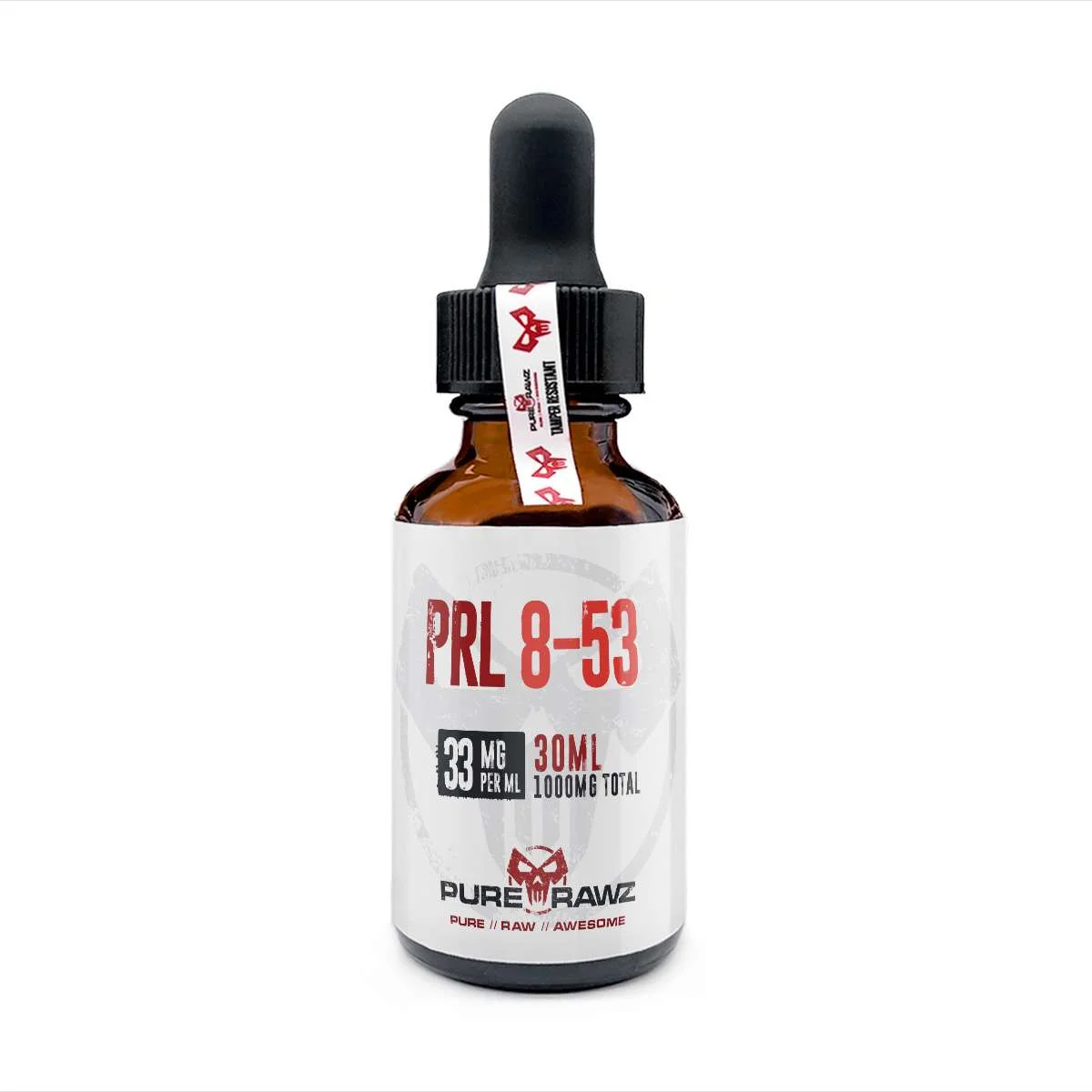
PRL-8-53
Price range: $57.37 through $92.36
Earn 57 - 92 points upon purchasing this product.
✅ 99% Purity – Third-Party Tested
🚚 Free U.S. Shipping on Orders $100+
 Proudly Made in the USA
⚡ Fast & Reliable Shipping
🔒 Secure Checkout Guaranteed
Enjoy 24/7 customer support, 1st & 3rd party verified 99% purity, and free shipping on orders over $100!
Description
Overview of PRL-8-53
PRL-8-53 is a synthetic benzylamine derivative. It contains a phenylethylamine (PEA) skeleton. Chemically, it is derived from benzoic acid. Benzoic acid is found in fruits, dairy products, and plants. PEA is a naturally occurring chemical in the body.
PRL-8-53 was first synthesized in the early 1970s and patented in 1974. It is used only for laboratory and research purposes. All studies on PRL-8-53 are conducted under controlled research conditions. This compound is intended for investigation of molecular and biochemical activity only.
Chemical and Molecular Properties (Table form)
| PRL-8-53 | |
| PubChem CID | 70700868 |
| Molecular Formula | C18H22ClNO2 |
| Molecular Weight | 319.8 g/mol |
| Synonyms | Benzoic acid, 3-(2-(methyl(phenylmethyl)amino)ethyl)-, methyl ester, hydrochloride; Methyl 3-(2-(benzyl(methyl)amino)ethyl)benzoate hydrochloride; PRL-8-53 HCl |
| IUPAC | methyl 3-[2-[benzyl(methyl)amino]ethyl]benzoate; hydrochloride |
| CAS | 51352-87-5 |
| Labeling | Laboratory and research use only |
| Chemical Structure Depiction | 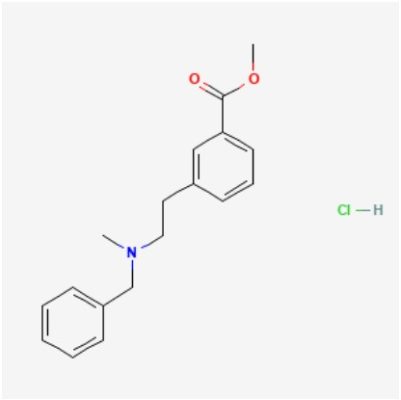 |
| Purity | ≥98% |
| Classification | Synthetic benzylamine derivative; research chemical |
| Storage Temperature | Cool, dry place; protect from light |
| Solubility | Soluble in DMSO and ethanol; limited solubility in water |
| Safety | For laboratory and research use only. Not for human or veterinary use. Follow standard chemical safety procedures. |
Mechanism of PRL-8-53
PRL-8-53 affects cholinergic systems in cells. It can change how acetylcholine receptors send signals and how ions move across cell membranes. Laboratory studies also show it may influence dopamine and serotonin pathways, which are important for cell-to-cell communication.
Researchers study these effects using cell cultures, receptor-binding tests, and isolated tissue samples. They measure how active the receptors are and how much neurotransmitter the cells release. Scientists also track molecules inside the cells, such as second messengers, to see how signaling between cells changes.
PRL-8-53 may alter how receptors group in the membrane or how they respond to repeated stimulation. It can also affect the balance between excitatory and inhibitory signals in networks of cells. Studying these effects helps researchers understand the molecular details of neurotransmitter regulation.
PRL-8-53 Research Application
This compound is studied in vitro and in controlled research settings for its biochemical interactions with neurotransmitter pathways. Investigations focus on receptor binding, neurotransmitter modulation, and molecular signaling processes.
Why Choose PureRawz for PRL-8-53
Buy PRL-8-53 for laboratory research use from our online shop. At Purerawz, we provide high-quality reference materials. Each research compound comes with a Certificate of Analysis for verification of purity and concentration.
Note:
PRL-8-53 is an investigational compound currently undergoing clinical evaluation and has not been established as safe or effective for any therapeutic use
Disclaimer
This information is for educational purposes only and not medical advice. Products are for research use only. Research must follow IRB or IACUC guidelines. Verify information independently before purchasing. By ordering, you agree to our Terms and Conditions. If you are not 100% satisfied with the product you received, please contact us at support@staging.purerawz.co
ATTENTION: All our products are for LABORATORY AND RESEARCH PURPOSES ONLY, not for veterinary or human use
Reference Links
PubChem Compound Summary for CID 70700868 (PRL-8-53). National Center for Biotechnology Information, U.S. National Library of Medicine. https://pubchem.ncbi.nlm.nih.gov/compound/70700868
Hansl, N. R., & Mead, B. T. (1978). PRL-8-53: Enhanced learning and subsequent retention in humans as a result of low oral doses of new psychotropic agent. Psychopharmacology,56(3), 249–253. https://doi.org/10.1007/bf00432846

Dr. Helma Wennemers
Dr. Helma Wennemers is a globally recognized chemist shaping modern peptide science and molecular design through highly original research in applied biosciences.
Her work explores how precise molecular architecture can be engineered to create new functional systems in chemistry and life sciences. Her contributions continue to redefine contemporary chemical research through creativity, depth, and structural innovation.
Please click here to access instructions on how to make a payment.
How to PayRelated products
-

Centrophenoxine
$17.47 Select options This product has multiple variants. The options may be chosen on the product page -
Picamilon Sodium (Nicotinoyl-GABA)
$24.57 Select options This product has multiple variants. The options may be chosen on the product page -
Oxiracetam
$22.94 Select options This product has multiple variants. The options may be chosen on the product page -
Agrocybe 30% Bisporiust
Price range: $26.77 through $56.28 Select options This product has multiple variants. The options may be chosen on the product page


