
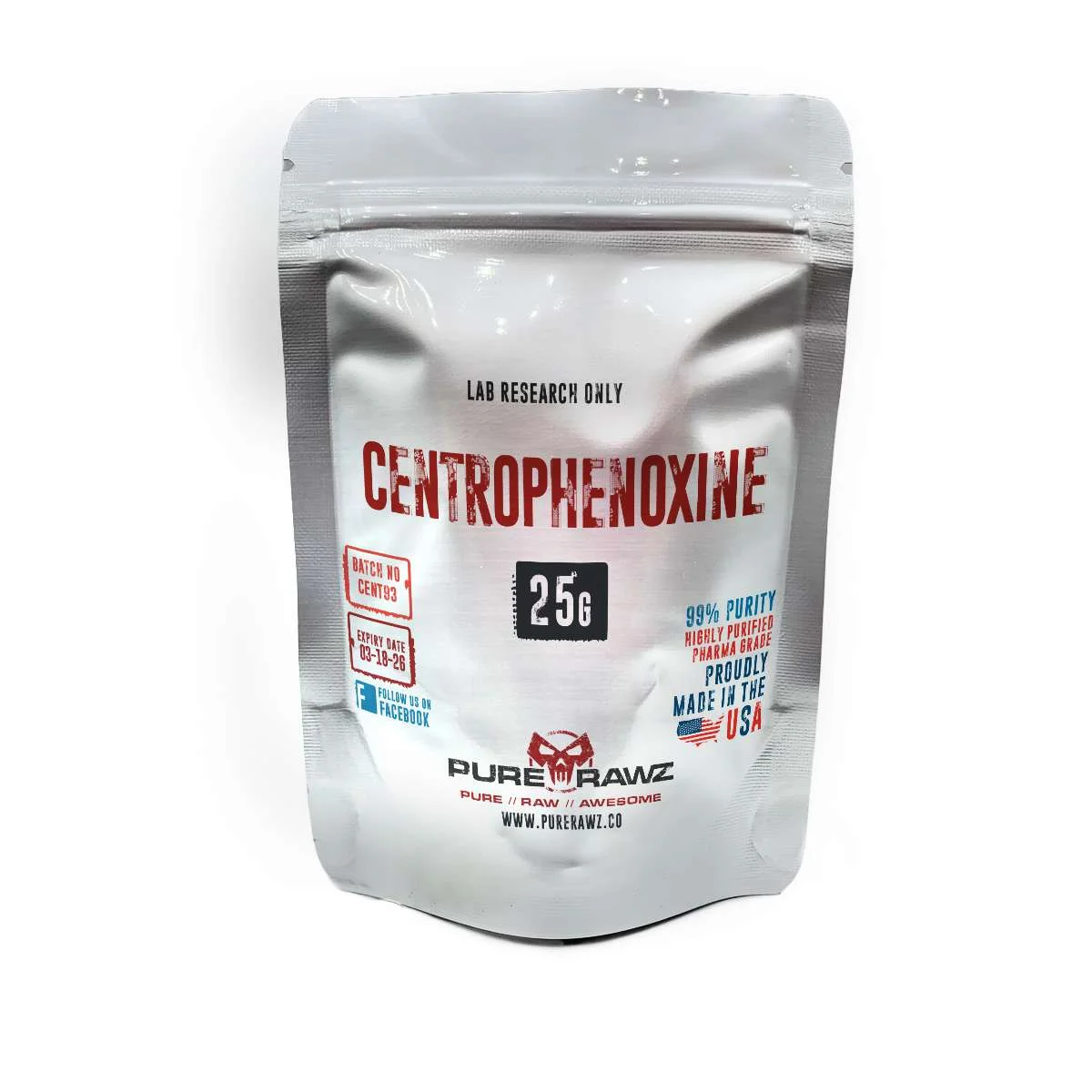
Centrophenoxine
$17.47
Earn 17 points upon purchasing this product.
✅ 99% Purity – Third-Party Tested
🚚 Free U.S. Shipping on Orders $100+
 Proudly Made in the USA
⚡ Fast & Reliable Shipping
🔒 Secure Checkout Guaranteed
Enjoy 24/7 customer support, 1st & 3rd party verified 99% purity, and free shipping on orders over $100!
Description
Centrophenoxine Overview
Centrophenoxine is a synthetic research chemical compound examined in laboratory environments. It is studied for its potential interactions with cellular metabolism pathways, membrane transport mechanisms, and intracellular biochemical signaling systems.
The compound is formed through the esterification of dimethylaminoethanol (DMAE) and p-chlorophenoxyacetic acid (pCPA). This molecular structure is investigated by researchers in biochemical and molecular biology studies.
In experimental laboratory contexts, Centrophenoxine is studied to analyze cellular metabolic processes and membrane transport dynamics. It is also examined for molecular regulatory pathways within controlled experimental models.
Centrophenoxine is categorized as a laboratory chemical preparation. It is intended strictly for investigational and analytical research purposes.
Chemical and Molecular Properties
| Property | Description |
| Compound Name | Centrophenoxine |
| Category | Synthetic research chemical compound |
| Chemical Type | Investigational cellular metabolic pathway modulator |
| Molecular Components | Esterified compound composed of Dimethylaminoethanol (DMAE) and p-Chlorophenoxyacetic Acid (pCPA) |
| Chemical Class | Choline-related synthetic laboratory chemical |
| Lab Safety Required | Handle as a laboratory chemical reagent and follow standard laboratory safety protocols |
| Storage Conditions | Store in a cool, dry environment away from direct light |
| Status | Not for human or animal consumption |
| Regulatory Status | Not approved by regulatory authorities |
Centrophenoxine is frequently examined in laboratory research due to its choline-related molecular structure and intracellular transport characteristics, which are investigated in cellular metabolism and biochemical signaling studies.
Working Mechanism of Centrophenoxine
Below is the proposed mechanism currently being investigated in controlled laboratory models.
Cellular Membrane Transport Investigation
Centrophenoxine is studied as a research chemical in molecular biology research due to its interaction with cellular membrane transport systems.
In laboratory experiments, researchers analyze how the compound interacts with:
- cellular membrane permeability mechanisms
- intracellular molecular transport pathways
- choline-related transport signaling networks
- membrane-associated biochemical interactions
These investigations allow scientists to analyze molecular transport behavior within controlled cellular environments.
Choline-Related Biochemical Pathway Studies
Centrophenoxine contains structural components related to choline-associated molecular systems, which are investigated in biochemical laboratory research.
Experimental studies may explore:
- choline-related molecular signaling pathways
- intracellular biochemical regulatory networks
- enzyme-mediated metabolic interactions
- phospholipid-related biochemical pathways
Such research helps scientists examine how choline-derived compounds interact with intracellular regulatory systems.
Cellular Metabolism and Enzyme Interaction Analysis
In biochemical research environments, Centrophenoxine is examined for its interaction with cellular metabolic pathways and enzyme-related signaling systems.
Laboratory investigations may analyze:
- enzyme activity related to metabolic regulation
- intracellular substrate - enzyme interaction mechanisms
- cellular metabolic pathway signaling
- biochemical regulatory responses within cellular models
These experimental approaches help researchers evaluate molecular interactions between synthetic compounds and metabolic regulatory pathways.
Molecular Regulatory Network Investigation
Centrophenoxine is also studied in laboratory settings to analyze its interaction with intracellular molecular regulatory networks.
Researchers may investigate:
- protein interaction signaling pathways
- transcription-related biochemical responses
- intracellular signaling cascades
- regulatory molecular pathway coordination
Such studies contribute to a broader understanding of cellular signaling networks in molecular biology research.
Biochemical Interaction Analysis
The molecular characteristics of Centrophenoxine enable researchers to examine multiple biochemical signaling pathways simultaneously in controlled experimental environments.
Investigational studies may explore:
- cellular metabolic regulatory pathways
- enzyme-mediated biochemical modulation
- intracellular molecular transport systems
- signaling pathway interactions within cellular models
These experimental models allow scientists to analyze complex biochemical interactions within laboratory research systems.
Centrophenoxine Research Applications
The primary investigational applications for Centrophenoxine include:
Cellular Studies
Researchers may analyze intracellular signaling networks, membrane transport mechanisms, and metabolic pathway responses in experimental cellular models.
Molecular Biology Research
Scientists may conduct receptor interaction studies, intracellular signaling analysis, and molecular regulatory pathway investigations using this laboratory chemical compound.
Biochemistry Research
Centrophenoxine may be utilized as a research chemical probe to study enzyme activity, metabolic signaling pathways, and intracellular biochemical interactions.
Analytical Research
Laboratories may employ this compound in controlled experimental environments to evaluate molecular structure characteristics and cellular biochemical signaling mechanisms.
Investigational Status
Centrophenoxine is considered an investigational research chemical compound and is not approved for therapeutic or clinical use.
Buy Centrophenoxine from Purerawz for Research Use
Research institutions and laboratory professionals can obtain Centrophenoxine through our online platform for investigational laboratory studies.
At Purerawz, this compound is provided exclusively as a research chemical preparation intended for scientific evaluation and controlled experimental analysis. Each batch is independently tested and supplied with Certificates of Analysis (COA) to ensure transparency and reliability in laboratory research applications.
Disclaimer
The information presented is intended strictly for educational and scientific reference. All procedures involving these laboratory chemicals must be conducted in appropriate laboratory environments in accordance with institutional research policies and laboratory safety protocols.
By placing an order through our website, you agree to Purerawz Terms and Conditions. If there is any issue with the product received, please contact our support team at support@staging.purerawz.co
ATTENTION: The products mentioned are laboratory chemicals intended solely for research purposes. They must not be used for human or animal consumption.
Reference Links
Centrophenoxine molecular structure and biochemical research https://pubchem.ncbi.nlm.nih.gov/compound/3614
Dimethylaminoethanol (DMAE) biochemical research studies https://pubmed.ncbi.nlm.nih.gov/16543079/
Cellular membrane transport and choline-related biochemical pathways https://pubmed.ncbi.nlm.nih.gov/11287120/

Dr. Helma Wennemers
Dr. Helma Wennemers is a globally recognized chemist shaping modern peptide science and molecular design through highly original research in applied biosciences.
Her work explores how precise molecular architecture can be engineered to create new functional systems in chemistry and life sciences. Her contributions continue to redefine contemporary chemical research through creativity, depth, and structural innovation.
Please click here to access instructions on how to make a payment.
How to PayRelated products
-

Sulbutiamine
Price range: $17.47 through $61.76 Select options This product has multiple variants. The options may be chosen on the product page -
CDP Choline (Citicoline)
$28.41 Select options This product has multiple variants. The options may be chosen on the product page -
Methylene Blue
Price range: $14.91 through $178.19 Select options This product has multiple variants. The options may be chosen on the product page -
Vincamine
Price range: $15.83 through $49.18 Select options This product has multiple variants. The options may be chosen on the product page


