
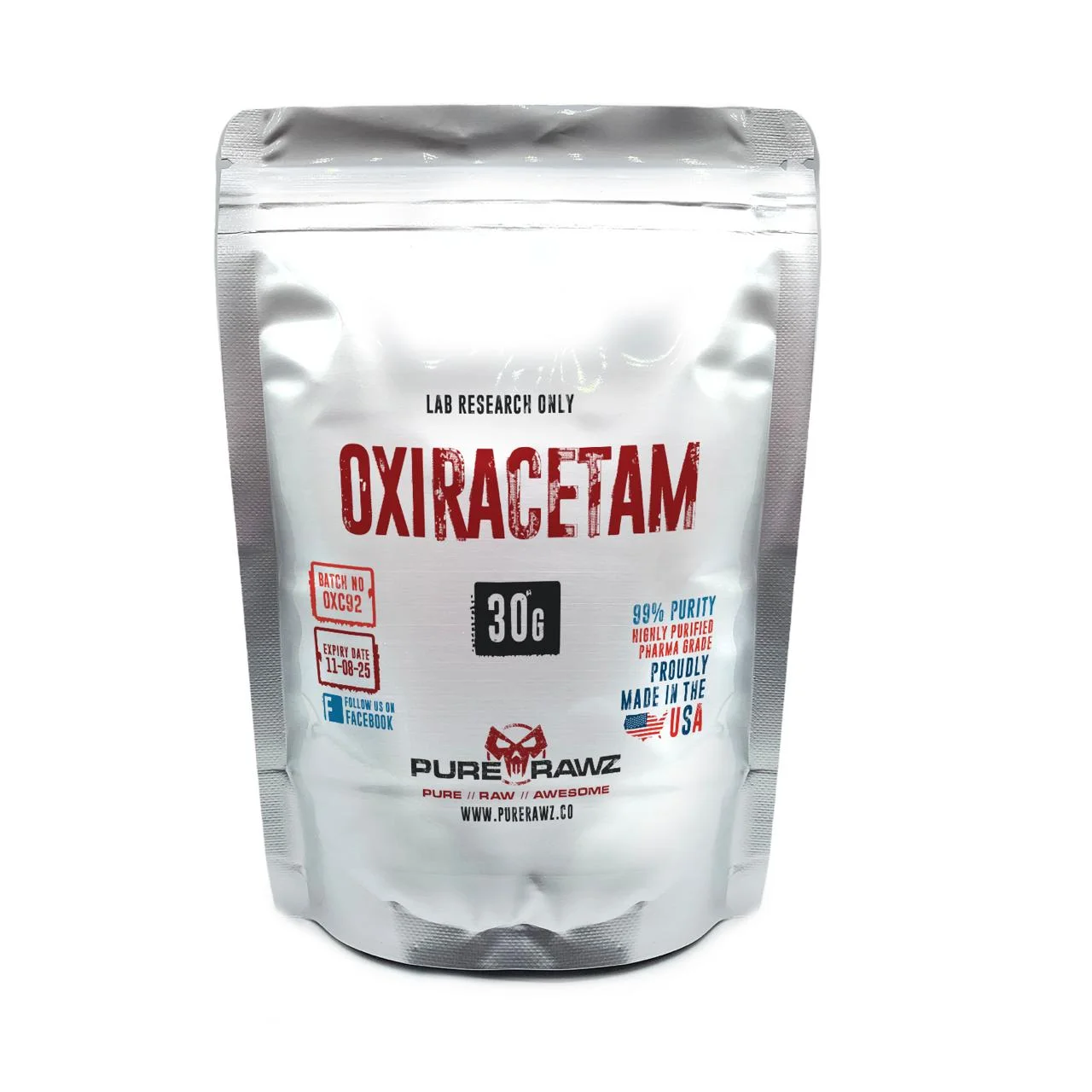
Oxiracetam
$22.94
Earn 23 points upon purchasing this product.
✅ 99% Purity – Third-Party Tested
🚚 Free U.S. Shipping on Orders $100+
 Proudly Made in the USA
⚡ Fast & Reliable Shipping
🔒 Secure Checkout Guaranteed
Enjoy 24/7 customer support, 1st & 3rd party verified 99% purity, and free shipping on orders over $100!
Description
Oxiracetam Overview
Oxiracetam is a synthetic nootropic research compound belonging to the racetam family. Racetams share a common chemical backbone based on a 2-pyrrolidone structure and have been widely studied in laboratory environments for their interactions with neuronal signaling systems.
Within racetam research literature, oxiracetam is frequently discussed alongside piracetam and aniracetam, as these compounds have been examined for their influence on AMPA-type glutamate receptors in experimental models. Research suggests that this interaction may influence receptor signaling activity and synaptic communication pathways.
Chemical and Molecular Properties
| PubChem CID | 4626 |
| Molecular Formula | C6H10N2O3 |
| Molecular Weight | 158.16 g/mol |
| Synonyms | ISF 2522, Neuractiv, Neuromet, CGP 21690E, GNF-PF-1005 |
| IUPAC | 2-(4-hydroxy-2-oxopyrrolidin-1-yl)acetamide |
| CAS | 62613-82-5 |
| Labeling | Research Use Only (RUO), not for human or animal consumption |
| Chemical Structure Depiction | 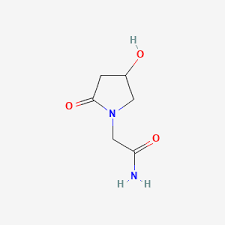 |
| Purity | 99% Purity |
| Classification | Research Use Only (RUO), not for human or animal consumption |
| Storage Temperature | Store in a controlled room temperature, typically between 15°C and 30°C (59°F to 86°F) |
Mechanisms of Action
The precise biochemical mechanisms of oxiracetam remain an active area of investigation. However, several potential mechanisms have been reported in experimental studies, including:
- Modulation of AMPA-sensitive glutamate receptors in neuronal models
- Influence on acetylcholine-related signaling pathways
- Effects on neuronal energy metabolism, including glucose utilization
- Investigation of interactions with 1,4-dihydropyridine receptor binding sites in the cerebral cortex
- Observations related to cell survival signaling pathways in neuronal cultures
Potential Research Applications
Oxiracetam has been referenced in scientific literature examining neuronal signaling pathways, synaptic communication, and cellular responses within neurological systems. Researchers may investigate this compound in controlled laboratory environments to better understand its biochemical interactions and molecular characteristics.
Neurotransmitter Signaling Studies
Oxiracetam has been explored in research examining glutamatergic and cholinergic signaling pathways. Laboratory studies may investigate how the compound interacts with neurotransmitter systems associated with synaptic transmission and neuronal communication.
Receptor Modulation Research
Some experimental models have examined oxiracetam in the context of AMPA-type glutamate receptor activity. Researchers may utilize the compound to study receptor modulation, ligand-receptor interactions, and downstream intracellular signaling pathways.
Synaptic Plasticity and Neural Network Investigations
Oxiracetam may be included in laboratory studies evaluating synaptic plasticity mechanisms, including processes related to neuronal connectivity and signal transmission within neural circuits.
Disclaimer
This information is for educational purposes only and not medical advice. Products are for research use only. Research must follow IRB or IACUC guidelines. Verify information independently before purchasing. By ordering, you agree to our Terms and Conditions. If you are not 100% satisfied with the product you received, please contact us at support@staging.purerawz.co
ATTENTION: All our products are for LABORATORY AND RESEARCH PURPOSES ONLY, not for veterinary or human use
References:
- Bottini, G., Vallar, G., Cappa, S., Monza, G. C., Scarpini, E., Baron, P., Cheldi, A., & Scarlato, G. (1992). Oxiracetam in dementia: a double-blind, placebo-controlled study. Acta Neurologica Scandinavica, 86(3), 237-241. https://doi.org/10.1111/j.1600-0404.1992.tb05077.x
- Saletu, B., Linzmayer, L., GrUNberger, J., & Pietschmann, H. (1985). Double-Blind, Placebo-Controlled, Clinical, Psychometric and Neurophysiological Investigations with Oxiracetam in the Organic Brain Syndrome of Late Life. Neuropsychobiology, 13(1-2), 44-52. https://doi.org/10.1159/000118161
- Europe PMC. (n.d.). Europe PMC. https://europepmc.org/article/med/3594458

Dr. Helma Wennemers
Dr. Helma Wennemers is a globally recognized chemist shaping modern peptide science and molecular design through highly original research in applied biosciences.
Her work explores how precise molecular architecture can be engineered to create new functional systems in chemistry and life sciences. Her contributions continue to redefine contemporary chemical research through creativity, depth, and structural innovation.
Please click here to access instructions on how to make a payment.
How to PayRelated products
-

Aniracetam
Price range: $60.24 through $130.25 Select options This product has multiple variants. The options may be chosen on the product page -
Kava Extract 70% Kavalactones
Price range: $19.66 through $47.52 Select options This product has multiple variants. The options may be chosen on the product page -
CDP Choline (Citicoline)
$28.41 Select options This product has multiple variants. The options may be chosen on the product page -
Piracetam
$24.08 Select options This product has multiple variants. The options may be chosen on the product page


