
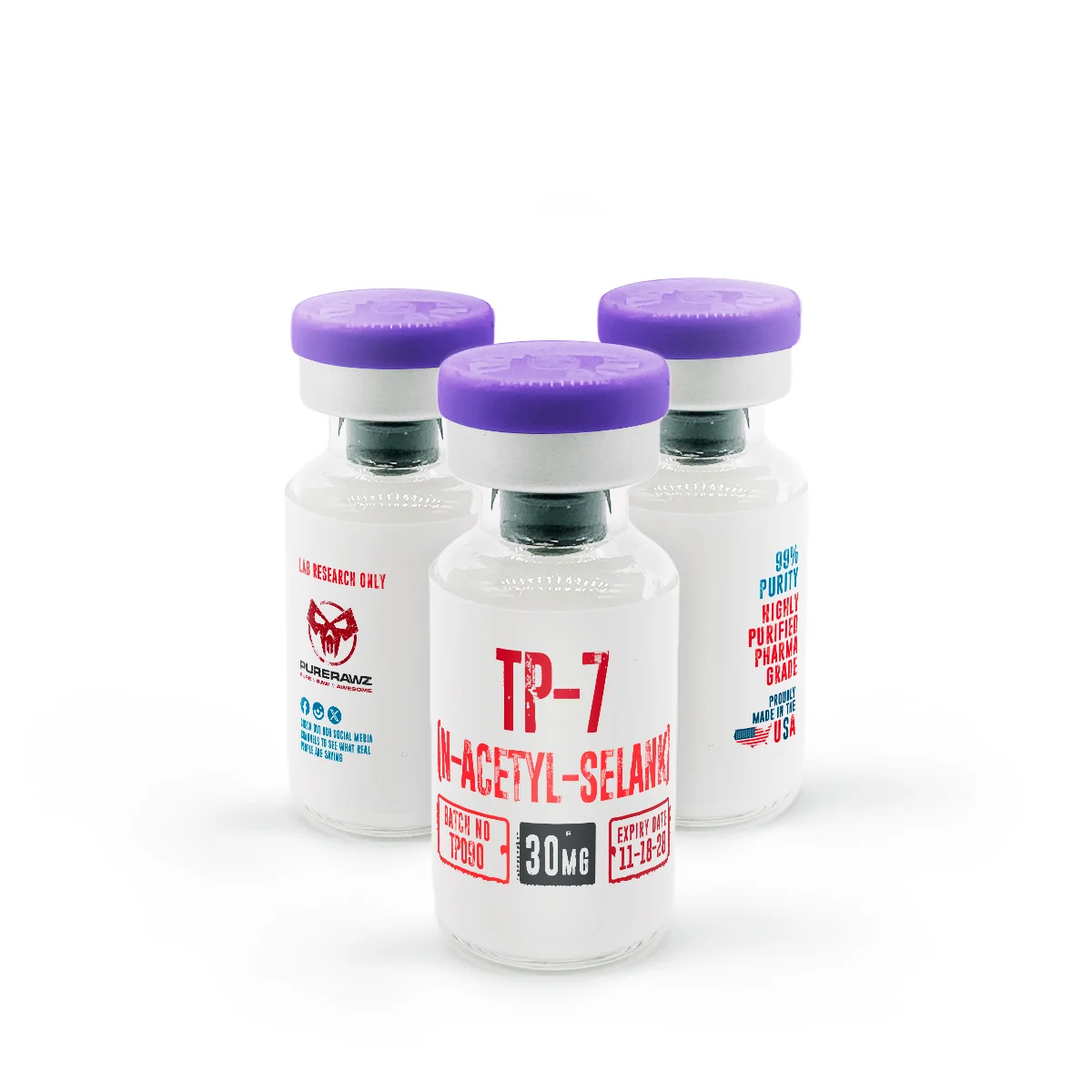
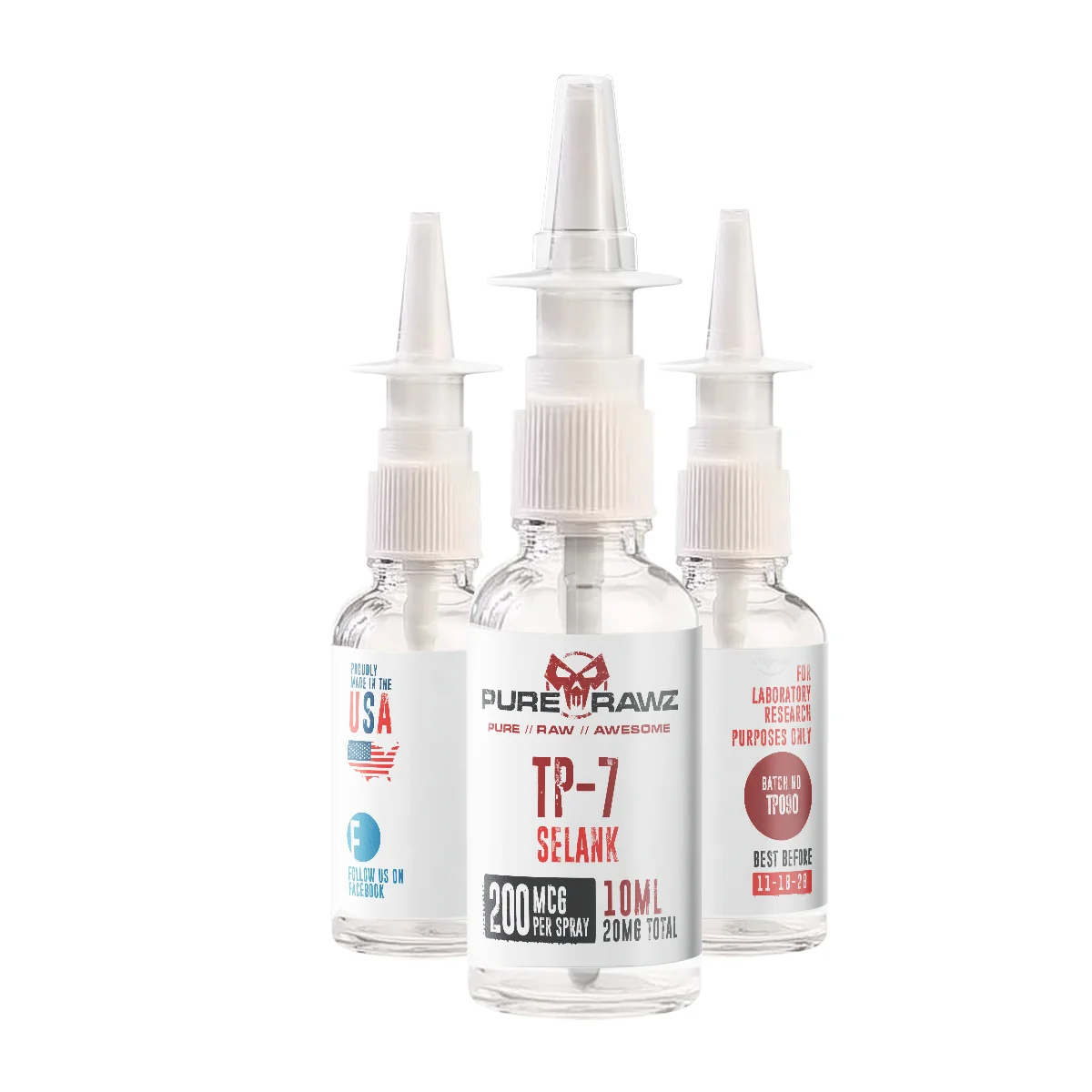
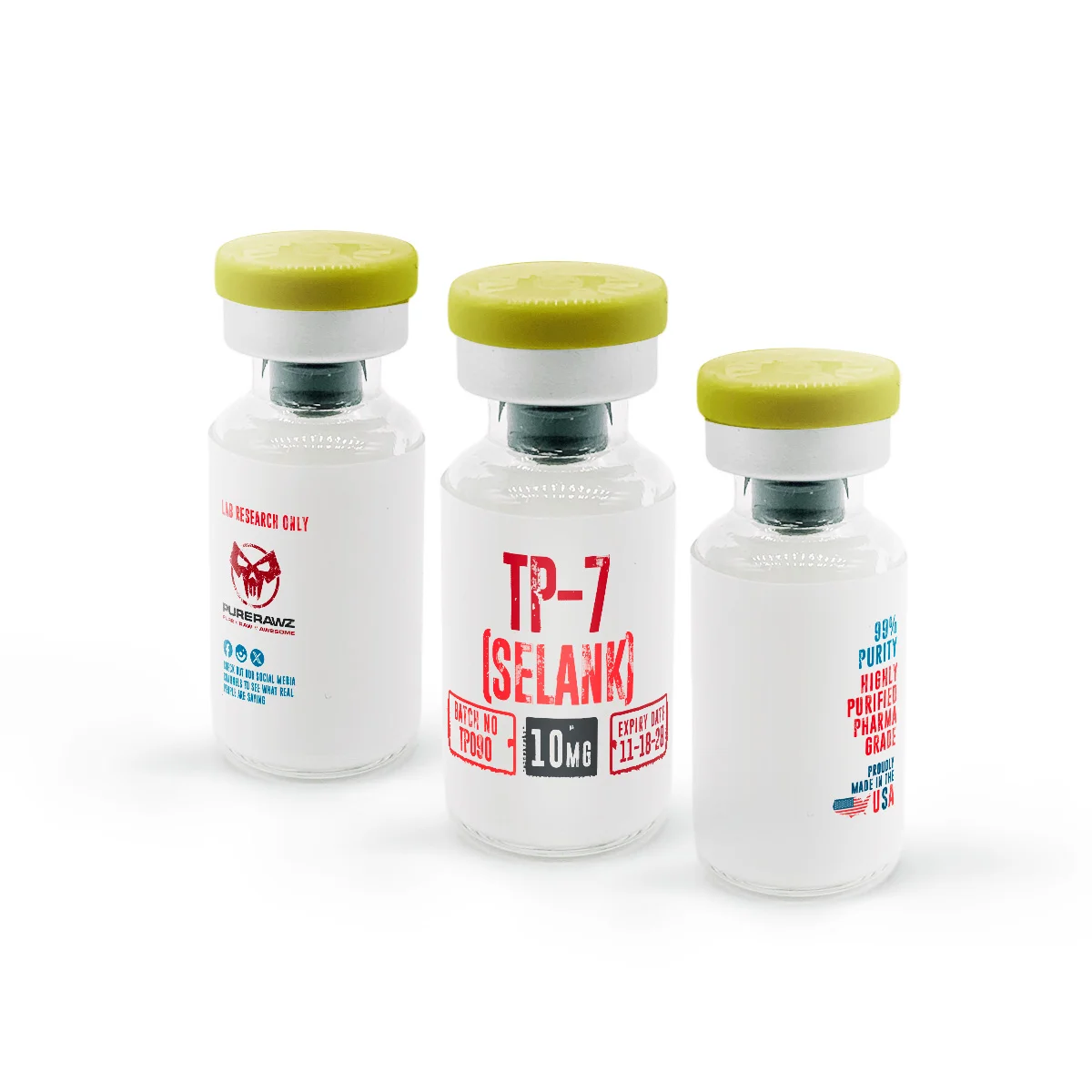
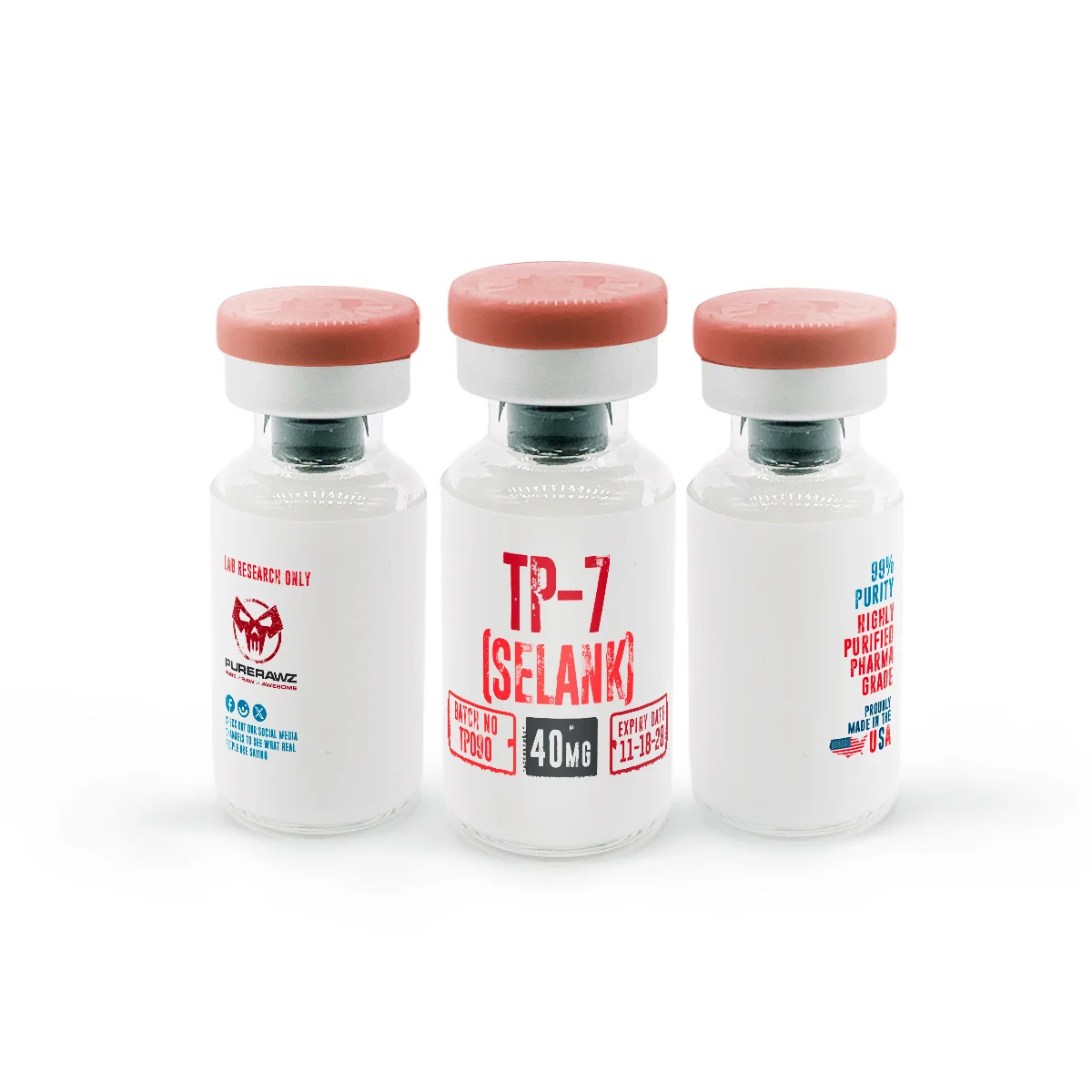
TP-7
Price range: $36.72 through $131.97
Earn 37 - 132 points upon purchasing this product.
✅ 99% Purity – Third-Party Tested
🚚 Free U.S. Shipping on Orders $100+
 Proudly Made in the USA
⚡ Fast & Reliable Shipping
🔒 Secure Checkout Guaranteed
Enjoy 24/7 customer support, 1st & 3rd party verified 99% purity, and free shipping on orders over $100!
Description
TP-7 - Product Information
TP-7 is a synthetic analog of Tuftsin. Clinical studies have shown that it produces anxiolytic effects comparable to that of medicines used to treat anxiety and insomnia. TP-7 has also been found to increase the effects of phenazepam (an anxiolytic drug) in anxiety patients.
In preclinical studies, TP-7 enhanced learning and memory, prevented weight gain, and enhanced antioxidant activity in the liver. Animals administered TP-7 also experienced improved blood flow and reduced blood pressure. Their blood and total cholesterol levels dipped.
PureRawz sells TP-7 for research and laboratory purposes only.
| TP-7 | |
| CAS Number | 129954-34-3 |
| Molar Mass | 751.887 g/mol |
| Chemical Formula | C33H57N11O9 |
| IUPAC Name | 1-[2-({1-[2-({1-[6-Amino-2-(2-amino-3-hydroxy-butyrylamino)-hexanoyl]-pyrrolidine-2-carbonyl}-amino)-5-guanidino-pentanoyl]-pyrrolidine-2-carbonyl}-amino)-acetyl]-pyrrolidine-2-carboxylic acid |
What is TP-7?
TP-7 is a synthetic peptide with seven amino acids in its chain. It is an analog of Tuftsin, a naturally occurring hormone that conducts various functions related to the immune system. Tuftsin is responsible for stimulating an immune response and killing bacteria and tumors. [R][R]
TP-7 was initially developed and produced by the Institute of Molecular Genetics of the Russian Academy of Sciences. It has been approved in Russia for the treatment of generalized anxiety disorders (GAD), a condition in which patients feel anxious for days on end. [R][R]
Clinical studies have highlighted that the effects of TP-7 are similar to that of tranquilizers at low doses. TP-7 has also been found to increase the beneficial effects of benzodiazepines (anxiolytic drugs), while reducing their adverse side effects, such as drowsiness and memory loss. [R]
In preclinical studies, TP-7 has shown that it possesses pronounced anti-anxiety activity. TP-7 has also been shown to act as an antidepressant and anti-stress drug in animals. Furthermore, its nootropic action enabled TP-7 to enhance memory and learning processes in rats. [R]
PureRawz sells TP-7 for laboratory research use only.
TP-7 vs N-Acetyl Selank
TP-7 and N-Acetyl Selank are both synthetic peptide compounds that have been studied for their potential effects on mood regulation, anxiety reduction, and neuroprotection.
TP-7 is a synthetic peptide that consists of a sequence of amino acids. It is derived from the naturally occurring peptide tuftsin.
N-Acetyl Selank is an acetylated version of TP-7, where an acetyl group is added to the peptide molecule. This modification can affect its stability and potential effects.
How does TP-7 Work?
Although its exact mechanism of action remains unknown, here are a few ways TP-7 is believed to act:
May Stabilize Enkephalins
Enkephalins are naturally occurring peptides with potent painkilling effects. A study on mice with different phenotypes of emotional and stress reactions showed that TP-7 treatment inhibited enkephalin degrading enzymes to stabilize enkephalin levels. [R]
Might Bind to GABA receptors
Results from two cell-based studies indicate that TP-7 may bind to GABA receptors. If proven in clinical studies, this would explain TP-7's potential anti-anxiety effects. As benzodiazepines (classical anti-anxiety medications) are also GABA receptor agonists. [R][R][R]
May Increase BDNF levels
Intranasal administration of TP-7 has been shown to stimulate an increase in brain-derived neurotrophic factor (BDNF) levels in the rat brain. BDNF is a key molecule that plays a vital role in learning and memory. This mechanism may help explain TP-7's claimed cognitive effects. [R][R]
Might Influence Neurotransmitter levels
In one rat study, TP-7 increased norepinephrine and reduced serotonin and dopamine levels. However, in another group of mice, TP-7 treatment didn't change serotonin levels but reportedly increased dopamine and norepinephrine levels. Thus, its exact mechanism remains unknown. [R]
TP-7 Research
What follows is a summary of the existing clinical, animal, and cell-based research on TP-7. The information presented in this section is for educational purposes only and shouldn't be constituted medical advice. PureRawz doesn't sell TP-7 for human consumption.
TP-7 and Anxiety
In a clinical trial involving 62 people, those administered TP-7 had reduced anxiety symptoms at the end of the study period. The effects of TP-7 were found to be similar to those of medazepam, an FDA-approved drug for the treatment of anxiety disorders. [R]
Another clinical trial investigated the anxiolytic effects of TP-7 in 60 patients with multiple anxiety disorders. Results indicated that TP-7 possesses pronounced anxiolytic effects. It was also shown that TP-7 treatment improved the patient's quality of life. [R]
Furthermore, in one study of 70 patients, TP-7 reportedly increased the positive effects of phenazepam (an anti-anxiety drug used in some US states). At the same time, TP-7 was found to decrease the drug's side effects, such as memory loss, sedation, sexual disturbances, etc. [R]
Various preclinical studies have also shed light on TP-7's potential anti-anxiety effects. In one animal study, 4 weeks of daily TP-7 treatment reduced anxiety in mice. Another study found that TP-7's anxiolytic effects were more pronounced in mice who were more anxious. [R][R]
TP-7 and Memory
A preclinical study investigated the effects of TP-7 treatment on the memory processes of rats. The animals were given either TP-7 or saline. Findings from the study suggest that TP-7 induces an increase in memory, especially when injected during the memory consolidation phase. [R]
One another animal study found that TP-7 treatment helped preserve memory in monkeys. The study further demonstrated that the anti-stress effects of TP-7 follow a different pathway than previously-studied neuro-hormones and have long-term compensatory character. [R]
However, clinical studies investigating the effects of TP-7 on memory are lacking.
TP-7 and Learning
One animal study compared the effects of TP-7 in rats with initially low levels of learning with those in normal rats. These experiments showed that TP-7 significantly activated the learning process in rats with initially poor learning ability. Plus, these effects increased with each dose. [R]
In another study, TP-7-treated rats learned more quickly how to avoid an electrical shock than their counterparts who weren't administered TP-7 peptide. Furthermore, the treatment group also exhibited fewer anxiety symptoms, highlighting the anxiolytic properties of this research chemical. [R]
TP-7 and Blood Flow
An animal study explored the potential effects of TP-7 treatment on blood pressure and blood flow in sedated cats. Findings from the study reveal that TP-7 increased cerebral blood flow by 24 +/- 2.8%. The drug also induced a 32 +/- 4.3% decrease in blood pressure. [R]
However, while TP-7 did induce positive changes in blood flow and blood pressure, those changes weren't long-lasting. For instance, the increase in blood flow lasted for up to 10 minutes, with the reduction in blood pressure vanishing within 3 minutes.
TP-7 and Cholesterol
Results from an animal study indicate that rats fed a high-fat diet showed a 58% decrease in total cholesterol levels when treated with TP-7. A 22% reduction in triglycerides accompanied this decrease in cholesterol levels. [R]
Additionally, rats fed a high-fat diet retained their initial weight throughout the treatment, with an average weight gain of only 6 grams. These data indicate that TP-7 administration affects the accumulation of fat mass in rats fed with a high-fat diet.
TP-7 and Immune Function
In a clinical trial involving patients with depression, TP-7 treatment reportedly increased IL-6 levels in the subjects' blood cells. The increase in IL-6 levels was observed in patients who had taken TP-7 for two weeks. IL-6 is a protein that helps regulate immune responses. [R]
Aside from that, findings from one cell-based study highlight the potential anti-viral properties of TP-7. The study showed that TP-7 induces the secretion of interferons. These anti-viral particles protect cell cultures from the cytopathological effects of viruses. [R]
TP-7 and Alcohol Withdrawal
To investigate its effects on alcohol withdrawal symptoms, rats who were given a 10% solution of ethanol as their sole drinking source for 6 months were treated with TP-7. Tests conducted at the study end found that TP-7 eliminated anxiety induced by ethanol withdrawal. [R]
In addition to eliminating anxiety, TP-7 also eradicated mechanical allodynia induced by alcohol withdrawal. Mechanical allodynia is a symptom of alcohol withdrawal in which benign stimuli like light touch cause a painful sensation. If left untreated, it can facilitate relapse. [R]
TP-7 and Depression
A rat study was conducted to investigate the effects of TP-7 on symptoms of depression. High doses of TP-7 reportedly counteracted symptoms of depression in the behavior of rats. These results indicate the presence of an antidepressant component in the spectrum of TP-7's activity. [R]
TP-7 and Stress
Findings from an animal study revealed that the peptide, TP-7, enhances the effect of diazepam in reducing anxiety in unpredictable chronic mild stress conditions in rats. It was also shown that the anxiolytic effect of TP-7 is comparable to that of classical benzodiazepine drugs. [R]
TP-7 Summary
Various clinical trials have shown that TP-7 possesses anxiolytic effects. Preclinical studies have highlighted its potential ability to enhance learning and memory, fight depression, reduce blood and total cholesterol levels, and alleviate alcohol withdrawal symptoms. More clinical studies are needed to examine its safety and efficacy in humans.
Disclaimer

Dr. Helma Wennemers
Dr. Helma Wennemers is a globally recognized chemist shaping modern peptide science and molecular design through highly original research in applied biosciences.
Her work explores how precise molecular architecture can be engineered to create new functional systems in chemistry and life sciences. Her contributions continue to redefine contemporary chemical research through creativity, depth, and structural innovation.
Please click here to access instructions on how to make a payment.
How to PayRelated products
-

Galantamine Hydrobromide
$57.37 Select options This product has multiple variants. The options may be chosen on the product page -
Agomelatine
$61.76 Select options This product has multiple variants. The options may be chosen on the product page -
Picamilon Sodium (Nicotinoyl-GABA)
$24.57 Select options This product has multiple variants. The options may be chosen on the product page -
Sulbutiamine
Price range: $17.47 through $61.76 Select options This product has multiple variants. The options may be chosen on the product page


