
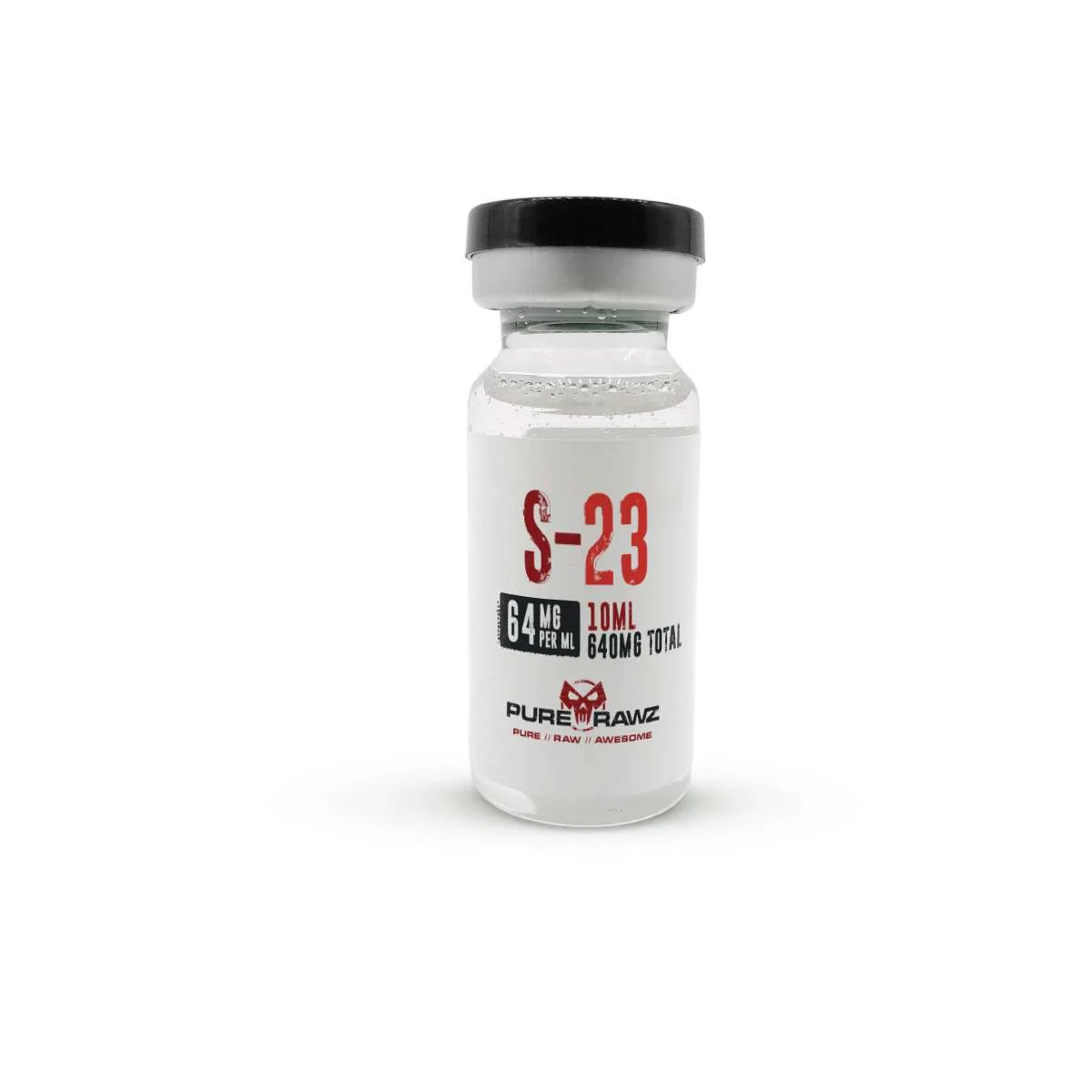
S-23 SARM
Price range: $57.83 through $139.79
Earn 58 - 140 points upon purchasing this product.
✅ 99% Purity – Third-Party Tested
🚚 Free U.S. Shipping on Orders $100+
 Proudly Made in the USA
⚡ Fast & Reliable Shipping
🔒 Secure Checkout Guaranteed
Enjoy 24/7 customer support, 1st & 3rd party verified 99% purity, and free shipping on orders over $100!
Description
S-23 Overview
S-23 is a non-steroidal selective androgen receptor modulator (SARM) that has been investigated in scientific research for its interaction with androgen receptors. Selective androgen receptor modulators are compounds designed to interact with androgen receptors in a more targeted manner compared with traditional anabolic agents.
In laboratory research settings, SARMs are explored for their ability to bind selectively to androgen receptors located in tissues such as muscle and bone. This selective receptor interaction is studied to better understand androgen receptor signaling and anabolic pathway activation in controlled experimental models.
Chemical and Molecular Properties
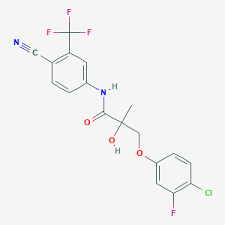
| PubChem CID | 67546346 |
| Molecular Formula | C18H13ClF4N2O3 |
| Molecular Weight | 416.8 g/mol |
| Synonyms | S23, CCTH-methylpropionamide |
| IUPAC | (2S)-3-(4-chloro-3-fluorophenoxy)-N-[4-cyano-3-(trifluoromethyl)phenyl]-2-hydroxy-2-methylpropanamide |
| CAS | 1010396-29-8 |
| Labeling | Research Use Only (RUO), not for human or animal consumption |
| Chemical Structure Depiction |
|
| Purity | 99% Purity |
| Classification | Research Use Only (RUO) |
| Storage Temperature | Store in a controlled room temperature, typically between 15°C and 30°C (59°F to 86°F) |
Mechanisms of Action
In experimental models, S-23 is studied for its interaction with androgen receptors (AR), which are part of the nuclear receptor family involved in regulating gene expression.
When a compound interacts with these receptors in laboratory assays, it may initiate receptor-mediated signaling pathways that influence cellular processes associated with anabolic activity.
Researchers investigate S-23 to better understand:
- Androgen receptor binding characteristics
- Selective activation of receptor signaling pathways
- Tissue-specific receptor responses in controlled models
Potential Research Applications
S-23 has attracted attention in scientific research due to its selective interaction with androgen receptors (AR). In controlled laboratory environments, researchers investigate this compound to better understand receptor signaling, tissue-specific responses, and androgen-related cellular pathways.
Androgen Receptor Signaling Studies
Experimental studies may examine how S-23 influences androgen receptor signaling in muscle-related cellular models. These investigations aim to characterize how selective receptor activation may affect cellular processes associated with protein synthesis pathways and tissue metabolism under controlled research conditions.
Skeletal Muscle Tissue Models
Experimental studies may examine how S-23 influences androgen receptor signaling in muscle-related cellular models. These investigations aim to characterize how selective receptor activation may affect cellular processes associated with protein synthesis pathways and tissue metabolism under controlled research conditions.
Bone Tissue Research
S-23 is also investigated in bone-related experimental models to study androgen receptor activity within bone tissue. Researchers analyze receptor-mediated signaling pathways that may influence cellular processes involved in bone structure and remodeling.
Metabolic and Tissue Interaction Studies
In laboratory research, S-23 may be explored for its potential influence on cellular signaling networks involved in metabolic regulation and tissue interactions. These studies help scientists examine how androgen receptor modulators interact with pathways related to muscle and adipose tissue dynamics.
Comparative SARM Research
Because of its high receptor selectivity, S-23 is sometimes included in comparative studies examining different SARMs and their receptor-binding characteristics. Researchers analyze differences in receptor affinity, signaling pathways, and tissue-specific responses to better understand how various modulators influence androgen receptor activity.
Disclaimer
This information is for educational purposes only and not medical advice. Products are for research use only. Research must follow IRB or IACUC guidelines. Verify information independently before purchasing. By ordering, you agree to our Terms and Conditions. If you are not 100% satisfied with the product you received, please contact us at support@staging.purerawz.co
ATTENTION: All our products are for LABORATORY AND RESEARCH PURPOSES ONLY, not for veterinary or human use
References:
- Jones, A., Chen, J., Hwang, D. J., Miller, D. D., & Dalton, J. T. (2008). Preclinical characterization of a (S)-N-(4-Cyano-3-Trifluoromethyl-Phenyl)-3-(3-Fluoro, 4-Chlorophenoxy)-2-Hydroxy-2-Methyl-Propanamide: a selective androgen receptor modulator for hormonal male contraception. Endocrinology, 150(1), 385-395. https://doi.org/10.1210/en.2008-0674
- Cutler, C., Viljanto, M., Hincks, P., Habershon-Butcher, J., Scarth, J., & Van Eenoo, P. (2024). Detection of the selective androgen receptor modulator S-23 and its metabolites in equine urine and plasma following oral administration. Drug Testing and Analysis, 17(5), 601-611. https://doi.org/10.1002/dta.3758

Dr. Helma Wennemers
Dr. Helma Wennemers is a globally recognized chemist shaping modern peptide science and molecular design through highly original research in applied biosciences.
Her work explores how precise molecular architecture can be engineered to create new functional systems in chemistry and life sciences. Her contributions continue to redefine contemporary chemical research through creativity, depth, and structural innovation.
Please click here to access instructions on how to make a payment.
How to PayRelated products
-

Enclomiphene Citrate
Price range: $62.85 through $133.90 Select options This product has multiple variants. The options may be chosen on the product page -
Evodiamine
Price range: $21.13 through $34.53 Select options This product has multiple variants. The options may be chosen on the product page -
1-Andro
Price range: $34.41 through $132.80 Select options This product has multiple variants. The options may be chosen on the product page -
Eros Tablets (Mirodenafil + Amino Tadalafil + SR-9011 + GW-0742)
$135.35 Select options This product has multiple variants. The options may be chosen on the product page


