
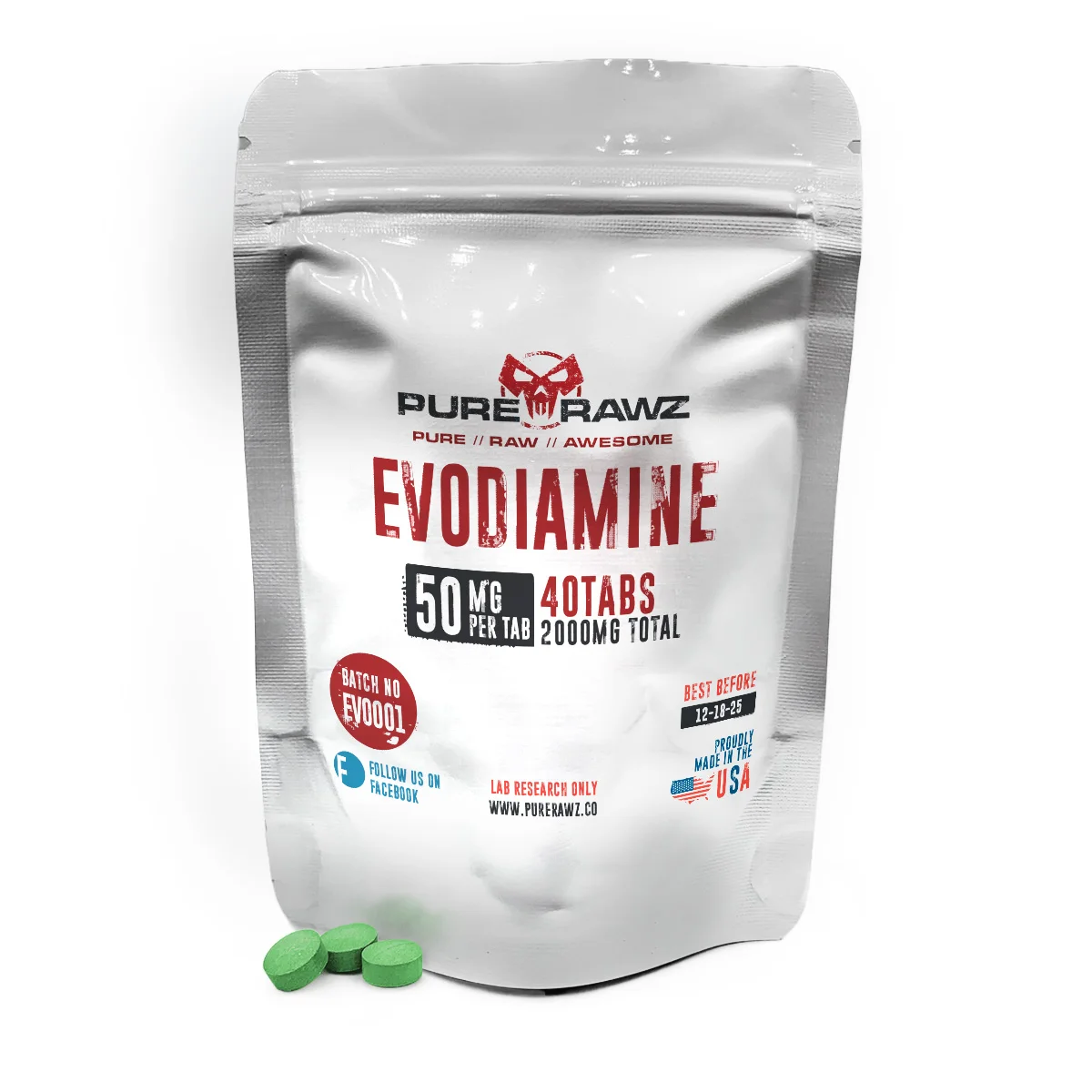
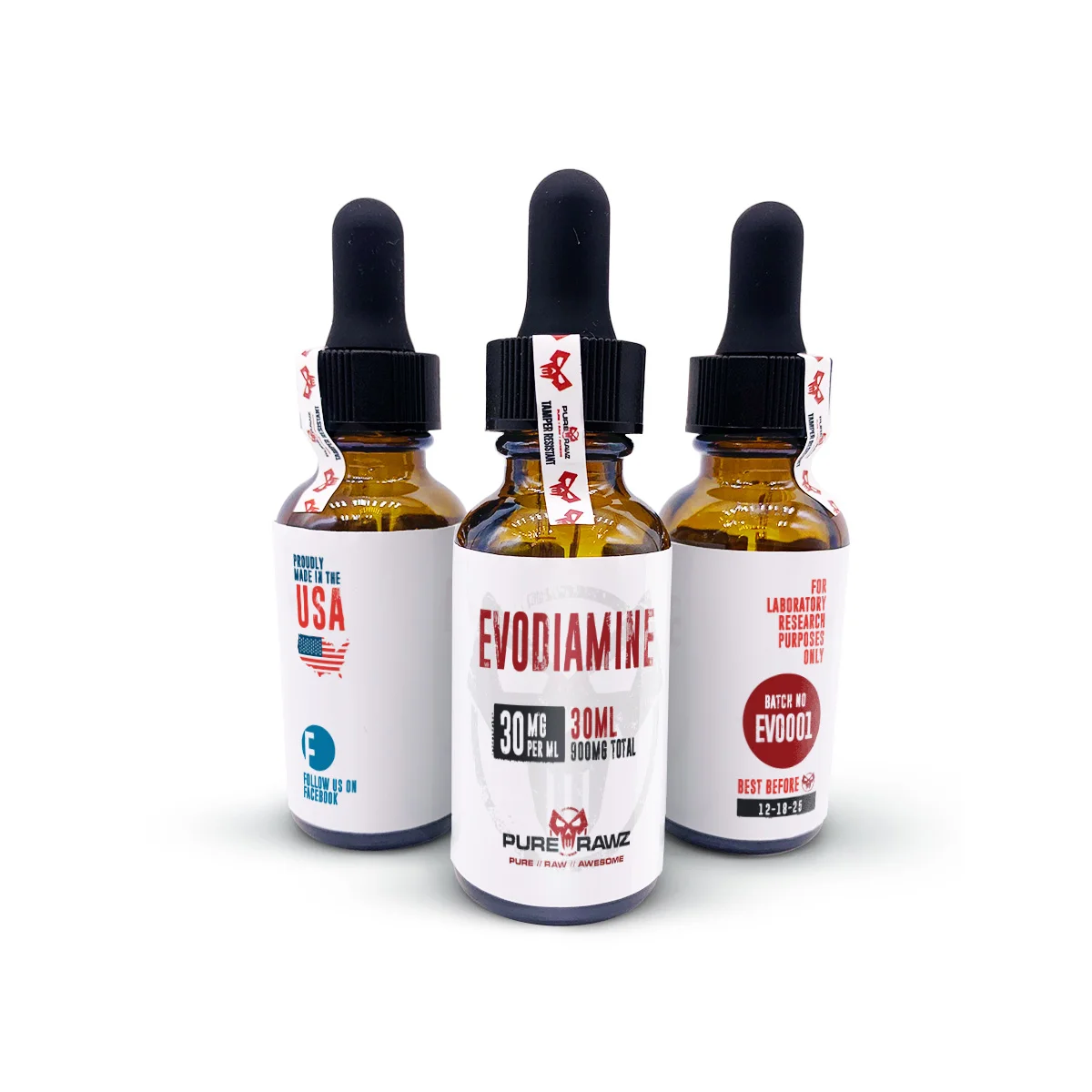
Evodiamine
Price range: $21.13 through $34.53
Earn 21 - 35 points upon purchasing this product.
✅ 99% Purity – Third-Party Tested
🚚 Free U.S. Shipping on Orders $100+
 Proudly Made in the USA
⚡ Fast & Reliable Shipping
🔒 Secure Checkout Guaranteed
Enjoy 24/7 customer support, 1st & 3rd party verified 99% purity, and free shipping on orders over $100!
Description
Overview of Evodiamine
The plant Evodiae fructus is the source of the bioactive alkaloid (a naturally occurring amino produced by a plant) extract known as evodiamine. Commonly abbreviated as EVO, evodiamine interacts with thermosensory receptors and modulates cellular pathways associated with heat signaling. EVO is currently under investigation and has not been approved by the FDA. It is exclusively granted for research purposes only.
Chemical and Molecular Properties
| Evodiamine | |
| PubChem CID | 442088 |
| Molecular Formula | C19H17N3O |
| Molecular Weight | 303.4 g/mol |
| Synonyms | Evodiamine
d-Evodiamine Evodiamine, (+)- C01825BVNL |
| IUPAC | (1S)-21-methyl-3,13,21-triazapentacyclo[11.8.0.02,10.04,9.015,20]henicosa-2(10),4,6,8,15,17,19-heptaen-14-one |
| CAS | 518-17-2 |
| Labeling | Research Use Only (RUO), not for human or animal consumption. |
| Chemical Structure Depiction | 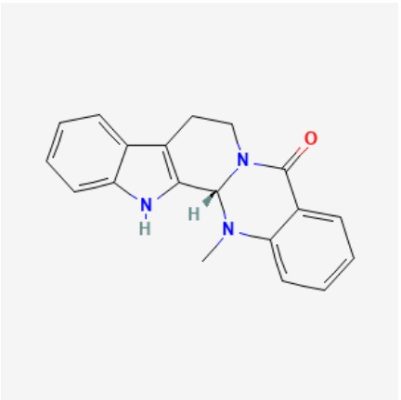 |
| Purity | ≥98% |
| Classification | Research Use Only (RUO) |
| Storage Temperature | Lyophilized: −20 °C or colder |
| Solubility | Water, DMSO (research-grade solvents) |
| Safety | Handle with gloves, a lab coat, eye protection; use a fume hood if dust/aerosol is possible |
Various Mechanisms of Evodiamine
Evodiamine on lipid-related pathways
Evodiamine acts as a non-pungent vanilloid (TRPV1) receptor agonist, modulating cellular lipid metabolism and thermogenic signaling pathways. Preclinical models indicate that evodiamine enhances mitochondrial GDP binding in brown adipose tissue, upregulates lipolytic activity in adipose tissue, and influences energy dissipation mechanisms, reflecting receptor-mediated regulation of lipid processing and thermogenic activity. These effects occur via TRPV1 receptor activation and downstream mitochondrial and enzymatic pathways, providing a mechanistic framework for studying lipid regulation and energy signaling at the cellular level.
Interaction of Evodiamine with Inflammatory Pathways
Evodiamine, a principal alkaloid of Evodia rutaecarpa, modulates cellular inflammatory signaling pathways. In immune-derived cell models, evodiamine has been shown to inhibit cyclooxygenase-2 (COX-2) expression and suppress NF-κB activation, affecting downstream eicosanoid-related signaling. Under the tested conditions, evodiamine does not alter inducible nitric oxide synthase (iNOS)-dependent nitric oxide production, indicating selective modulation of inflammatory pathways at the molecular level. Still, it is important to note that Evodiamine's molecular interactions with pro-inflammatory signaling components do not suggest therapeutic or physiological effects.
Evodiamine and Metastatic Pathways
Evodiamine has been studied in experimental models for its effects on cell migration, invasion, and proliferation signaling. In carcinoma-derived cell lines, evodiamine has been shown to influence cell movement and interaction with extracellular matrix components, including reduced penetration through matrix substrates. Extended exposure in controlled laboratory conditions has also been associated with modulation of cell growth dynamics in a concentration- and time-dependent manner. In preclinical models, evodiamine has been observed to affect the development of metastatic nodules, suggesting involvement in pathways related to cell cycle regulation, adhesion signaling, and metastatic progression mechanisms. However, these findings are limited to experimental research settings and do not imply therapeutic application or clinical efficacy.
Why Choose Purerawz for Evodiamine?
Buy Evodiamine for laboratory research use from our online shop. At Purerawz, we provide high-quality reference materials. Each research compound comes with a Certificate of Analysis for verification of purity and concentration.
Note:
Evodiamine is an investigational compound currently undergoing clinical evaluation and has not been established as safe or effective for any therapeutic use
Disclaimer
This information is for educational purposes only and not medical advice. Products are for research use only. Research must follow IRB or IACUC guidelines. Verify information independently before purchasing. By ordering, you agree to our Terms and Conditions. If you are not 100% satisfied with the product you received, please contact us at support@staging.purerawz.co
ATTENTION: All our products are for LABORATORY AND RESEARCH PURPOSES ONLY, not for veterinary or human use
Reference Links
Kobayashi, Y., Nakano, Y., Kizaki, M., Hoshikuma, K., Yokoo, Y., Kamiya, T., & Mori, Y. (2001). Capsaicin-like anti-obese activities of evodiamine from fruits of Evodia rutaecarpa, a vanilloid receptor agonist. Planta Medica, 67(7), 628–633. https://pubmed.ncbi.nlm.nih.gov/11582540/
Choi, Y. H., Shin, E. M., Kim, Y. S., Cai, X. F., Lee, J. J., & Kim, H. P. (2006). Anti-inflammatory principles from the fruits of Evodia rutaecarpa and their cellular action mechanisms. Archives of Pharmacal Research, 29(4), 293–297. https://pubmed.ncbi.nlm.nih.gov/16681034/
Ogasawara, M., Matsunaga, T., Takahashi, S., Saiki, I., Suzuki, H., & Saito, H. (2001). Anti-invasive and anti-metastatic activities of evodiamine. Biological & Pharmaceutical Bulletin, 24(8), 917–920. https://www.jstage.jst.go.jp/article/bpb/24/8/24_8_917/_article

Dr. Helma Wennemers
Dr. Helma Wennemers is a globally recognized chemist shaping modern peptide science and molecular design through highly original research in applied biosciences.
Her work explores how precise molecular architecture can be engineered to create new functional systems in chemistry and life sciences. Her contributions continue to redefine contemporary chemical research through creativity, depth, and structural innovation.
Please click here to access instructions on how to make a payment.
How to PayRelated products
-

Arimistane
Price range: $67.96 through $234.28 Select options This product has multiple variants. The options may be chosen on the product page -
6-OXO
Price range: $64.87 through $170.84 Select options This product has multiple variants. The options may be chosen on the product page -
LGD-3303
Price range: $84.93 through $296.69 Select options This product has multiple variants. The options may be chosen on the product page -
DHEA (Dehydroepiandrosterone)
Price range: $15.49 through $38.44 Select options This product has multiple variants. The options may be chosen on the product page


