
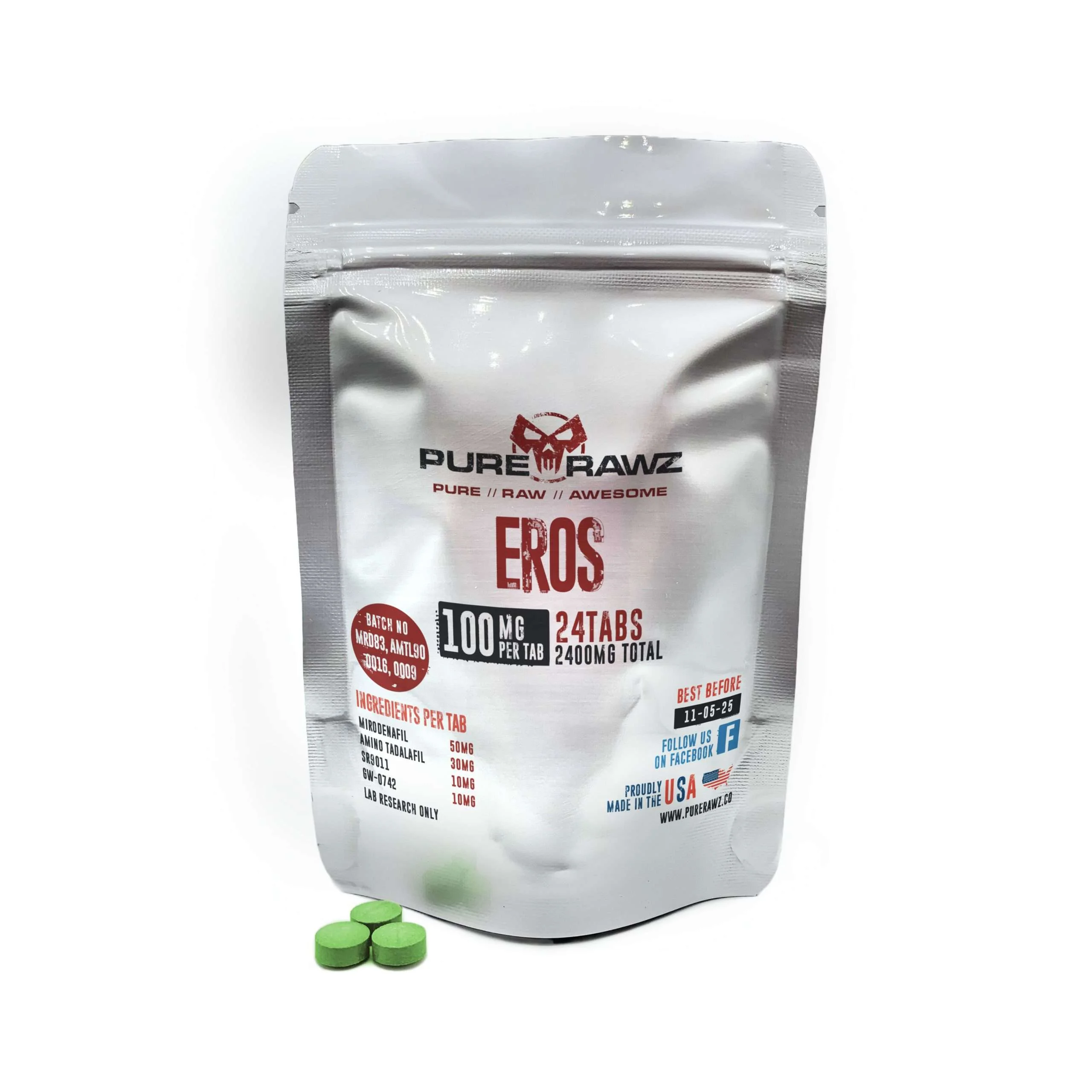
Eros Tablets (Mirodenafil + Amino Tadalafil + SR-9011 + GW-0742)
$135.35
Earn 135 points upon purchasing this product.
✅ 99% Purity – Third-Party Tested
🚚 Free U.S. Shipping on Orders $100+
 Proudly Made in the USA
⚡ Fast & Reliable Shipping
🔒 Secure Checkout Guaranteed
Enjoy 24/7 customer support, 1st & 3rd party verified 99% purity, and free shipping on orders over $100!
Description
Overview
The Mirodenafil + Amino Tadalafil + SR-9011 + GW-0742 stack is an investigational multi-compound formulation designed for laboratory research exploring molecular pathways related to nuclear receptor signaling, phosphodiesterase regulation, metabolic gene expression, and circadian biology.
This stack combines two phosphodiesterase-5 (PDE5) inhibitors with two metabolic and nuclear receptor modulators. The compounds are commonly examined in in vitro studies and preclinical experimental models to investigate interactions between cyclic nucleotide signaling, transcriptional regulation, circadian clock mechanisms, and lipid metabolism pathways.
In research settings, combinations of these compounds may be used to explore interactions between PDE-mediated cyclic nucleotide signaling, REV-ERB-mediated transcriptional repression, and PPAR-δ-regulated metabolic gene expression within experimental systems.
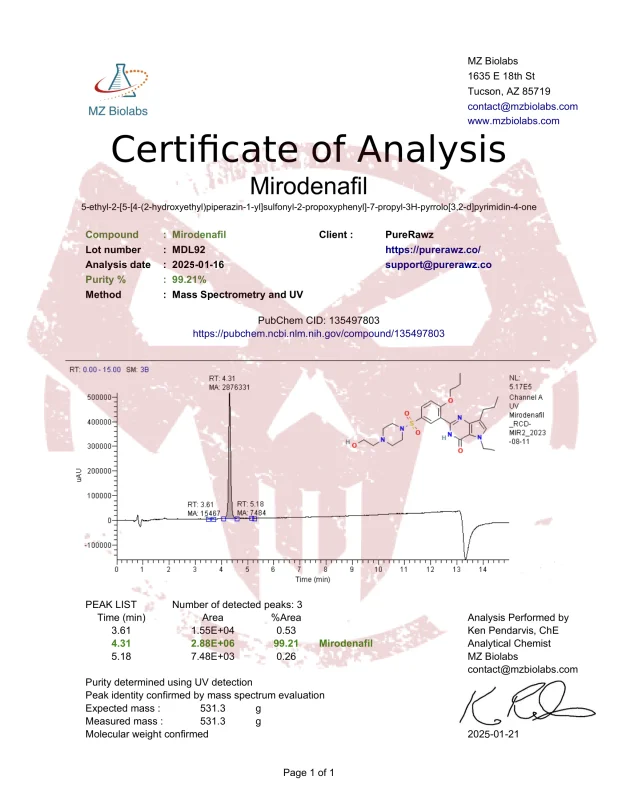
Mirodenafil
Mirodenafil is a small-molecule compound classified as a phosphodiesterase-5 (PDE5) inhibitor. In laboratory environments, it is investigated for its ability to modulate cyclic guanosine monophosphate (cGMP) signaling pathways through inhibition of the PDE5 enzyme.
In biochemical systems, PDE5 regulates intracellular cGMP concentrations by catalyzing its hydrolysis. Experimental inhibition of this enzyme allows researchers to examine downstream signaling pathways linked to cyclic nucleotide regulation. These pathways are frequently studied in cell culture assays, molecular signaling experiments, and preclinical pharmacology research models.
Chemical and Molecular Properties
| Property | Data |
| CAS Number | 862189-95-5 |
| Molecular Formula | C26H37N5O5S |
| Molar Mass | 531.7 g/mol |
| Chemical Class | Phosphodiesterase-5 inhibitor |
| IUPAC Name | 5-ethyl-2-[5-[4-(2-hydroxyethyl)piperazin-1-yl]sulfonyl-2-propoxyphenyl]-7-propyl-3H-pyrrolo[3,2-d]pyrimidin-4-one |
Working Mechanism
Mirodenafil functions through inhibition of phosphodiesterase type-5 (PDE5), an enzyme responsible for the hydrolytic degradation of cyclic guanosine monophosphate (cGMP).
In biochemical signaling pathways:
- Nitric oxide signaling stimulates guanylate cyclase, leading to cGMP synthesis.
- PDE5 catalyzes the conversion of cGMP into inactive 5'-GMP, reducing intracellular cyclic nucleotide levels.
- Mirodenafil binds to the catalytic domain of PDE5, preventing cGMP hydrolysis.
In experimental models, this results in sustained intracellular cGMP levels, enabling investigation of:
- protein kinase G (PKG) signaling pathways
- regulation of ion channel activity
- molecular pathways involved in smooth-muscle signaling and vascular cell biology
Such mechanisms are commonly studied in cell culture assays measuring cyclic nucleotide signaling activity.
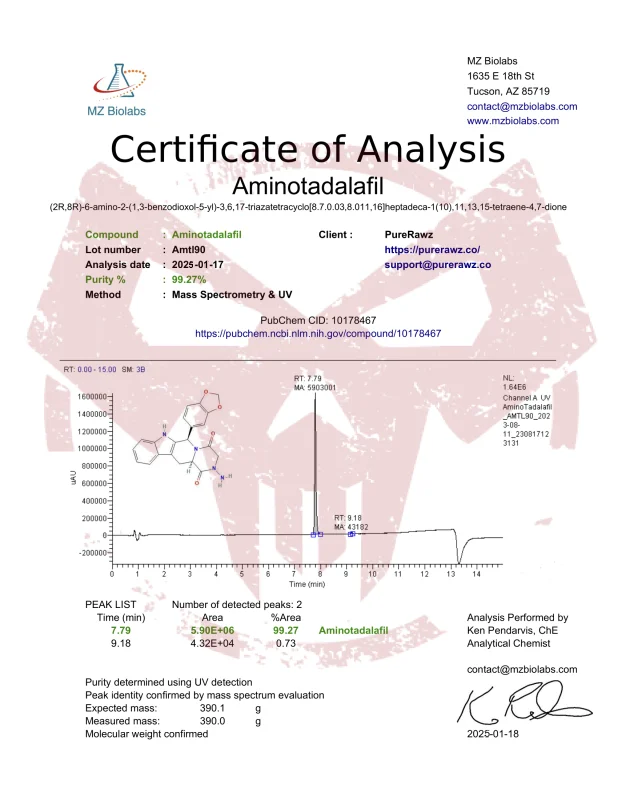
Amino Tadalafil
Amino Tadalafil is a structural derivative related to tadalafil, belonging to the class of phosphodiesterase-5 (PDE5) inhibitory compounds. Within experimental biochemical research, this compound is investigated for its capacity to interact with the PDE5 catalytic site, influencing intracellular cGMP turnover.
In laboratory models, PDE5 inhibitors are commonly utilized to study nitric-oxide-cGMP signaling cascades, which play a role in various cellular signaling processes. Investigational studies involving tadalafil analogs often focus on enzyme binding affinity, signal transduction modulation, and transcriptional responses triggered by cyclic nucleotide signaling.
Chemical and Molecular Properties
| Property | Data |
| Molecular Formula | C21H18N4O4 |
| Molar Mass | 390.4 g/mol |
| Chemical Class | PDE5 inhibitor derivative |
| Structural Category | Tadalafil analog |
Working Mechanism
Amino Tadalafil derivatives act as competitive inhibitors of phosphodiesterase-5, affecting intracellular cyclic nucleotide metabolism.
The molecular process involves:
- Binding to the PDE5 catalytic site
- Preventing enzymatic breakdown of cyclic guanosine monophosphate (cGMP)
- Sustaining intracellular cGMP concentrations within experimental systems
Elevated cGMP levels can activate protein kinase G signaling pathways, influencing multiple cellular processes including:
- intracellular signaling cascades
- transcription factor activation
- regulation of metabolic signaling pathways
In laboratory environments, these processes are commonly investigated through biochemical enzyme inhibition assays and gene expression analysis in cellular models.
SR-9011
SR-9011 is a synthetic small-molecule compound that functions as an agonist of the nuclear receptors REV-ERBα and REV-ERβ. These receptors are transcriptional regulators involved in circadian rhythm control and metabolic gene expression.
In molecular biology research, REV-ERB receptors act as ligand-dependent transcriptional repressors that regulate components of the circadian clock machinery. Experimental ligands such as SR-9011 are frequently used in in vitro transcription assays and preclinical models to evaluate the relationship between nuclear receptor signaling and circadian gene networks.
Chemical and Molecular Properties
| Property | Data |
| CAS Number | 1379686-29-9 |
| Molecular Formula | C23H31ClN4O3S |
| Molar Mass | 479.0 g/mol |
| Chemical Class | REV-ERB nuclear receptor agonist |
| IUPAC Name | 3-[[(4-chlorophenyl)methyl-[(5-nitrothiophen-2-yl)methyl]amino]methyl]-N-pentylpyrrolidine-1-carboxamide |
Working Mechanism
SR-9011 functions by binding to REV-ERBα and REV-ERBβ nuclear receptors, which are transcriptional repressors within the circadian regulatory network.
At the molecular level:
- SR-9011 binds to the ligand-binding domain of REV-ERB receptors.
- This interaction promotes recruitment of corepressor complexes, including NCoR and HDAC3.
- These complexes suppress transcription of REV-ERB target genes.
REV-ERB signaling influences transcription of genes involved in:
- circadian rhythm regulation
- metabolic pathway control
- cellular energy homeostasis
These mechanisms are commonly examined in experimental models evaluating circadian transcription cycles and metabolic gene expression patterns.
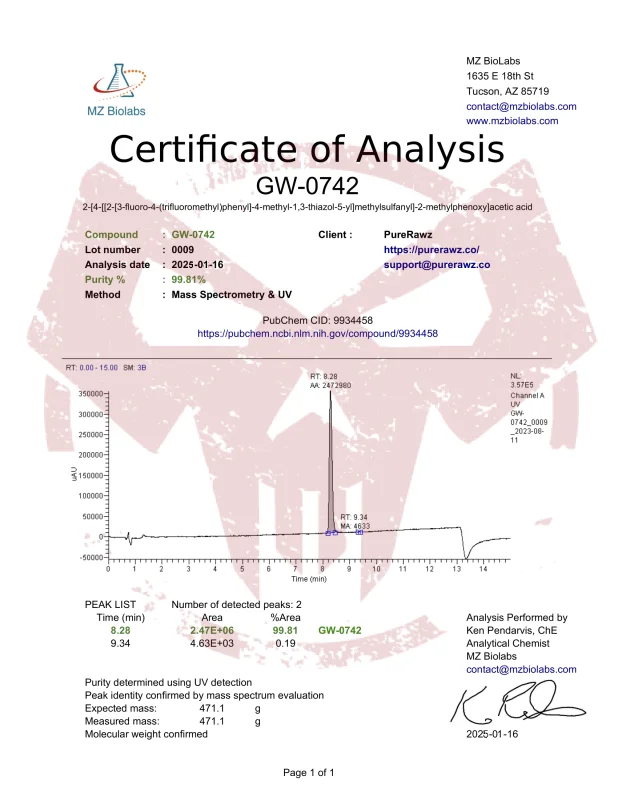
GW-0742
GW-0742 is a potent and selective agonist of peroxisome proliferator-activated receptor delta (PPAR-δ), a nuclear receptor that functions as a transcription factor regulating genes involved in lipid metabolism, mitochondrial function, and cellular energy regulation.
In experimental research, PPAR-δ ligands are widely used to investigate transcriptional control of metabolic pathways. Upon ligand binding, PPAR-δ forms heterodimers with the retinoid X receptor (RXR) and interacts with peroxisome proliferator response elements (PPREs) within DNA.
Chemical and Molecular Properties
| Property | Data |
| CAS Number | 317318-84-6 |
| Molecular Formula | C21H17F4NO3S2 |
| Molar Mass | 471.5 g/mol |
| Chemical Class | PPAR-δ agonist |
| IUPAC Name | 2-[4-[[2-[3-fluoro-4-(trifluoromethyl)phenyl]-4-methyl-1,3-thiazol-5-yl]methylsulfanyl]-2-methylphenoxy]acetic acid |
Working Mechanism
GW-0742 activates peroxisome proliferator-activated receptor delta (PPAR-δ), a ligand-activated transcription factor.
The molecular signaling process involves:
- GW-0742 binding to the PPAR-δ ligand-binding domain.
- Activated PPAR-δ forming a heterodimer with retinoid X receptor (RXR).
- The heterodimer binding to peroxisome proliferator response elements (PPREs) within DNA.
This binding regulates transcription of genes associated with:
- fatty acid transport and oxidation
- mitochondrial energy metabolism
- cellular lipid utilization pathways
These transcriptional mechanisms are widely examined in experimental metabolic research models and in vitro gene expression assays.
Research Applications in Laboratory Settings
Circadian Rhythm and Molecular Clock Research
SR-9011 is frequently used in in vitro circadian rhythm experiments to examine:
- transcriptional regulation of BMAL1 and CLOCK target genes
- interactions between REV-ERB nuclear receptors and circadian transcription loops
- modulation of clock gene expression patterns in cellular models
These experiments help characterize the molecular architecture of circadian transcription networks.
Metabolic Gene Expression Studies
GW-0742 is commonly employed in preclinical metabolic research models to investigate:
- transcriptional regulation of fatty-acid oxidation genes
- mitochondrial gene expression patterns
- cellular lipid metabolism signaling pathways
These studies often utilize cell culture systems and molecular reporter assays to analyze transcriptional activation.
Cyclic Nucleotide Signaling Research
Mirodenafil and amino tadalafil derivatives are utilized in experimental PDE5 inhibition studies, particularly in:
- cGMP signaling assays
- investigations of protein kinase G activation
- studies examining cyclic nucleotide signaling cascades
Such experiments may involve biochemical assays measuring cGMP concentrations or PDE activity.
Integrated Metabolic and Transcriptional Research Models
The combination of PDE5 inhibitors with nuclear receptor modulators allows researchers to explore interactions between cyclic nucleotide signaling and transcriptional regulation pathways.
Experimental models may investigate:
- cross-talk between PPAR signaling and circadian clock regulators
- transcriptional responses to simultaneous REV-ERB and PPAR-δ modulation
- metabolic pathway regulation in cell-based gene expression studies
These approaches are used to characterize complex signaling networks controlling cellular metabolism and transcriptional regulation.
Why Choose Purerawz for Mirodenafil + Amino Tadalafil + SR-9011 + GW-0742 Research Stack?
Buy Mirodenafil + Amino Tadalafil + SR-9011 + GW-0742 Research Stack for laboratory research use from our online shop. At Purerawz, we provide high-quality reference materials. Each research compound comes with a Certificate of Analysis for verification of purity and concentration.
Disclaimer
This information is for educational purposes only and not medical advice. Products are for research use only. Research must follow IRB or IACUC guidelines. Verify information independently before purchasing. By ordering, you agree to our Terms and Conditions. If you are not 100% satisfied with the product you received, please contact us at support@staging.purerawz.co
Reference Links
- Kim, F., Singh, P., Jo, H., Xi, T., Song, D., Ku, S. K., & Choung, J. J. (2024). Therapeutic effects of mirodenafil, a phosphodiesterase 5 inhibitor, on stroke models in rats. Neurotherapeutics, 22(1), e00463. https://doi.org/10.1016/j.neurot.2024.e00463
- Sadek, A. A., Sabra, M. S., Ali, M. F., Abdelhamid, H. N., & Hussein, K. (2025). Potential of tadalafil and tadalafil-cellulose nanocomposite in preventing postsurgical abdominal adhesions in a rat cecal abrasion model. Scientific Reports, 15(1), 31210. https://doi.org/10.1038/s41598-025-14894-0
- Sandu, C., Dumas, M., Malan, A., Sambakhe, D., Marteau, C., Nizard, C., Schnebert, S., Perrier, E., Challet, E., Pevet, P., & Felder-Schmittbuhl, M. (2012). Human skin keratinocytes, melanocytes, and fibroblasts contain distinct circadian clock machineries. Cellular and Molecular Life Sciences, 69(19), 3329-3339. https://doi.org/10.1007/s00018-012-1026-1
- Lundell, K., Thulin, P., Hamsten, A., & Ehrenborg, E. (2007). Alternative splicing of human peroxisome proliferator-activated receptor delta (PPARdelta):effects on translation efficiency and trans-activation ability. BMC Molecular Biology, 8(1), 70. https://doi.org/10.1186/1471-2199-8-70

Dr. Helma Wennemers
Dr. Helma Wennemers is a globally recognized chemist shaping modern peptide science and molecular design through highly original research in applied biosciences.
Her work explores how precise molecular architecture can be engineered to create new functional systems in chemistry and life sciences. Her contributions continue to redefine contemporary chemical research through creativity, depth, and structural innovation.
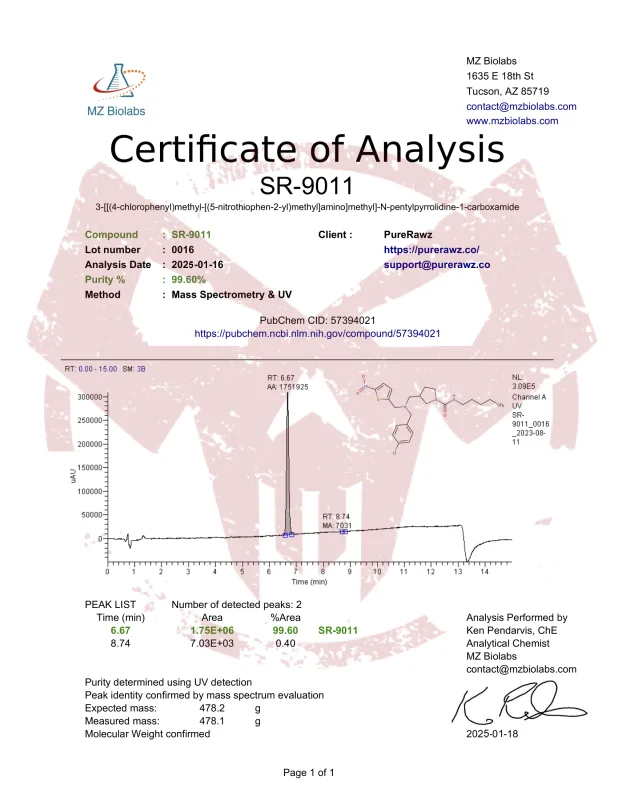
COA
Please click here to access instructions on how to make a payment.
How to PayRelated products
-

Enclomiphene Citrate
Price range: $62.85 through $133.90 Select options This product has multiple variants. The options may be chosen on the product page -
Amino Tadalafil
Price range: $31.13 through $78.15 Select options This product has multiple variants. The options may be chosen on the product page -
Arimistane
Price range: $67.96 through $234.28 Select options This product has multiple variants. The options may be chosen on the product page -
RAD 140 (Testolone)
Price range: $35.50 through $184.72 Select options This product has multiple variants. The options may be chosen on the product page


