
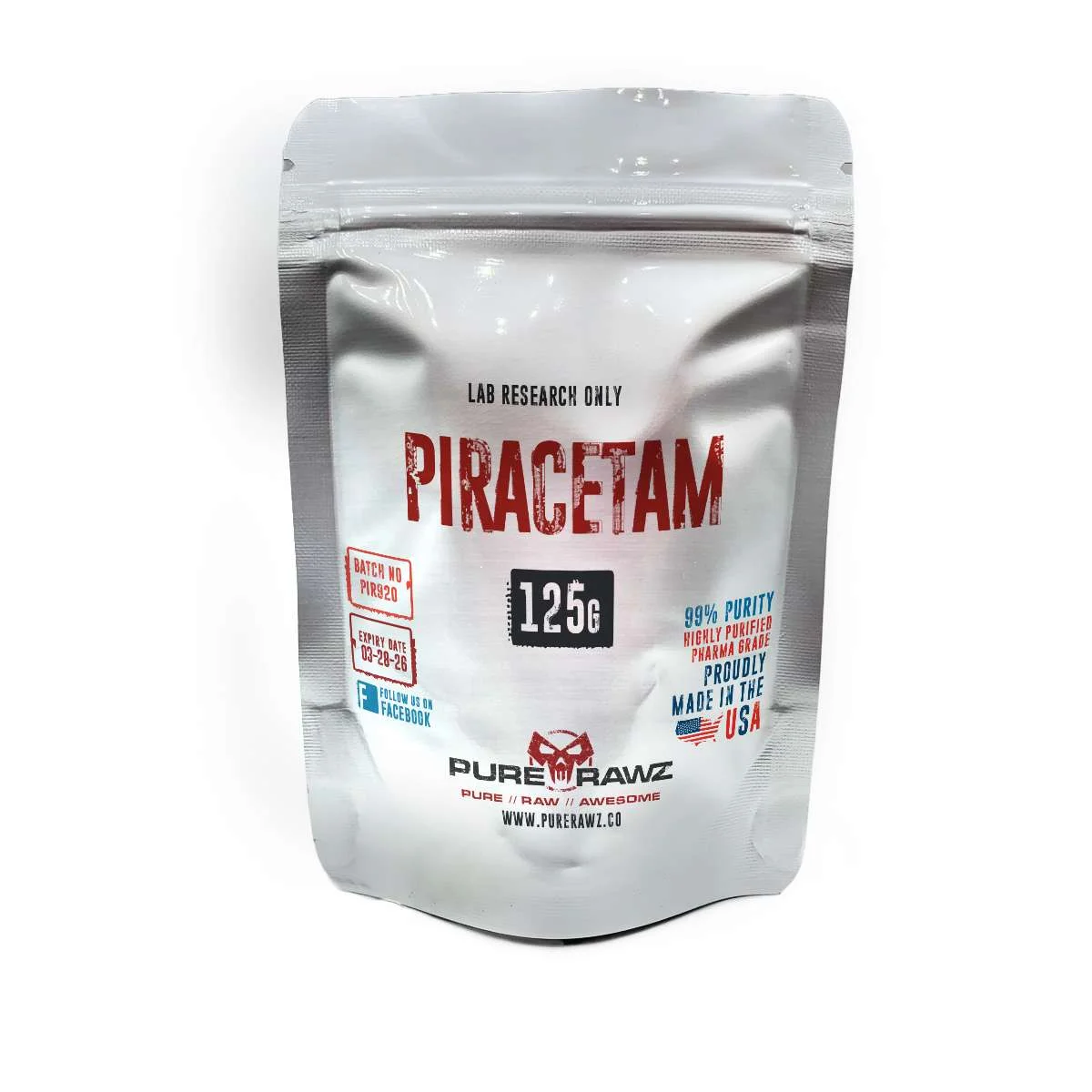
Piracetam
$24.08
Earn 24 points upon purchasing this product.
✅ 99% Purity – Third-Party Tested
🚚 Free U.S. Shipping on Orders $100+
 Proudly Made in the USA
⚡ Fast & Reliable Shipping
🔒 Secure Checkout Guaranteed
Enjoy 24/7 customer support, 1st & 3rd party verified 99% purity, and free shipping on orders over $100!
Description
Piracetam Overview
Piracetam (chemical name: 2-oxo-1-pyrrolidinyl acetamide) is a synthetic compound in the racetam class. It was one of the first nootropic research chemicals developed and has been investigated extensively in laboratory and controlled experimental settings.
Chemical and Molecular Properties
| PubChem CID | 4843 |
| Molecular Formula | C6H10N2O2 |
| Molecular Weight | 142.16 g/mol |
| Synonyms | 2-Oxo-1-pyrrolidineacetamide
2-(2-Oxopyrrolidin-1-yl)acetamide 2-(2-Oxopyrrolidino)acetamide 1-Acetamido-2-pyrrolidinone |
| IUPAC | 2-(2-oxopyrrolidin-1-yl)acetamide |
| CAS | 7491-74-9 |
| Labeling | Research Use Only (RUO), not for human or animal consumption |
| Chemical Structure Depiction | 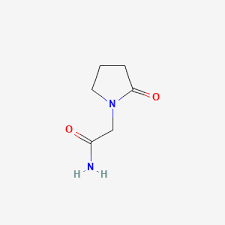 |
| Purity | 99% Purity |
| Classification | Research Use Only (RUO), not for human or animal consumption |
| Storage Temperature | Store in a controlled room temperature, typically between 15°C and 30°C (59°F to 86°F) |
Mechanisms of Action
Piracetam's precise mechanism is not fully understood. Research suggests it acts via multiple pathways:
Membrane Fluidity Modulation
- Piracetam appears to increase the flexibility of neuronal and mitochondrial membranes.
- In laboratory models, this may help restore cellular function where membrane rigidity is pronounced.
Metabolic Enhancement
- Studies indicate potential enhancement of mitochondrial function, including improved membrane potential and ATP production.
- It may also reduce susceptibility to oxidative stress in experimental systems.
Neurotransmission Modulation
- Observed effects on cholinergic pathways (acetylcholine-associated) and glutamatergic systems (particularly AMPA receptors).
- These effects are investigated for their influence on synaptic signaling and cellular communication in research models.
Potential Research Applications
Piracetam is primarily used in in vitro and preclinical research to explore cellular, molecular, and physiological processes. Key research applications include:
Membrane and Cellular Studies
- Investigated for its effects on cellular membrane fluidity in neuronal and mitochondrial models.
- Used to examine how changes in membrane flexibility influence intracellular signaling and cellular responses under experimental conditions.
Mitochondrial and Metabolic Research
- Employed in studies assessing mitochondrial function, including membrane potential and ATP production in laboratory models.
- Used to investigate oxidative stress modulation and cellular resilience in controlled experiments.
Neurotransmission and Synaptic Signaling
- Studied for interactions with cholinergic pathways (acetylcholine-related) and glutamatergic systems (AMPA receptors) in research models.
- Useful for exploring synaptic signaling, plasticity, and neuronal communication in preclinical studies.
Disclaimer
This information is for educational purposes only and not medical advice. Products are for research use only. Research must follow IRB or IACUC guidelines. Verify information independently before purchasing. By ordering, you agree to our Terms and Conditions. If you are not 100% satisfied with the product you received, please contact us at support@staging.purerawz.co
ATTENTION: All our products are for LABORATORY AND RESEARCH PURPOSES ONLY, not for veterinary or human use
References:
- Muller, W., Eckert, G., & Eckert, A. (1999). Piracetam: novelty in a unique mode of action. Pharmacopsychiatry, 32(S 1), 2-9. https://doi.org/10.1055/s-2007-979230
- Noorbala, A. A., Akhondzadeh, S., Davari-Ashtiani, R., & Amini-Nooshabadi, H. (1999). Piracetam in the treatment of schizophrenia: implications for the glutamate hypothesis of schizophrenia. Journal of Clinical Pharmacy and Therapeutics, 24(5), 369-374. https://doi.org/10.1046/j.1365-2710.1999.00238.x
- Winblad, B. (2005). Piracetam: A review of pharmacological properties and clinical uses. CNS Drug Reviews, 11(2), 169–182. https://doi.org/10.1111/j.1527-3458.2005.tb00268.x

Dr. Helma Wennemers
Dr. Helma Wennemers is a globally recognized chemist shaping modern peptide science and molecular design through highly original research in applied biosciences.
Her work explores how precise molecular architecture can be engineered to create new functional systems in chemistry and life sciences. Her contributions continue to redefine contemporary chemical research through creativity, depth, and structural innovation.
Please click here to access instructions on how to make a payment.
How to PayRelated products
-

Agrocybe 30% Bisporiust
Price range: $26.77 through $56.28 Select options This product has multiple variants. The options may be chosen on the product page -
Sale!
7,8 Dihydroxyflavone
Original price was: $27.31.$22.69Current price is: $22.69. Select options This product has multiple variants. The options may be chosen on the product page -
Centrophenoxine
$17.47 Select options This product has multiple variants. The options may be chosen on the product page -
Adamantyl Carbonyl Proline
$37.71 Select options This product has multiple variants. The options may be chosen on the product page


