
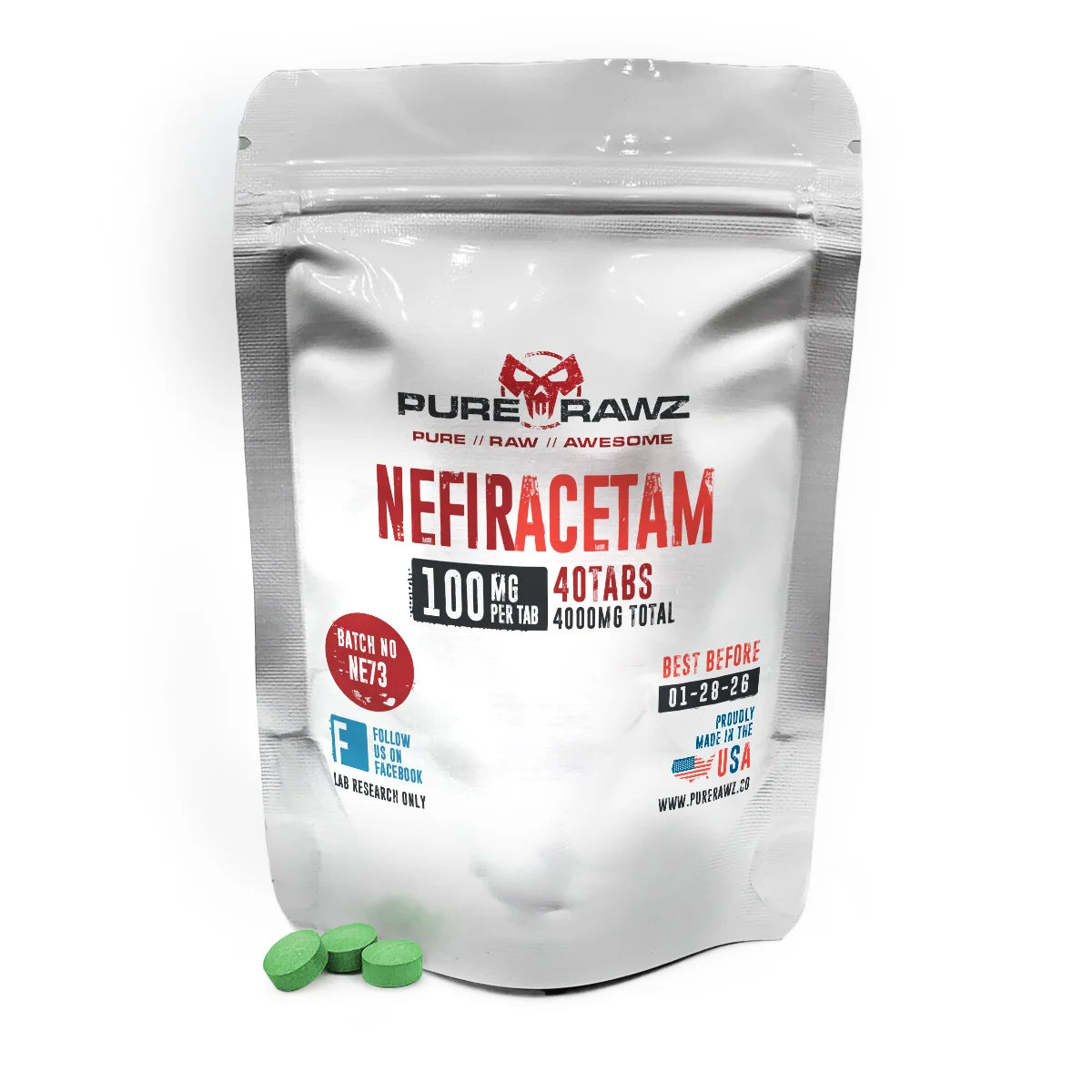
Nefiracetam
Price range: $22.88 through $37.94
Earn 23 - 38 points upon purchasing this product.
✅ 99% Purity – Third-Party Tested
🚚 Free U.S. Shipping on Orders $100+
 Proudly Made in the USA
⚡ Fast & Reliable Shipping
🔒 Secure Checkout Guaranteed
Enjoy 24/7 customer support, 1st & 3rd party verified 99% purity, and free shipping on orders over $100!
Description
Nefiracetam Overview
Nefiracetam is a fat-soluble nootropic compound belonging to the racetam family. Like other racetams, it contains a pyrrolidone nucleus, which gives the compound its distinct chemical properties.
As a cholinergic research compound, Nefiracetam has been studied in laboratory models for its potential effects on acetylcholine activity. The latter is a neurotransmitter associated with learning, focus, and memory formation. Preclinical studies indicate that Nefiracetam may also influence memory-related pathways and neuronal protection in controlled research settings.
Chemical and Molecular Properties
| PubChem CID | 71157 |
| Molecular Formula | C14H18N2O2 |
| Molecular Weight | 246.30 g/mol |
| Synonyms | 77191-36-7
Nefiracetamum DM-9384 1-Pyrrolidineacetamide, N-(2,6-dimethylphenyl)-2-oxo- |
| IUPAC | N-(2,6-dimethylphenyl)-2-(2-oxopyrrolidin-1-yl)acetamide |
| CAS | 77191-36-7 |
| Labeling | Research Use Only (RUO), not for human or animal consumption. |
| Chemical Structure Depiction | 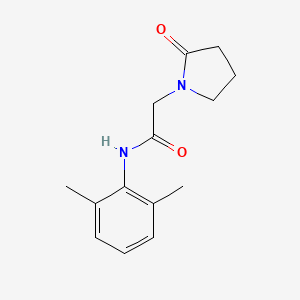 |
| Purity | 99% Purity |
| Classification | Research Use Only (RUO) |
| Storage Temperature | Store at controlled room temperature, 20°C to 25°C (68°F to 77°F) |
Mechanisms of Action
In laboratory and animal studies, Nefiracetam is believed to act through several pathways:
- Enhancing neuronal signaling: May modulate calcium channels in neurons, supporting communication between brain cells.
- Supporting neurotransmitters: Observed to influence acetylcholine activity, a key mediator of learning and memory in research models.
- Promoting brain plasticity: Preclinical studies suggest potential effects on pathways related to BDNF (Brain-Derived Neurotrophic Factor) and NGF (Nerve Growth Factor).
- Neuroprotection: Laboratory models indicate Nefiracetam may reduce cell death and support neuronal resilience following injury or chemical stress.
Potential Research Applications
Nefiracetam has been investigated for its effects in multiple preclinical models:
Memory and Cognition
- Studied for potential improvements in learning and memory using laboratory models.
- Research indicates effects on acetylcholine and glutamate signaling, which are critical for information storage and recall.
- Demonstrated reversal of experimentally induced memory deficits in animal studies using substances such as ethanol, scopolamine, and anesthetics.
Neuroprotection
- Observed to preserve vital proteins like BDNF and synapsin I in ischemia and brain injury models.
- Suggests potential use in laboratory research on neuronal resilience and recovery mechanisms.
Mood and Emotional Regulation
- Certain animal studies indicate possible anxiolytic (calming) and antidepressant-like effects.
- Appears to influence GABAergic and cholinergic pathways in research models, potentially balancing relaxation and alertness in preclinical studies.
Brain Plasticity and Growth
- Shown to support neuritogenesis, the growth of new connections between neurons.
- Laboratory studies demonstrate potential enhancement of neurotrophic factors such as BDNF and NGF, critical for neuron survival, growth, and function.
Disclaimer
This information is for educational purposes only and not medical advice. Products are for research use only. Research must follow IRB or IACUC guidelines. Verify information independently before purchasing. By ordering, you agree to our Terms and Conditions. If you are not 100% satisfied with the product you received, please contact us at support@staging.purerawz.co
ATTENTION: All our products are for LABORATORY AND RESEARCH PURPOSES ONLY, not for veterinary or human use
References:
- Nomura, T., & Nishizaki, T. (2000). Nefiracetam facilitates hippocampal neurotransmission by a mechanism independent of the piracetam and aniracetam action. Brain Research, 870(1-2), 157-162.https://doi.org/10.1016/s0006-8993(00)02417-3
- Aihara, H., Li, X., Fujiwara, S., Matsumura, T., Okumura, S., Tozaki, H., Kanno, T., Ohta, K., Nagai, K., & Nishizaki, T. (2001). The protective action of nefiracetam against electrophysiological and metabolic damage in the hippocampus after deprivation of glucose and oxygen. Brain Research, 922(1), 158-162. https://doi.org/10.1016/s0006-8993(01)03165-1
- Fujita, R., Takayama, N., & Ueda, H. (2002). The cognition-enhancer nefiracetam is protective in BDNF-independent neuronal cell death under the serum-free condition. Neurochemistry International, 40(2), 139-143. https://doi.org/10.1016/s0197-0186(01)00080-8

Dr. Helma Wennemers
Dr. Helma Wennemers is a globally recognized chemist shaping modern peptide science and molecular design through highly original research in applied biosciences.
Her work explores how precise molecular architecture can be engineered to create new functional systems in chemistry and life sciences. Her contributions continue to redefine contemporary chemical research through creativity, depth, and structural innovation.
Please click here to access instructions on how to make a payment.
How to PayRelated products
-

Aniracetam
Price range: $60.24 through $130.25 Select options This product has multiple variants. The options may be chosen on the product page -
IDRA-21
Price range: $17.47 through $89.62 Select options This product has multiple variants. The options may be chosen on the product page -
L-Theanine
Price range: $11.45 through $24.57 Select options This product has multiple variants. The options may be chosen on the product page -
Oxiracetam
$22.94 Select options This product has multiple variants. The options may be chosen on the product page


