
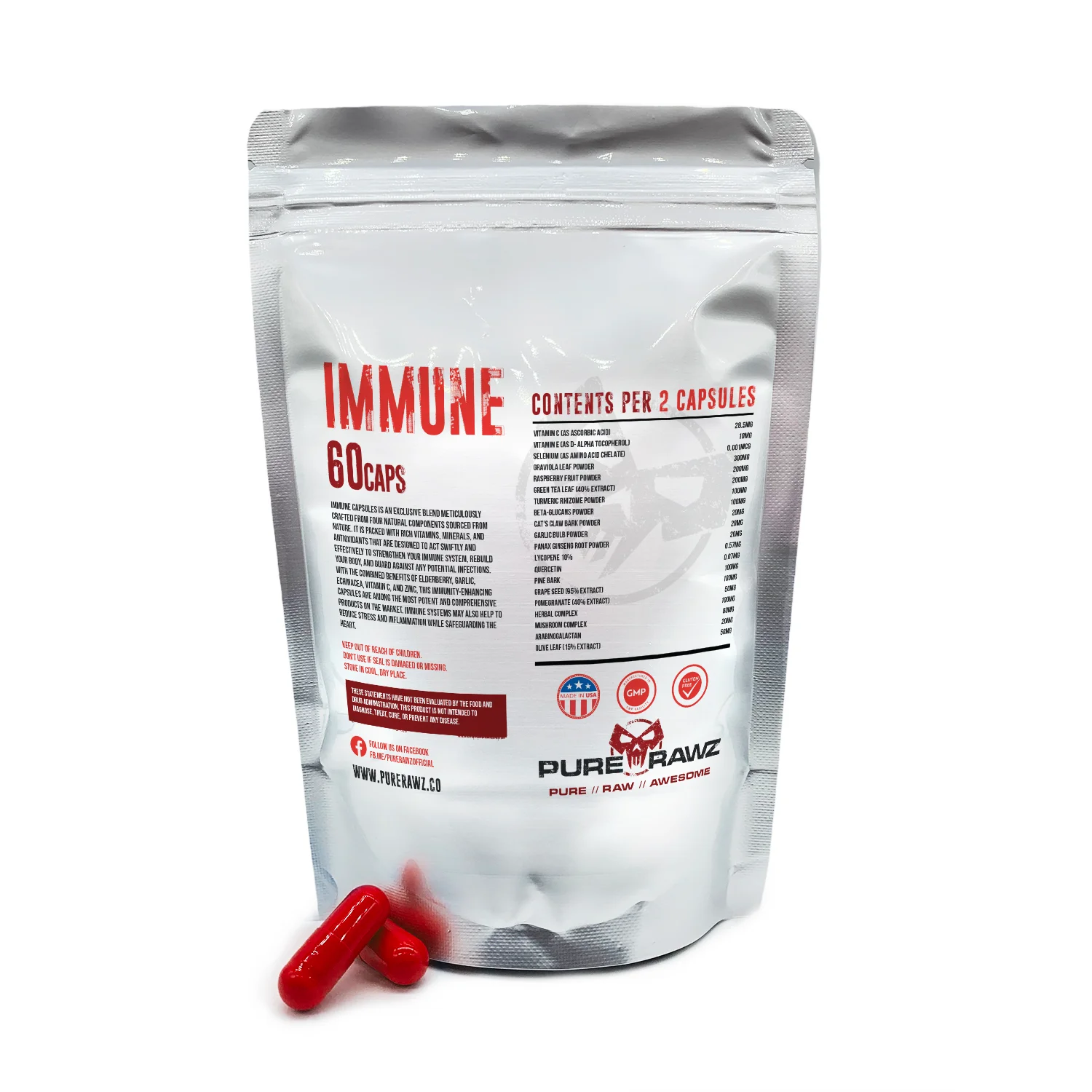
Immune
$17.20
Earn 17 points upon purchasing this product.
Check Out Alternative Here!
Looking for something with similar applications? Check out our Attention Capsules. A great alternative with comparable research applications!
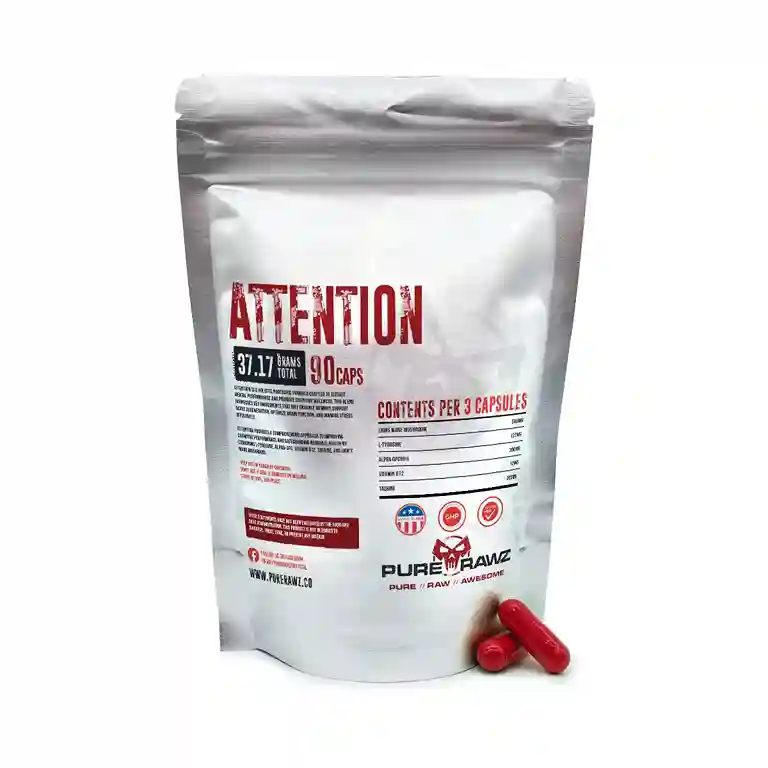
Attention Capsules
✅ 99% Purity – Third-Party Tested
🚚 Free U.S. Shipping on Orders $100+
 Proudly Made in the USA
⚡ Fast & Reliable Shipping
🔒 Secure Checkout Guaranteed
Enjoy 24/7 customer support, 1st & 3rd party verified 99% purity, and free shipping on orders over $100!
Description
Immune Phytochemical Complex Research Chemical
Product Information
The combination of plant-derived substances, micronutrients, and antioxidant molecules found in Immune Phytochemical Complex capsules is frequently studied in lab studies. 60 capsules are contained in each bottle, which PureRawz only sells for research purposes.
Standardized plant extracts, botanical powders, vitamins, and minerals are all included in the recipe. When researching plant-based phytochemicals and antioxidant compounds, these materials are frequently utilized in experimental settings.
Capsule Composition
| Capsule Contents | Concentration |
| Vitamin C (as Ascorbic Acid) | 28.5 mg |
| Vitamin E (as d-Alpha Tocopherol) | 10 mg |
| Selenium (Amino Acid Chelate) | 0.001 mcg |
| Graviola Leaf Powder | 300 mg |
| Raspberry Fruit Powder | 200 mg |
| Green Tea Leaf Extract (40%) | 200 mg |
| Turmeric Rhizome Powder | 100 mg |
| Beta-Glucans Powder | 100 mg |
| Cat’s Claw Bark Powder | 20 mg |
| Garlic Bulb Powder | 20 mg |
| Panax Ginseng Root Powder | 20 mg |
| Lycopene (10%) | 0.57 mg |
| Quercetin | 0.07 mg |
| Pine Bark Extract | 100 mg |
| Grape Seed Extract (95%) | 100 mg |
| Pomegranate Extract (40%) | 50 mg |
| Herbal Phytochemical Complex | 100 mg |
| Mushroom Extract Complex | 80 mg |
| Arabinogalactan | 20 mg |
| Olive Leaf Extract (15%) | 50 mg |
The ingredients in this formulation are not approved by the U.S. FDA to diagnose, treat, cure, or prevent any disease.
These materials are supplied strictly for laboratory research use. They are not intended for human or animal consumption.
Researchers must follow applicable regulations and institutional guidelines when handling chemical materials.
Research Applications
Laboratory studies typically look at substances originating from plants, such as polyphenols, flavonoids, and antioxidant molecules. Research using these materials could look at:
- Antioxidant mechanisms and oxidative stress pathways
- Interaction of phytochemicals with immunological signaling models
- Polyphenols and cellular metabolism
- Characterization of botanical substances in the lab
- Evaluation of bioactive compounds obtained from plants in vitro
These investigations are limited to controlled laboratory and preclinical environments.
Why Buy From PureRawz?
PureRawz provides research-grade materials that undergo quality verification and third-party testing. Certificates of Analysis (COA) are available to confirm identity and purity.
Orders are packaged securely and processed with quality checks. Free shipping is available for purchases of $100 or more.
Research Disclaimer
The products mentioned are all research chemicals meant only for use in laboratories. Applications for humans or animals are not permitted.
It is the duty of researchers to adhere to appropriate supervision and compliance protocols, such as:
Clinical research regulations set forth by the Institutional Review Board (IRB)
Guidelines for animal research established by the Institutional Animal Care and Use Committee (IACUC)
Buyers who purchase from PureRawz consent to abide by the company's terms and conditions as well as all applicable laws. Message t support@staging.purerawz.co to get more information about this chemical research.
ATTENTION: All products are for LABORATORY AND RESEARCH PURPOSES ONLY and are not intended for human or animal use.
References
Benzie, I. F., & Wachtel-Galor, S. (2011). Herbal medicine: Biomolecular and clinical aspects. CRC Press.
Chiva-Blanch, G., & Badimon, L. (2020). Effects of polyphenol intake on metabolic syndrome: Current evidence. Nutrients, 12(6), 1 20. https://doi.org/10.3390/nu12061812
Daglia, M. (2012). Polyphenols as antimicrobial agents. Current Opinion in Biotechnology, 23(2), 174 181. https://doi.org/10.1016/j.copbio.2011.08.007
Ghasemzadeh, A., & Jaafar, H. Z. (2013). Antioxidant potential and anticancer activity of young ginger. Molecules, 18(3), 3197 3210. https://doi.org/10.3390/molecules18033197
Santos-Buelga, C., & Scalbert, A. (2000). Proanthocyanidins and tannin-like compounds. Journal of the Science of Food and Agriculture, 80(7), 1094 1117.

Dr. Helma Wennemers
Dr. Helma Wennemers is a globally recognized chemist shaping modern peptide science and molecular design through highly original research in applied biosciences.
Her work explores how precise molecular architecture can be engineered to create new functional systems in chemistry and life sciences. Her contributions continue to redefine contemporary chemical research through creativity, depth, and structural innovation.
Please click here to access instructions on how to make a payment.
How to PayRelated products
-

Extreme Cycle Capsules
$72.68 Select options This product has multiple variants. The options may be chosen on the product page -
Shroomz
$18.47 Read more -
Lean Shed
$36.33 Select options This product has multiple variants. The options may be chosen on the product page -
ZEN Capsules
$32.90 Select options This product has multiple variants. The options may be chosen on the product page


