
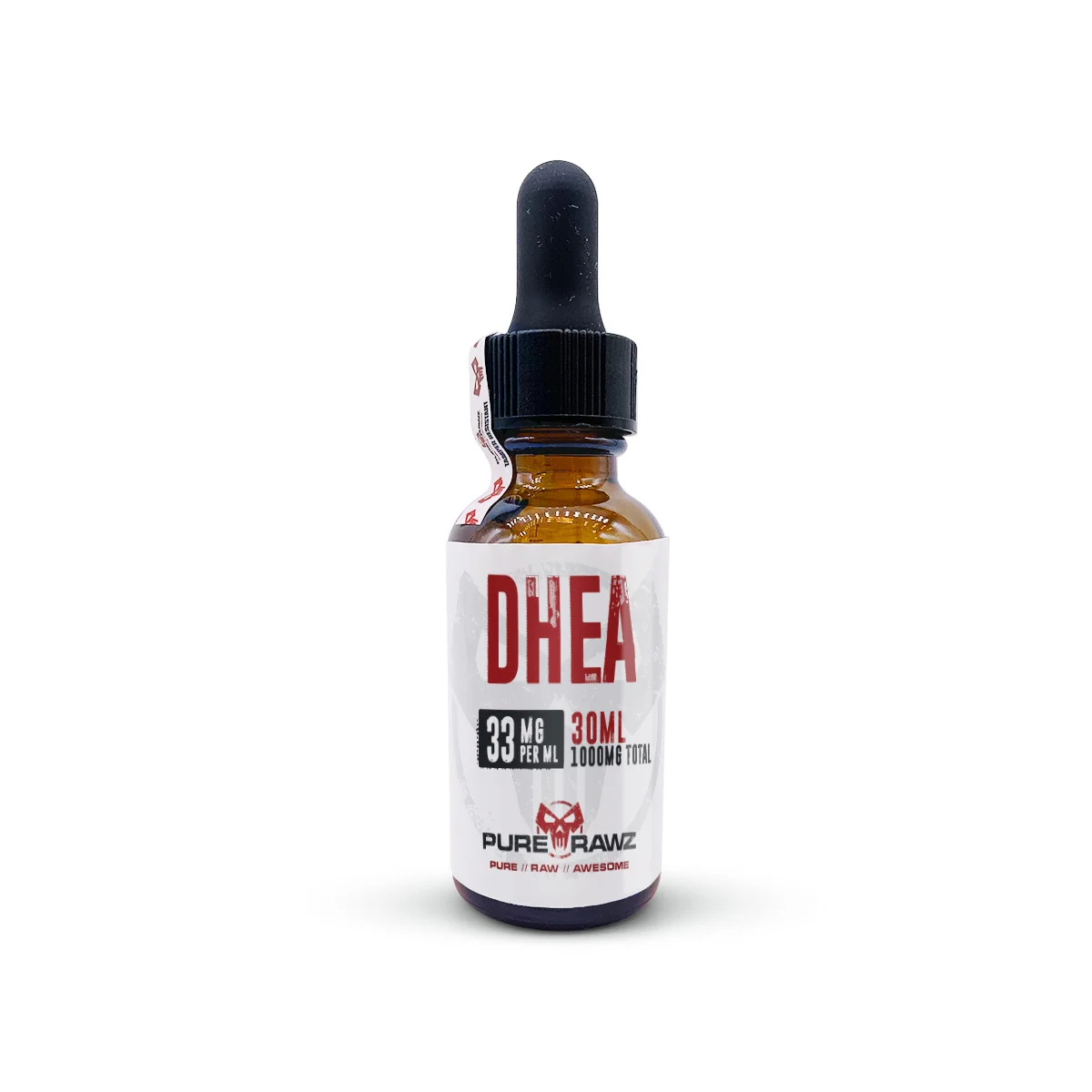
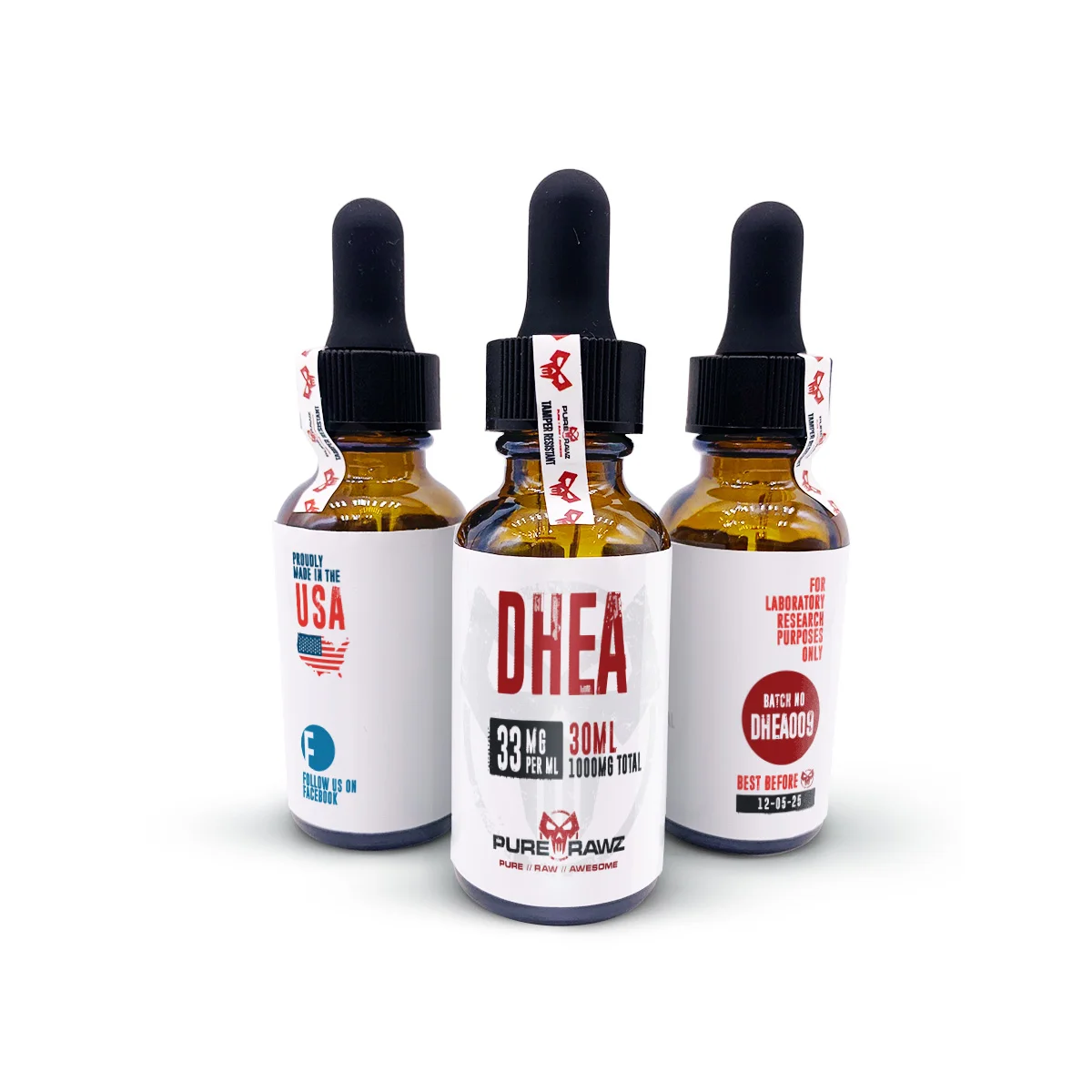
DHEA (Dehydroepiandrosterone)
Price range: $15.49 through $38.44
Earn 15 - 38 points upon purchasing this product.
✅ 99% Purity – Third-Party Tested
🚚 Free U.S. Shipping on Orders $100+
 Proudly Made in the USA
⚡ Fast & Reliable Shipping
🔒 Secure Checkout Guaranteed
Enjoy 24/7 customer support, 1st & 3rd party verified 99% purity, and free shipping on orders over $100!
Description
Overview of DHEA-dehydroepiandrosterone
Dehydroepiandrosterone (DHEA) is an endogenous steroidal precursor. Research indicates that DHEA is synthesized in the adrenal cortex, gonads, and central nervous system.
In research preclinical models, DHEA has appeared to function as a substrate for androgenic and estrogenic biosynthesis.
In experimental paradigms, DHEA is utilized to interrogate steroidogenic enzymatic pathways and nuclear receptor-mediated transcription. It may also be used for apoptotic and proliferative signaling.
Note: Purerawz provides dehydroepiandrosterone for laboratory use only. It is not intended for human or animal use.
Chemical Properties
| Pubchem CID | 5881 |
| Molecular Weight | 288.4 g/mol |
| Molecular Formula | C19H28O2 |
| Solubility | DMF: 25 mg/ml
DMSO: 15 mg/ml DMSO: DMSO/PBS (pH 7.2, 1:1 mixture) Ethanol: 10 mg/ml |
| Synonyms | Dehydroepiandrosterone
DHEA PRASTERONE 53-43-0 Dehydroisoandrosterone |
| Chemical Structure | |
| IUPAC | (3S,8R,9S,10R,13S,14S)-3-hydroxy-10,13-dimethyl-1,2,3,4,7,8,9,11,12,14,15,16-dodecahydrocyclopenta[a]phenanthren-17-one |
| CAS | 53-43-0 |
Working Mechanism of DHEA
Researchers have observed in laboratory models that Dehydroepiandrosterone (DHEA) may function primarily as a steroidogenic precursor. It enters targeted cells via passive diffusion due to its lipophilic nature.
Studies suggest that DHEA intracellularly undergoes enzymatic conversion in research preclinical models. It is converted by 3β-hydroxysteroid dehydrogenase (3β-HSD) and 17β-hydroxysteroid dehydrogenase (17β-HSD) into active androgens. By doing so, it may modulate nuclear steroid hormone receptor signaling in investigational models.
Research Applications of DHEA-dehydroepiandrosterone
Dehydroepiandrosterone (DHEA) is studied in controlled laboratory models for the following potential research applications.
- Steroidogenesis pathway analysis via enzymatic conversion kinetics (3β-HSD, 17β-HSD, aromatase).
- Nuclear receptor signaling studies (androgen receptor and estrogen receptor transcriptional activity) in investigational models.
- The compound is being used to study cell proliferation and apoptosis assays in hormone-responsive models.
- It is studied for mitochondrial bioenergetics and oxidative phosphorylation in laboratory models.
- Reactive oxygen species (ROS) regulation and redox signaling analysis.
Why Buy DHEA-dehydroepiandrosterone Online from Purerawz?
You can buy Dehydroepiandrosterone (DHEA) online from our online shop at reasonable prices. Each batch of this product undergoes rigorous testing for purity, identity, and contaminants, ensuring consistency and safety.
Disclaimer
This information is for educational purposes only and not medical advice. Products are for research use only. Research must follow IRB or IACUC guidelines. Verify information independently before purchasing. By ordering, you agree to our Terms and Conditions. If you are not 100% satisfied with the product you received, please contact us at support@staging.purerawz.co
ATTENTION: All our products are for LABORATORY AND RESEARCH PURPOSES ONLY, not for veterinary or human use
Reference Link
- Jancic, J., Nenezic, N., Kostic, S., Strac, D. S., Grunauer, M., Nenezic, D., Radosavljevic, M., & Jancic, J. (2022). Dehydroepiandrosterone (Dhea): Pharmacological Effects And Potential Therapeutic Application. Mini-Reviews in Medicinal Chemistry, 22. https://doi.org/10.2174/1389557522666220919125817
- Rutkowski, K., Sowa, P., Rutkowska-Talipska, J., Kuryliszyn-Moskal, A., & Rutkowski, R. (2014). Dehydroepiandrosterone (DHEA): Hypes and Hopes. Drugs, 74(11), 1195–1207. https://doi.org/10.1007/s40265-014-0259-8

Dr. Helma Wennemers
Dr. Helma Wennemers is a globally recognized chemist shaping modern peptide science and molecular design through highly original research in applied biosciences.
Her work explores how precise molecular architecture can be engineered to create new functional systems in chemistry and life sciences. Her contributions continue to redefine contemporary chemical research through creativity, depth, and structural innovation.
Please click here to access instructions on how to make a payment.
How to PayRelated products
-

Arimistane
Price range: $67.96 through $234.28 Select options This product has multiple variants. The options may be chosen on the product page -
RAD 140 (Testolone)
Price range: $35.50 through $184.72 Select options This product has multiple variants. The options may be chosen on the product page -
Amino Tadalafil
Price range: $31.13 through $78.15 Select options This product has multiple variants. The options may be chosen on the product page -
Yohimbine HCL
Price range: $23.29 through $61.86 Select options This product has multiple variants. The options may be chosen on the product page


