
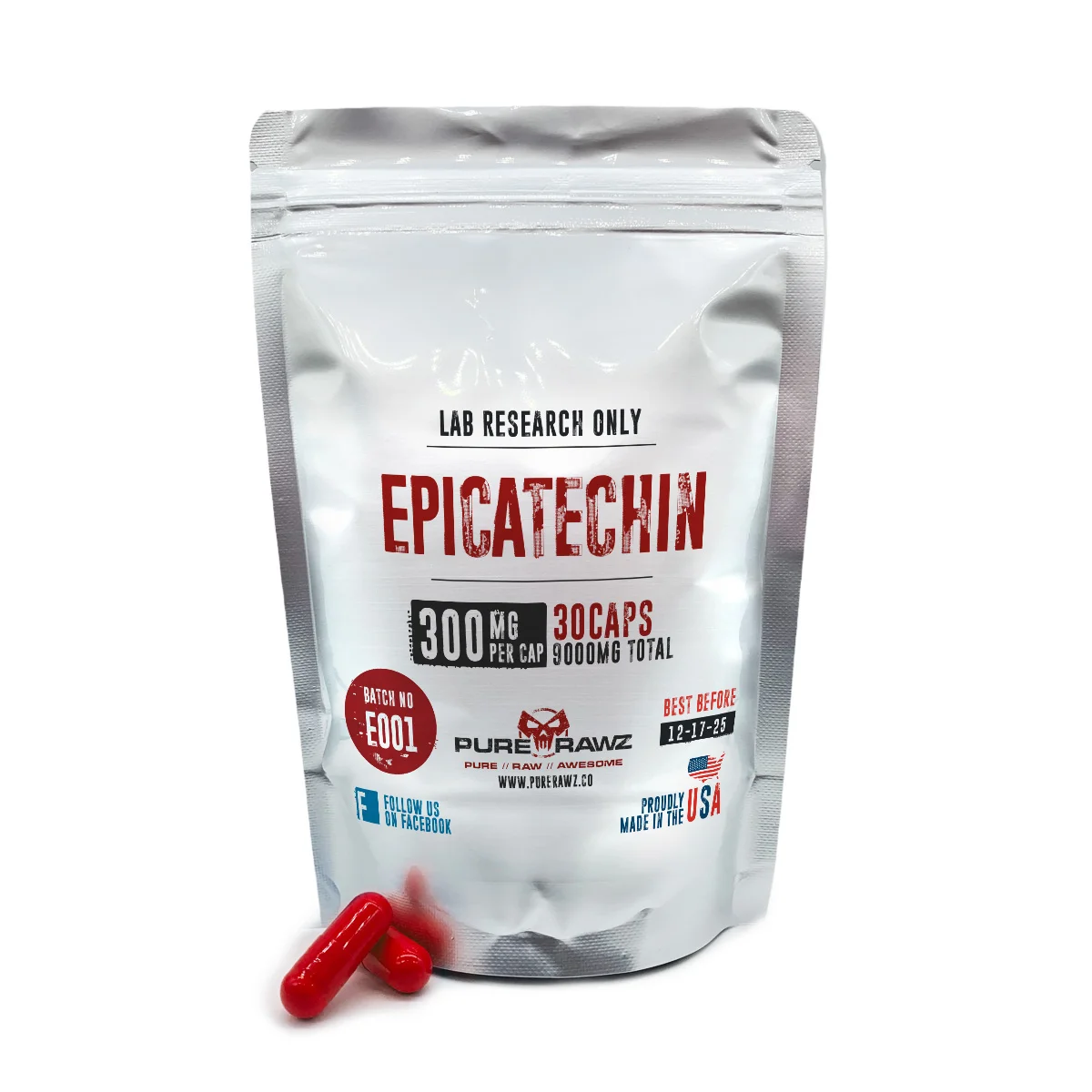
Epicatechin
Price range: $38.79 through $45.33
Earn 39 - 45 points upon purchasing this product.
✅ 99% Purity – Third-Party Tested
🚚 Free U.S. Shipping on Orders $100+
 Proudly Made in the USA
⚡ Fast & Reliable Shipping
🔒 Secure Checkout Guaranteed
Enjoy 24/7 customer support, 1st & 3rd party verified 99% purity, and free shipping on orders over $100!
Description
Epicatechin
Product Overview
Epicatechin, often written as (-)-epicatechin, is a flavanol compound with several hydroxyl groups attached to a flavan-3-ol backbone. These structural features are associated with the compound's redox activity and its role in various biochemical interactions observed in laboratory models. The molecule belongs to the broader flavonoid family of polyphenols. It occurs naturally in many plants, including cocoa beans, tea leaves, and certain fruits.
| Property | Data |
| Compound Name | (-)-Epicatechin |
| PubChem CID | 72276 |
| CAS Number | 490-46-0 |
| Molecular Formula | C15H14O6 |
| Molecular Weight | 290.27 g/mol |
| Chemical Classification | Flavanol (Flavonoid polyphenol) |
| IUPAC Name | (2R,3R)-2-(3,4-dihydroxyphenyl)-3,4-dihydro-2H-chromene-3,5,7-triol |
| Structure | 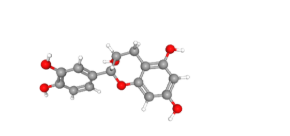 |
| Source Database | PubChem (NCBI) |
Working Mechanism
In laboratory studies, epicatechin is often examined in connection with cellular redox balance and metabolic signaling. The molecule contains phenolic groups that can participate in oxidation–reduction reactions.
It may influence oxidative stress pathways in experimental systems. Researchers sometimes explore these reactions when studying how polyphenols interact with cellular signaling networks.
Research Applications
The molecular structure of epicatechin is frequently analyzed in studies focused on polyphenol signaling and oxidative stress pathways. These investigations help scientists observe how flavonoid compounds interact with complex biochemical systems.
In vascular biology models, epicatechin has also been included in laboratory assays examining nitric oxide signaling. Such experiments explore how plant-derived flavonoids may affect enzyme systems involved in nitric oxide production.
Another area of interest involves mitochondrial signaling and energy metabolism. In controlled laboratory settings, epicatechin has been used to investigate how flavanol compounds interact with pathways involved in cellular energy metabolism.
Why Buy at PureRawz
PureRawz supplies research materials intended for analytical and laboratory use.
Orders placed through PureRawz include product documentation, secure packaging, and traceable sourcing practices. For laboratories purchasing investigational materials, orders over $100 qualify for free shipping.
Customers may also subscribe to the PureRawz newsletter to receive updates about new product releases and promotions.
Note: PureRawz only distributes epicatechin as a research chemical. The chemical has not been approved in the United States. The Food and Drug Administration (FDA) approves the product for medicinal or veterinary purposes.
Research Disclaimer
The information provided is intended for scientific reference and educational purposes only.
By placing an order, you agree to the PureRawz Terms and Conditions. If you are not satisfied with your order, please contact support@staging.purerawz.co.
ATTENTION: All products are FOR LABORATORY AND RESEARCH PURPOSES ONLY and NOT FOR HUMAN OR ANIMAL USE.
All experimental procedures should be conducted by qualified professionals and must comply with institutional regulatory oversight, such as IRB or IACUC guidelines, where applicable.
References
Bernatova, I. (2018). Biological activities of (-)-epicatechin and epicatechin-containing foods. Biomolecules, 8(4), 193. https://pubmed.ncbi.nlm.nih.gov/30404231/
Ramirez-Sanchez, I., Taub, P. R., Ciaraldi, T. P., et al. (2013). Epicatechin enhances mitochondrial signaling and reduces oxidative stress in experimental models. American Journal of Physiology – Heart and Circulatory Physiology, 305(9), H1320–H1331. https://pubmed.ncbi.nlm.nih.gov/23997137/
National Center for Biotechnology Information. (2024). Epicatechin compound summary. PubChem Database. https://pubchem.ncbi.nlm.nih.gov/compound/72276
ClinicalTrials.gov. (2024). Flavonoid pharmacology research database. https://clinicaltrials.gov

Dr. Helma Wennemers
Dr. Helma Wennemers is a globally recognized chemist shaping modern peptide science and molecular design through highly original research in applied biosciences.
Her work explores how precise molecular architecture can be engineered to create new functional systems in chemistry and life sciences. Her contributions continue to redefine contemporary chemical research through creativity, depth, and structural innovation.
Please click here to access instructions on how to make a payment.
How to PayRelated products
-

Agrocybe 30% Bisporiust
Price range: $26.77 through $56.28 Select options This product has multiple variants. The options may be chosen on the product page -
Agomelatine
$61.76 Select options This product has multiple variants. The options may be chosen on the product page -
PRL-8-53
Price range: $57.37 through $92.36 Select options This product has multiple variants. The options may be chosen on the product page -
Kava Extract 70% Kavalactones
Price range: $19.66 through $47.52 Select options This product has multiple variants. The options may be chosen on the product page


