
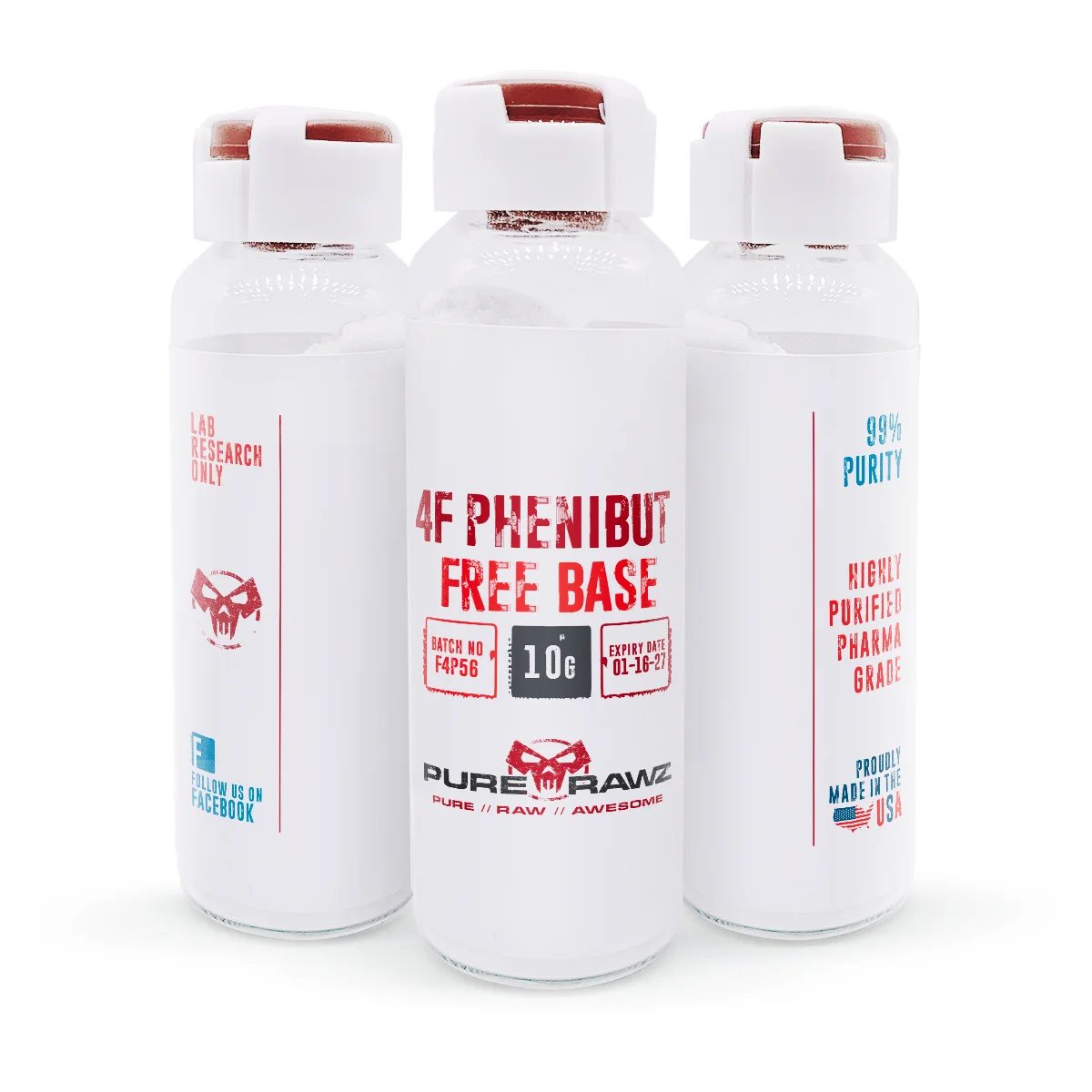
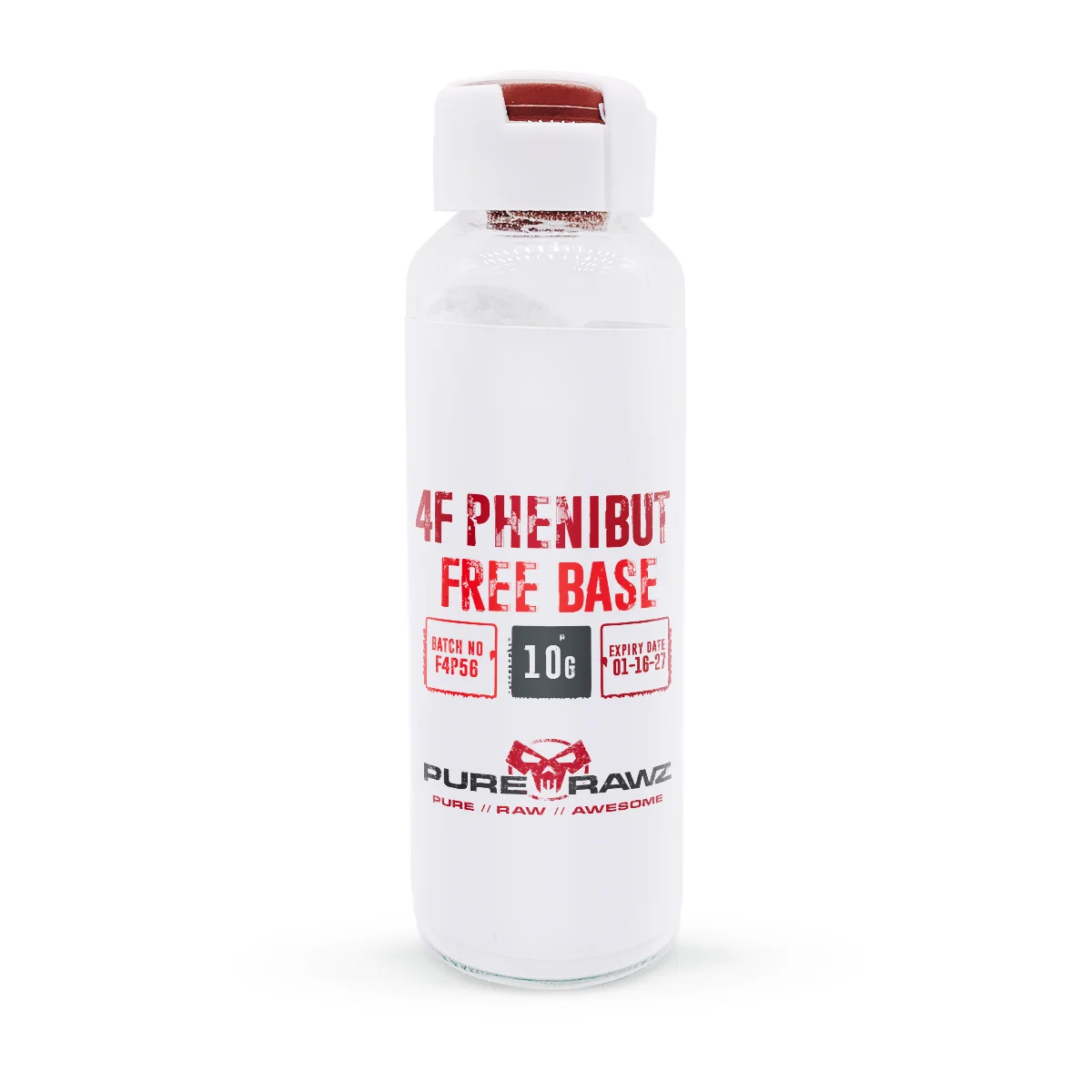
4F-Phenibut Free Base
$77.22
Earn 77 points upon purchasing this product.
✅ 99% Purity – Third-Party Tested
🚚 Free U.S. Shipping on Orders $100+
 Proudly Made in the USA
⚡ Fast & Reliable Shipping
🔒 Secure Checkout Guaranteed
Enjoy 24/7 customer support, 1st & 3rd party verified 99% purity, and free shipping on orders over $100!
Description
4F-Phenibut Free Base Overview
4F-Phenibut Free Base is a fluorinated analog of phenibut, a compound structurally related to gamma-aminobutyric acid (GABA). The addition of a fluorine atom to the phenibut structure may influence the compound's chemical properties and receptor-binding characteristics.
In laboratory environments, 4F-Phenibut Free Base is utilized as a research compound to investigate mechanisms associated with neurotransmitter systems and central nervous system signaling pathways. Researchers study this compound to better understand how structural modifications may influence receptor interactions and downstream signaling activity.
Chemical and Molecular Properties
| PubChem CID | 103611 |
| Molecular Formula | C10H12FNO2 |
| Molecular Weight | 197.210 g/mol |
| Synonyms | β-(4-Fluorophenyl)-γ-aminobutyric acid
4-Amino-3-(4-fluorophenyl)butyric acid Benzenepropanoic acid, β-(aminomethyl)-4-fluoro |
| IUPAC | 4-Amino-3-(4-fluorophenyl)butanoic acid |
| CAS | 1858241-03-8 |
| Labeling | Research Use Only (RUO), not for human or animal consumption |
| Chemical Structure Depiction | |
| Purity | 99% |
| Classification | Research Use Only (RUO) |
| Storage Temperature | Store at -20°C (-4°F) for long-term stability |
| Solubility | Water, DMSO (research-grade solvents) |
| Safety | Handle with gloves, a lab coat, eye protection; use a fume hood if dust/aerosol is possible |
Mechanisms of Action
In controlled laboratory investigations, 4F-Phenibut has been studied in experimental models for potential interactions with GABA-related receptor systems involved in inhibitory neurotransmission.
Research models suggest that phenibut and structurally related analogs have been studied for interactions with GABA-B receptor pathways; however, the specific receptor-binding profile of 4F-Phenibut remains under investigation.
Some studies explore its potential interactions with additional neurotransmitter-related pathways; however, these mechanisms are not fully characterized. These pathways have been described in literature in relation to neurological processes such as motivation, reward signaling, and cognitive function.
Further investigation is required to fully characterize the receptor-binding profile and intracellular signaling activity associated with 4F-Phenibut.
Potential Research Applications
Within laboratory settings, 4F-Phenibut is investigated for several areas of neurochemical research, including:
- Examination of GABA receptor-associated signaling pathways
- Evaluation of fluorinated phenibut analogs and their receptor-binding characteristics
- Analysis of neurotransmitter modulation in experimental models
- Investigation of central nervous system signaling mechanisms related to inhibitory neurotransmission
- Comparative studies between phenibut and structurally modified derivatives
These research efforts help scientists better understand how structural changes to GABA-related compounds may influence receptor activity and cellular signaling processes.
Disclaimer
This information is for educational purposes only and not medical advice. Products are for research use only. Research must follow IRB or IACUC guidelines. Verify information independently before purchasing. By ordering, you agree to our Terms and Conditions. If you are not 100% satisfied with the product you received, please contact us at support@staging.purerawz.co
ATTENTION: All our products are for LABORATORY AND RESEARCH PURPOSES ONLY, not for veterinary or human use.
References:
- Irie, T., Yamazaki, D., & Kikura-Hanajiri, R. (2020). F-phenibut (β-(4-Fluorophenyl)-GABA), a potent GABAB receptor agonist, activates an outward-rectifying K+ current and suppresses the generation of action potentials in mouse cerebellar Purkinje cells. European Journal of Pharmacology, 884, 173437. https://doi.org/10.1016/j.ejphar.2020.173437
- Lapin, I. (2001). Phenibut (β-Phenyl-GABA): a tranquilizer and nootropic drug. CNS Drug Reviews, 7(4), 471-481. https://doi.org/10.1111/j.1527-3458.2001.tb00211.x

Dr. Helma Wennemers
Dr. Helma Wennemers is a globally recognized chemist shaping modern peptide science and molecular design through highly original research in applied biosciences.
Her work explores how precise molecular architecture can be engineered to create new functional systems in chemistry and life sciences. Her contributions continue to redefine contemporary chemical research through creativity, depth, and structural innovation.
Please click here to access instructions on how to make a payment.
How to PayRelated products
-

Amino Tadalafil
Price range: $31.13 through $78.15 Select options This product has multiple variants. The options may be chosen on the product page -
Tyr-hGH 177-191
Price range: $77.49 through $138.87 Select options This product has multiple variants. The options may be chosen on the product page -
Cordyceps Sinensis
Price range: $36.61 through $66.13 Select options This product has multiple variants. The options may be chosen on the product page -
Cardarine (GW-501516)
Price range: $47.52 through $164.48 Select options This product has multiple variants. The options may be chosen on the product page


