
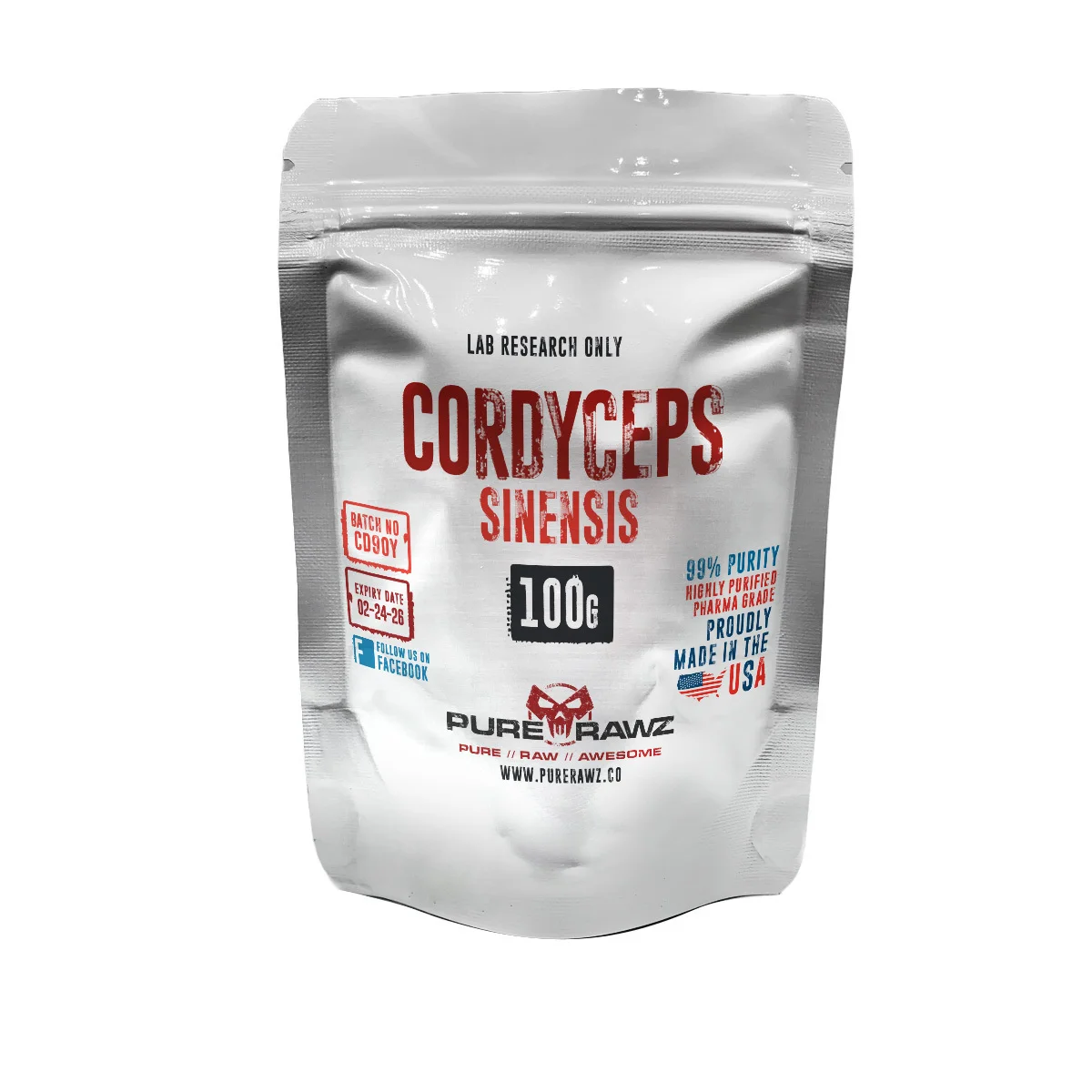
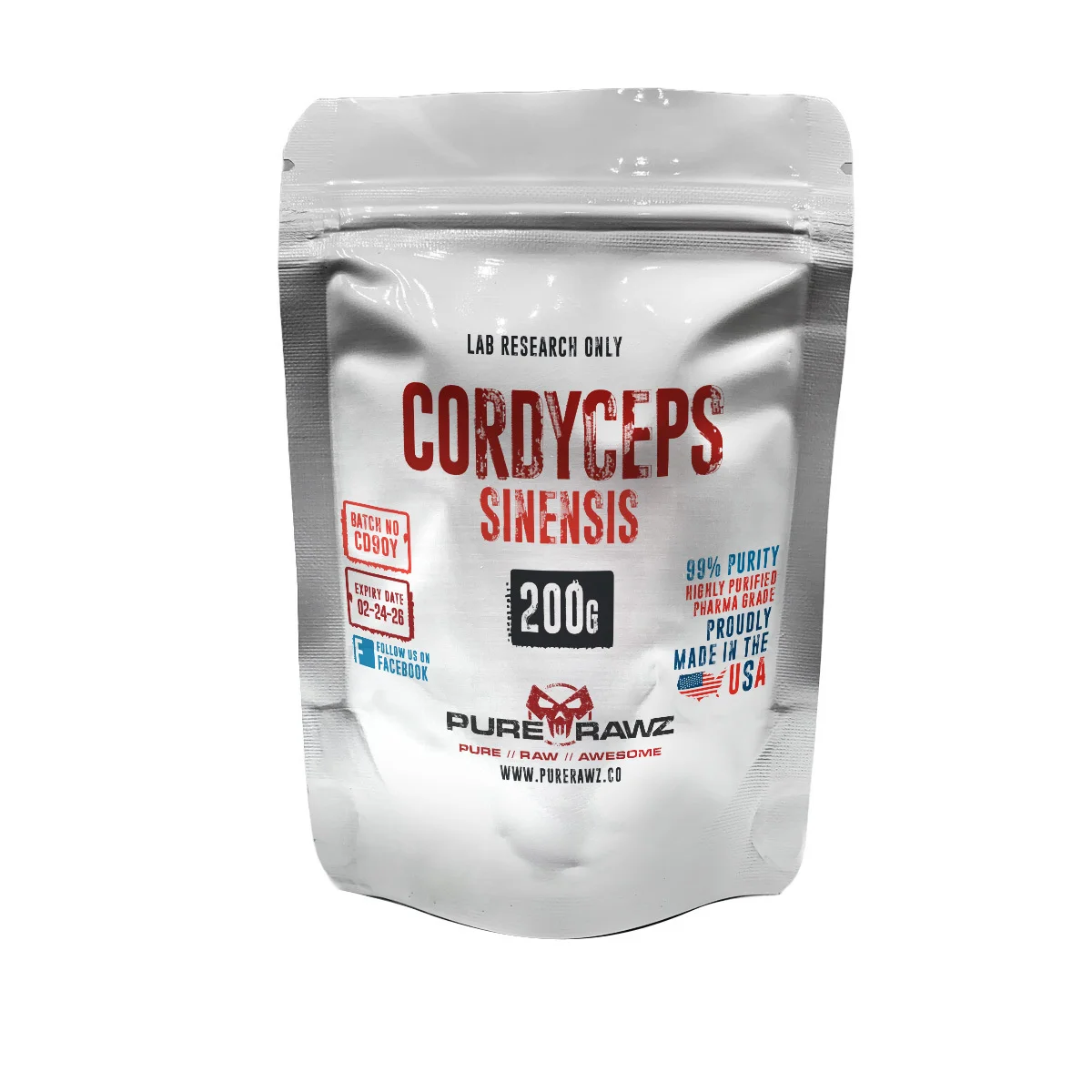
Cordyceps Sinensis
Price range: $36.61 through $66.13
Earn 37 - 66 points upon purchasing this product.
✅ 99% Purity – Third-Party Tested
🚚 Free U.S. Shipping on Orders $100+
 Proudly Made in the USA
⚡ Fast & Reliable Shipping
🔒 Secure Checkout Guaranteed
Enjoy 24/7 customer support, 1st & 3rd party verified 99% purity, and free shipping on orders over $100!
Description
Cordyceps sinensis Extract
Product Information
Cordyceps are parasitic fungi from the Cordycipitaceae family. Because of their unique host-parasite lifecycle and the numerous secondary metabolites they produce, species in this genus have been studied in ecological and biochemical contexts. Cordyceps sinensis, a fungus that has traditionally been found in high-altitude regions of the Tibetan Plateau, is one of the better recognized species.
One of the most frequently studied molecules associated with Cordyceps species is cordycepin (3′-deoxyadenosine). Cordycepin has been examined in biochemical and pharmacological experiments because of its structural similarity to adenosine and its potential influence on cellular signaling pathways.
| Property | Data |
| Compound Name | Cordycepin (3′-Deoxyadenosine) |
| PubChem CID | 6303 |
| CAS Number | 73-03-0 |
| Molecular Formula | C10H13N5O3 |
| Molecular Weight | 251.24 g/mol |
| Chemical Classification | Purine nucleoside analog |
| Source Database | PubChem (NCBI) |
Working Mechanism
Cordycepin is known to participate in biochemical processes involving nucleic acid metabolism. Because the molecule resembles adenosine but lacks the 3′-hydroxyl group required for RNA chain elongation, it can interrupt RNA synthesis when incorporated into nucleic acid strands. This mechanism has made cordycepin useful in experimental work exploring transcription regulation and RNA stability.
Cordyceps extracts also contain additional compounds, including polysaccharides and sterols, which have been examined for their interactions with signaling proteins and inflammatory mediators. These investigations are typically performed using cell cultures or controlled experimental systems.
Research Applications
Laboratory work involving cordycepin has examined mitochondrial activity and cellular energy pathways, particularly those associated with ATP production. Because ATP functions as the primary energy carrier within cells, alterations in nucleotide metabolism are sometimes explored to understand broader metabolic responses.
Immunological signaling has also been studied in relation to Cordyceps metabolites. Some experiments have evaluated how cordycepin influences cytokine expression and immune cell activity in controlled models. These investigations aim to clarify how nucleoside analogs interact with transcription pathways and inflammatory mediators.
Other studies examine oxidative stress mechanisms. Fungal metabolites isolated from Cordyceps species have been analyzed for their interactions with reactive oxygen species and antioxidant defense systems in cultured cells.
Why Purchase From PureRawz?
As implied by the terms "Pure" and "Raw," PureRawz takes their commitment to creating research compounds of the highest caliber seriously. Through third-party testing and product handling from production to delivery, PureRawz provides transparency regarding product details.
Research may also get discounts upon subscribing from PureRawz Newsletter. Or get free shipping for Orders over $100.
Note: It is important to clarify that Cordyceps-derived extracts are not approved by the U.S. Food and Drug Administration (FDA) as medicinal treatments. Their study remains limited to experimental and analytical research settings.
Research Disclaimer
This information is for educational purposes only and not medical advice. Products are for research use only. Research must follow IRB or IACUC guidelines. Verify information independently before purchasing. By ordering, you agree to our Terms and Conditions. If you are not 100% satisfied with the product you received, please contact us at support@staging.purerawz.co
ATTENTION: All our products are for LABORATORY AND RESEARCH PURPOSES ONLY, not for veterinary or human use
References
Cunningham, K. G., & Hutchinson, S. A. (1951). Cordycepin, a metabolic product from cultures of Cordyceps militaris. Nature, 166(4231), 949. https://pubmed.ncbi.nlm.nih.gov/14793310/
National Center for Biotechnology Information. (2024). Cordycepin compound summary. PubChem Database. https://pubchem.ncbi.nlm.nih.gov/compound/6303
Paterson, R. R. M. (2008). Cordyceps – A traditional Chinese medicine and another fungal therapeutic biofactory? Phytochemistry, 69(7), 1469-1495. https://pubmed.ncbi.nlm.nih.gov/18308564/
Zhou, X., Gong, Z., Su, Y., Lin, J., & Tang, K. (2009). Cordyceps fungi: Natural products and pharmacological functions. Journal of Pharmacy and Pharmacology, 61(3), 279-291. https://pubmed.ncbi.nlm.nih.gov/19298653/
ClinicalTrials.gov. (2024). Cordycepin related research database. https://clinicaltrials.gov

Dr. Helma Wennemers
Dr. Helma Wennemers is a globally recognized chemist shaping modern peptide science and molecular design through highly original research in applied biosciences.
Her work explores how precise molecular architecture can be engineered to create new functional systems in chemistry and life sciences. Her contributions continue to redefine contemporary chemical research through creativity, depth, and structural innovation.
Please click here to access instructions on how to make a payment.
How to PayRelated products
-

Tyr-hGH 177-191
Price range: $77.49 through $138.87 Select options This product has multiple variants. The options may be chosen on the product page -
Amino Tadalafil
Price range: $31.13 through $78.15 Select options This product has multiple variants. The options may be chosen on the product page -
S-23 SARM
Price range: $57.83 through $139.79 Select options This product has multiple variants. The options may be chosen on the product page -
Setipiprant
$55.73 Select options This product has multiple variants. The options may be chosen on the product page


