
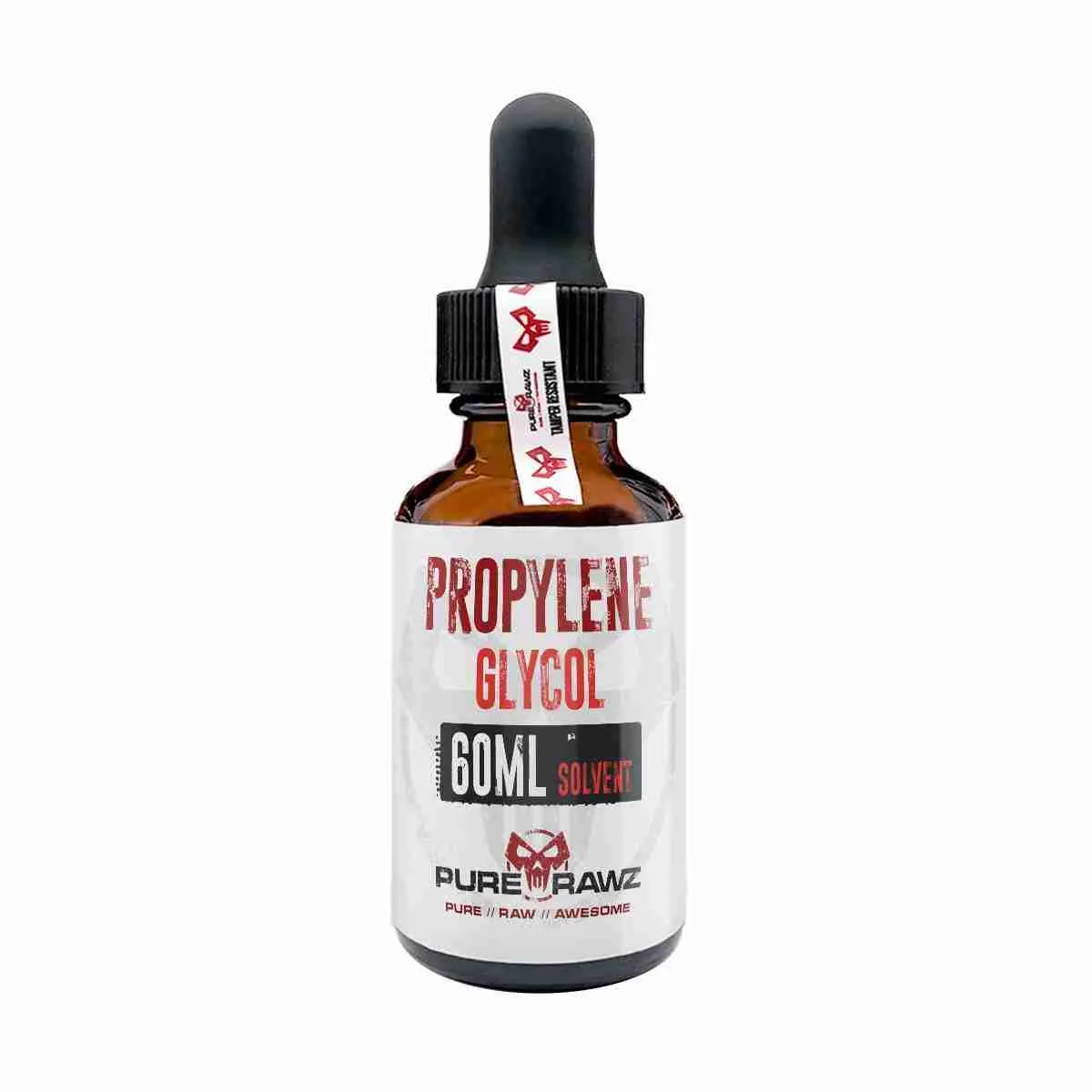
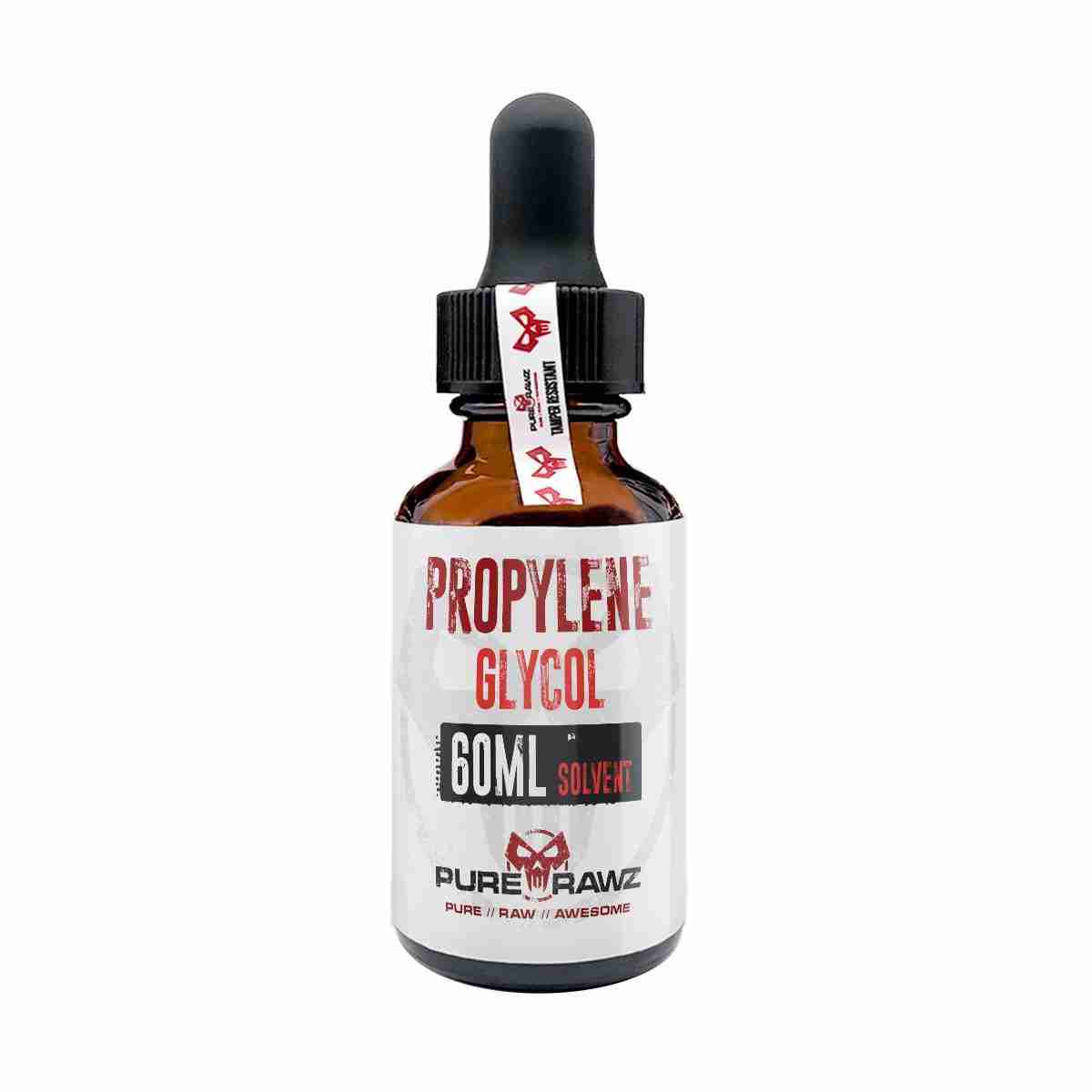
Propylene Glycol – Solvent
$9.27
Earn 9 points upon purchasing this product.
✅ 99% Purity – Third-Party Tested
🚚 Free U.S. Shipping on Orders $100+
 Proudly Made in the USA
⚡ Fast & Reliable Shipping
🔒 Secure Checkout Guaranteed
Enjoy 24/7 customer support, 1st & 3rd party verified 99% purity, and free shipping on orders over $100!
Description
Propylene Glycol (USP Grade) - Product Information
Propylene Glycol (USP Grade) is a high-purity synthetic organic compound classified as a diol, meaning it contains two alcohol functional groups. Chemically identified as propane-1,2-diol, it is a clear, colorless, and nearly odorless liquid known for its strong ability to dissolve a wide range of substances.
The USP (United States Pharmacopeia) grade designation indicates that the compound meets strict purity and quality standards for chemical consistency and minimal impurity levels. Because of this controlled purity, it is commonly supplied to laboratories, testing facilities, and research institutions where reliable chemical performance is required.
In research environments, Propylene Glycol is often utilized as a solvent, carrier medium, or formulation component in experimental systems. Its hygroscopic nature and compatibility with water and many organic compounds make it useful for studying chemical interactions, material stability, and solution behavior under controlled laboratory conditions.
Chemical Properties
| PubChem CID | 1030 |
| Chemical 3D Structure Depiction | 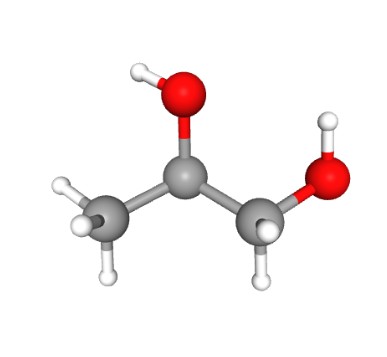 |
| Chemical 2D Structure Depiction | 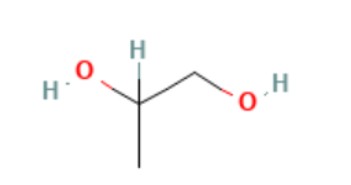 |
| Molecular Formula | C3H8O2
CH3CHOHCH2OH |
| Molecular Weight | 76.09 g/mol |
| IUPAC Name | propane-1,2-diol |
| CAS | 57-55-6 |
| Synonyms | propylene glycol
1,2-propanediol propane-1,2-diol 57-55-6 1,2-Propylene glycol.. |
Research Applications of Propylene Glycol
Propylene glycol is being research for its following potential applications:
-
Analytical Solvent
Used as a solvent for preparing laboratory solutions and dissolving chemical compounds in analytical experiments.
-
Formulation Medium
Utilized as a carrier medium in controlled experimental formulations for studying compound dispersion and stability.
-
Compatibility Testing
Applied in laboratory studies to evaluate chemical and material compatibility in mixed systems.
-
Method Development
Used during analytical method development and calibration in laboratory testing environments.
-
Physical Property Research
Employed in experiments investigating solubility, viscosity, hygroscopicity, and other physicochemical properties.
Note:
This product is intended strictly for laboratory research and analytical purposes only, with no involvement in human processes or applications.
Disclaimer
This information is for educational purposes only and does not constitute medical advice. THE PRODUCTS DESCRIBED HEREIN ARE FOR LABORATORY AND RESEARCH USE ONLY.
All clinical research must be conducted with oversight from the appropriate Institutional Review Board (IRB). All preclinical research must be conducted with oversight from the appropriate Institutional Animal Care and Use Committee (IACUC) following the guidelines of the Animal Welfare Act (AWA).Our content is intended to be used and must be used for informational purposes only.
By completing and paying for your order, you agree to our Terms and Conditions. Customer satisfaction is our number one priority. If you are not 100% satisfied with the product you received, please contact us at support@staging.purerawz.co
ATTENTION: All our products are for LABORATORY AND RESEARCH PURPOSES ONLY, not for veterinary or human usage.
Reference Links
Jacob, S. E., Scheman, A., & McGowan, M. A. (2018). Propylene Glycol. Dermatitis: Contact, Atopic, Occupational, Drug, 29(1), 3–5. https://doi.org/10.1097/DER.0000000000000315
ATSDR. (2014, March 25). Propylene Glycol | Public Health Statement | ATSDR. Wwwn.cdc.gov. https://wwwn.cdc.gov/TSP/PHS/PHS.aspx?phsid=1120&toxid=240

Dr. Helma Wennemers
Dr. Helma Wennemers is a globally recognized chemist shaping modern peptide science and molecular design through highly original research in applied biosciences.
Her work explores how precise molecular architecture can be engineered to create new functional systems in chemistry and life sciences. Her contributions continue to redefine contemporary chemical research through creativity, depth, and structural innovation.
Please click here to access instructions on how to make a payment.
How to PayRelated products
-

DMSO Dimethyl Sulfoxide – Solvent
$11.45 Select options This product has multiple variants. The options may be chosen on the product page -
Sterilized Bottles
Price range: $1.62 through $5.98 Select options This product has multiple variants. The options may be chosen on the product page -
Cotton Seed Oil
Price range: $12.01 through $18.57 Select options This product has multiple variants. The options may be chosen on the product page -
Digital LCD Diamond Scale 50Grams x 0.001g
$50.75 Add to cart


