
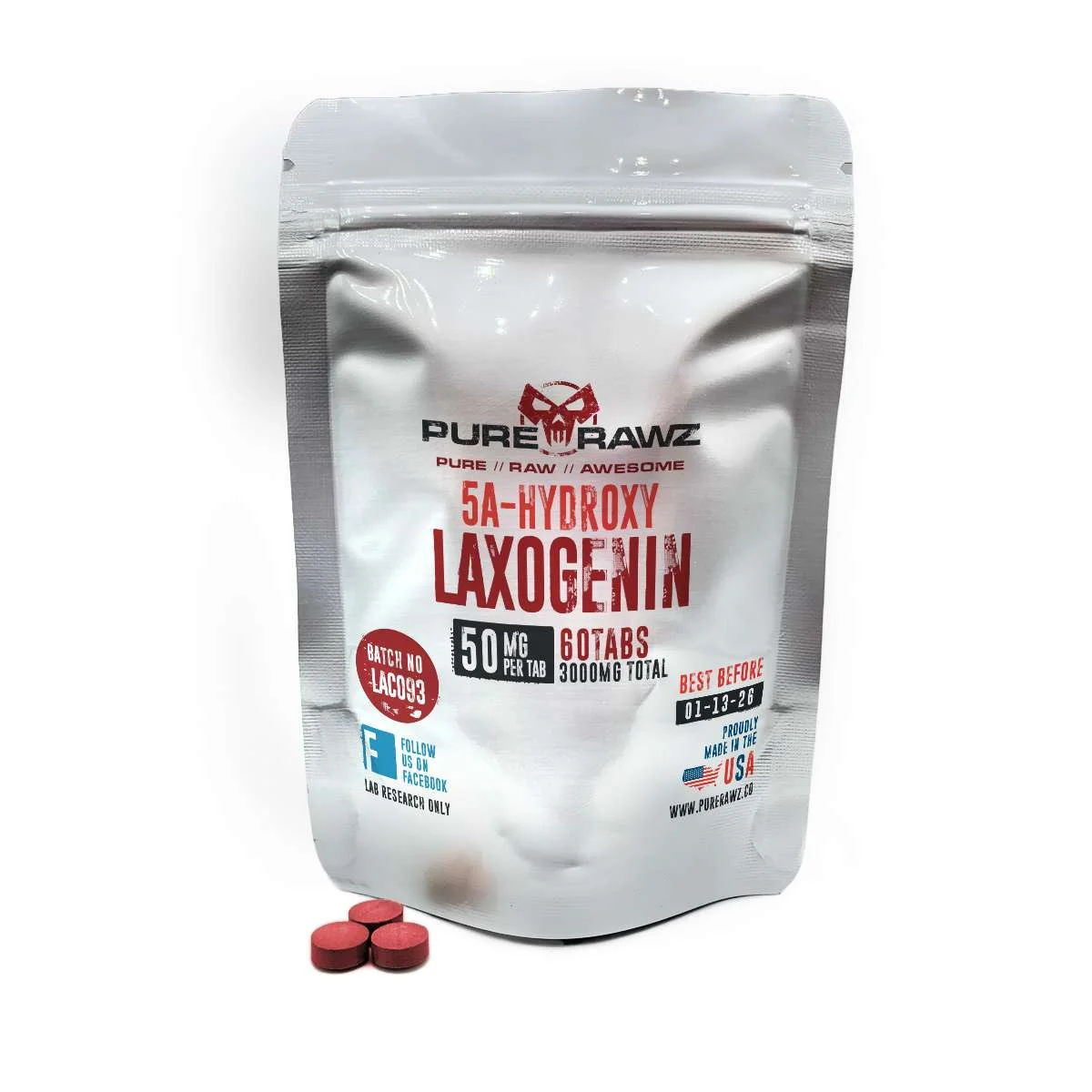
Laxogenin (5a-Hydroxy Laxogenin)
Price range: $66.13 through $116.40
Earn 66 - 116 points upon purchasing this product.
✅ 99% Purity – Third-Party Tested
🚚 Free U.S. Shipping on Orders $100+
 Proudly Made in the USA
⚡ Fast & Reliable Shipping
🔒 Secure Checkout Guaranteed
Enjoy 24/7 customer support, 1st & 3rd party verified 99% purity, and free shipping on orders over $100!
Description
Laxogenin (5a-Hydroxy Laxogenin) Overview
Laxogenin is a plant-based steroid derived from brassinosteroids, a group of plant hormones known to regulate growth and protein metabolism in plant cells. In cell-based studies, certain brassinosteroids have been shown to increase protein synthesis while reducing protein breakdown, which has led to laxogenin being referred to as a "plant anabolic" in research contexts.
Laboratory studies suggest that specific brassinosteroid compounds may stimulate protein production in muscle cells, supporting research into lean tissue growth and intracellular signaling pathways.
Chemical and Molecular Properties
| PubChem CID | 10950057 |
| Molecular Formula | C27H42O4 |
| Molecular Weight | 430.6 g/mol |
| Synonyms | 1177-71-5
6-Oxotigogenin HT7W184YG4 (1R,2S,4S,5'R,6R,7S,8R,9S,12S,13R,16S,18S)-16-hydroxy-5',7,9,13-tetramethylspiro[5-oxapentacyclo[10.8.0.02,9.04,8.013,18]icosane-6,2'-oxane]-19-one |
| IUPAC | (1R,2S,4S,5'R,6R,7S,8R,9S,12S,13R,16S,18S)-16-hydroxy-5',7,9,13-tetramethylspiro[5-oxapentacyclo[10.8.0.02,9.04,8.013,18]icosane-6,2'-oxane]-19-one |
| CAS | 1177-71-5 |
| Labeling | Research Use Only (RUO), not for human or animal consumption. |
| Chemical Structure Depiction | 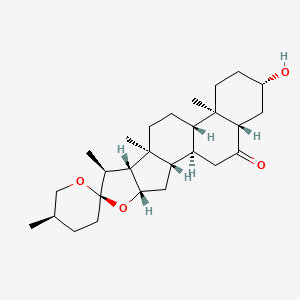 |
| Purity | 99% Purity |
| Classification | Research Use Only (RUO) |
| Storage Temperature | Store at controlled room temperature, 20°C to 25°C (68°F to 77°F) |
Mechanisms of Action
Plant steroids such as laxogenin operate via mechanisms distinct from human anabolic hormones. Research indicates that laxogenin:
- Activates cell surface signaling pathways that influence protein production.
- Engages AKT1 (protein kinase B), a protein linked to the regulation of protein synthesis and reduced muscle protein breakdown in cellular and animal models.
- Inhibits phosphodiesterase, the enzyme responsible for breaking down cAMP, leading to increased intracellular cAMP levels and activation of downstream signaling pathways associated with metabolic activity.
These mechanisms are currently observed in cell and animal models only.
Potential Research Applications
Laxogenin is used in laboratory settings to study:
- Protein synthesis and degradation pathways - Investigates how plant steroids influence muscle protein production and breakdown in cells.
- Intracellular signaling mechanisms in muscle cells - Explores how laxogenin activates pathways like AKT1 and cAMP-mediated signaling.
- Cellular responses to plant-derived steroid compounds - Examines how muscle and other cell types react to brassinosteroid exposure.
- Metabolic processes, including cAMP-mediated signaling - Studies the effects on energy regulation and fat metabolism at the cellular level.
Disclaimer
This information is for educational purposes only and not medical advice. Products are for research use only. Research must follow IRB or IACUC guidelines. Verify information independently before purchasing. By ordering, you agree to our Terms and Conditions. If you are not 100% satisfied with the product you received, please contact us at support@staging.purerawz.co
ATTENTION: All our products are for LABORATORY AND RESEARCH PURPOSES ONLY, not for veterinary or human use
References:
- Nikaido, T., Ohmoto, T., Kubo, S., Mimaki, Y., & Sashida, Y. (1992). Steroidal saponins from the rhizomes of Smilax sieboldii. Phytochemistry, 31(7), 2445-2450. https://doi.org/10.1016/0031-9422(92)83296-b
- Baba, M., Masayoshi, Kishi, N., Okada, Y., Shibata, S., Peng, J., Yao, S., Nishino, H., & Okuyama, T. (2000). Saponins Isolated from Allium chinense G. DON and Antitumor-promoting Activities of Isoliquiritigenin and Laxogenin from the Same Drug. Biological and Pharmaceutical Bulletin, 23(5), 660-662. https://doi.org/10.1248/bpb.23.660
- Esposito, D., Kizelsztein, P., Komarnytsky, S., & Raskin, I. (2012). Hypoglycemic effects of brassinosteroid in diet-induced obese mice. American Journal of Physiology-Endocrinology and Metabolism, 303(5), E652-E658. https://doi.org/10.1152/ajpendo.00024.2012

Dr. Helma Wennemers
Dr. Helma Wennemers is a globally recognized chemist shaping modern peptide science and molecular design through highly original research in applied biosciences.
Her work explores how precise molecular architecture can be engineered to create new functional systems in chemistry and life sciences. Her contributions continue to redefine contemporary chemical research through creativity, depth, and structural innovation.
Please click here to access instructions on how to make a payment.
How to PayRelated products
-

Evodiamine
Price range: $21.13 through $34.53 Select options This product has multiple variants. The options may be chosen on the product page -
Pyrroloquinoline Quinone (PQQ)
Price range: $11.45 through $133.90 Select options This product has multiple variants. The options may be chosen on the product page -
Agaricus 30% Bisporiust
Price range: $21.85 through $52.46 Select options This product has multiple variants. The options may be chosen on the product page -
Chaga 30% Extract POLYSACCHARIDES
Price range: $14.20 through $36.61 Select options This product has multiple variants. The options may be chosen on the product page


