
🔥 WE HAVE THE BEST COMPOUNDS ON THE PLANET
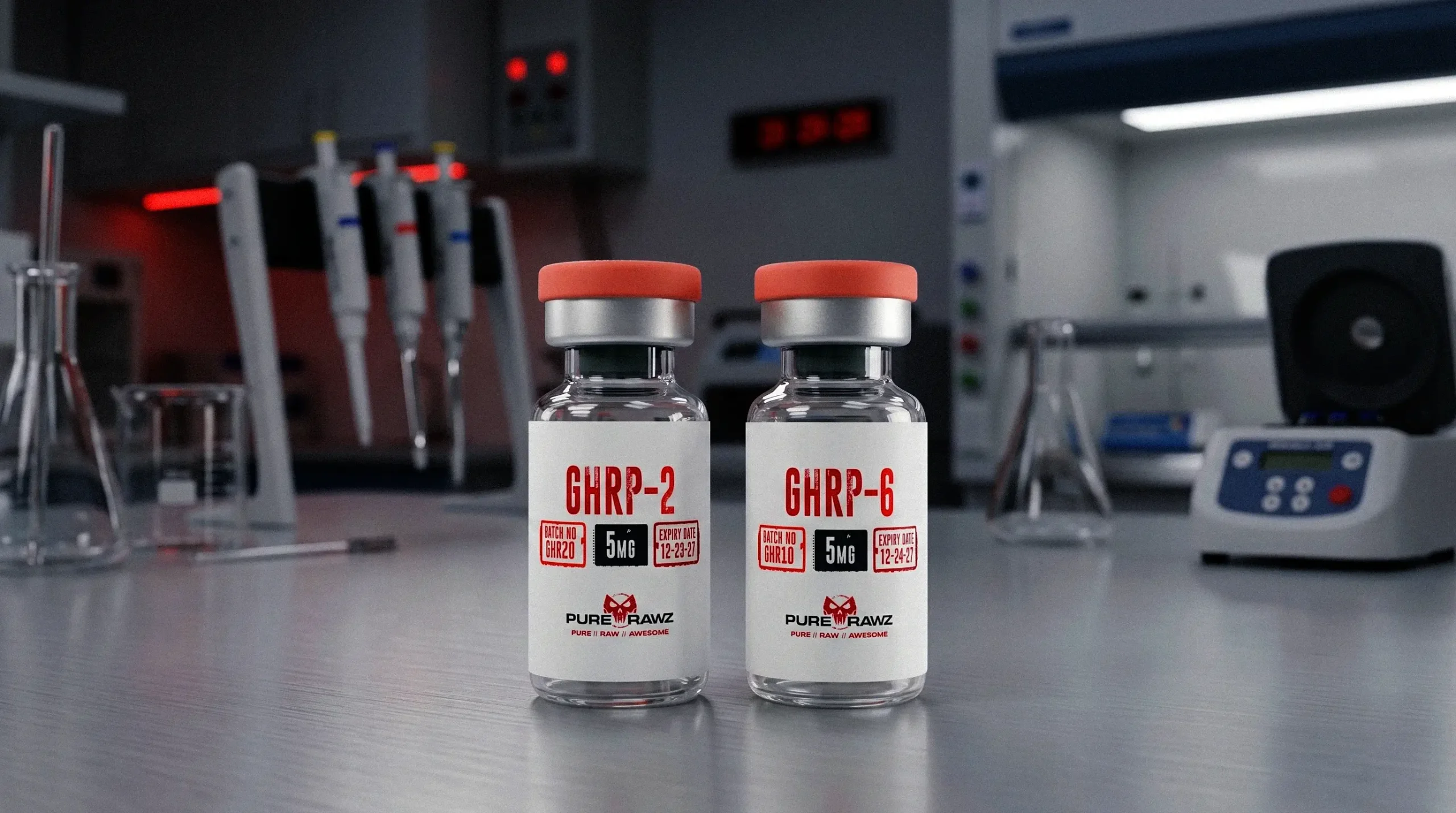
GHRP-2 and GHRP-6 are two synthetic peptides used in modern research settings. Both are growth hormone secretagogue peptides.
Researchers believe that both compounds act as synthetic agonists of the ghrelin receptor (GHS-R1a).
The compounds may trigger downstream growth hormone release from the pituitary as observed in investigational models.
Moreover, researchers have suggested that both GHRP-2 and GHRP-6 are ghrelin receptor agonists. However, they have different working mechanisms. In the following blog, we are going to have a detailed look at their potency, appetite pathway involvement, and other factors.
GHRP-2 and GHRP-6 are not approved by the U.S. Food and Drug Administration (FDA) for human use. Both are classified as research chemicals intended strictly for laboratory and preclinical research purposes. This content is for informational and educational purposes only and does not constitute medical advice, diagnosis, or treatment.
Studies have indicated that GHRP-2 and GHRP-6 are synthetic growth hormone-releasing peptides. They activate the GHS-R1a receptor to stimulate pulsatile growth hormone secretion from the anterior pituitary.
Preclinical research indicates that GHRP-2 produces stronger GH pulse amplitude in pituitary cell models, with less pronounced orexigenic activity than GHRP-6 in comparative studies. GHRP-6 demonstrates more pronounced ghrelin-mediated orexigenic pathway activation in animal model studies, alongside its GH-releasing effects.
A few investigational findings relevant to both peptides also highlight differential IGF-1 modulation, cortisol response, and prolactin elevation.
GHRP-2 (Growth Hormone-Releasing Peptide-2) is a synthetic peptide belonging to the growth hormone-releasing peptide (GHRP) family. It's a class of investigational compounds developed to study the endogenous mechanisms governing growth hormone regulation in preclinical models.
Structurally, GHRP-2 is a six-amino-acid sequence designed to mimic and amplify the activity of the ghrelin receptor in investigational research subjects.
GHRP-2 holds the status of investigational compound and is not approved by the FDA for clinical use. It remains confined to preclinical and laboratory research settings.
GHRP-6 (Growth Hormone-Releasing Peptide-6) is a synthetic hexapeptide. It is one of the earliest members of the growth hormone-releasing peptide family to be characterized in preclinical research.
It was developed as an investigational tool to study the endogenous ghrelin receptor system and its role in regulating somatotropic axis activity.
GHRP-6 is strictly an investigational synthetic peptide and is not FDA-approved for human use. It is studied exclusively in laboratory and preclinical settings.
In preclinical research models, GHRP-2 has been shown to work by binding to the growth hormone secretagogue receptor (GHSR), also known as ghrelin receptor. It's a G-protein-coupled receptor located on pituitary somatotrophs.
Once GHRP-2 binds to the ghrelin receptor, it initiates a well-characterized signaling cascade centered on the activation of phospholipase C (PLC).
This hydrolyses phosphatidylinositol 4,5-bisphosphate (PIP₂) into inositol trisphosphate (IP₃) and diacylglycerol (DAG).
The resulting surge in intracellular calcium concentration directly triggers pulsatile GH release from somatotroph granules in research preclinical models. It reflects the pulsatile pattern observed with endogenous growth hormone in research models.
Additionally, GHRP-2 has stronger GH release potency. The cleaner GH-stimulating profile of this peptide has made it a compound of particular investigational interest when researchers aim to isolate somatotropic axis variables.
Note: As an investigational compound not approved for clinical use, all findings related to GHRP-2's downstream effects remain confined to preclinical settings.
Researchers have observed that GHRP-2 may moderately elevate cortisol and prolactin alongside GH secretion.
Moreover, GHRP-2 is studied for its short plasma half-life estimated at approximately 15–60 minutes in investigational settings.
Researchers studying the (GH) system may use this property to observe specific growth hormone release events and their effects on IGF-1 levels in preclinical studies.
In research preclinical models, GHRP-6 has been shown to bind to the same GHSR ghrelin receptor target as GHRP-2. It activates the phospholipase C signaling cascade to drive GH release from pituitary somatotrophs in research investigational models.
However, GHRP-6 engages ghrelin pathways associated with energy regulation more strongly than GHRP-2 in animal model studies. Researchers have observed pronounced orexigenic pathway activation alongside GH secretion in these preclinical settings.
Researchers have observed significant increases in feeding behavior and caloric intake measurements in animal model studies of GHRP-6.
GHRP-6’s Peak GH release potency remains lower than that observed with GHRP-2 in equivalent investigational settings.
Studies have indicated that with a comparable short half-life of approximately 15–60 minutes, GHRP-6 generates pulsatile rather than sustained GH output.
This dual activity across somatotropic and orexigenic pathways has established GHRP-6 as a distinct investigational reference compound in research.
While GHRP-2 and GHRP-6 share the same receptor target and both stimulate growth hormone release via identical GH secretion pathways, their binding profiles, potency, and orexigenic activity differ significantly. The table below outlines the key differences between GHRP-2 and GHRP-6 across every major investigational parameter.
| Feature | GHRP-2 | GHRP-6 |
| Receptor Target in Preclinical Models | Primarily activates the ghrelin receptor (GHS-R1a) | Also activates the ghrelin receptor (GHS-R1a) |
| GH Release Potency | Generally considered more potent for stimulating Growth Hormone Secretion | Moderate GH-releasing activity |
| Orexigenic Activity in Research Models | Mild to moderate orexigenic signaling observed in animal studies | Pronounced orexigenic activity observed in animal model studies |
| Expected Half-Life | Approximately 15–60 minutes in research settings | Approximately 15–60 minutes in research settings |
| Studied Cortisol/Prolactin Profile | May increase cortisol and prolactin more noticeably | Can also increase cortisol and prolactin, but often considered milder |
| Research Applications | Studied for GH axis responsiveness, IGF-1 modulation, and endocrine signaling | Frequently studied for appetite regulation, GH release, and metabolic research |
| Observed Variables in Research Models | Hematological shifts, hunger-related behavior changes, vasodilatory responses, and elevated cortisol/prolactin in animal model studies | Hunger-related behavior changes, hematological shifts, sensory response variables, and fatigue-related behavioral observations in animal model studies |
| FDA Status | Not approved for medical use by the U.S. Food and Drug Administration | Not approved for medical use by the U.S. Food and Drug Administration |
| WADA Status | Prohibited by the World Anti-Doping Agency under growth hormone secretagogues | Also prohibited by the World Anti-Doping Agency |
A few studies have suggested that GHRP-2 generally produces stronger GH release than GHRP-6 and Ipamorelin in preclinical models. However, few researchers have noted that Hexarelin is also among the strongest GH-releasing peptides in the classic GHRP family.
In preclinical GH secretagogue research studies, “potency” is usually determined by comparing how strongly a peptide can stimulate GH release. Researchers commonly measure:
Using those criteria, the classic GHRP compounds are commonly ranked approximately as follows for acute GH-releasing activity:
Compared with Ipamorelin, GHRP-2 typically produces:
GHRP-2 is frequently described as producing stronger and more reliable increases in growth hormone levels (GH levels) than GHRP-6, with less pronounced orexigenic activity in comparative research models.
In different research settings, GHRP-2 has shown stronger GH-releasing effects. That is mainly because it activates the ghrelin receptor (GHS-R1a) with high potency and influences GH regulation at multiple levels in preclinical research models:
This combination tends to produce larger GH pulses and stronger transient elevations in growth hormone levels.
In peptide research, “stronger GH release” usually refers to one or more of these outcomes:
It does not necessarily mean better long-term outcomes, safer signaling, or superior anabolic effects. Moreover, studies have indicated that stronger GH stimulation can increase unwanted hormonal activity, such as prolactin or cortisol levels, in research models.
Researchers also distinguish between:
So a peptide that produces the highest short-term GH spike is not automatically the most useful in every experimental design.
Research findings indicate that GHRP-6 activates orexigenic pathways through binding at the ghrelin receptor (GHS-R1a). {1} This receptor overlaps with endogenous hunger-signaling pathways, which is why GHRP-6 produces feeding behavior changes in animal model studies.
In preclinical models, this receptor activation can increase feeding behavior, raise caloric intake, and alter energy balance alongside its GH-releasing effects.
The appetite-stimulating (“orexigenic”) effect of GHRP-6 is primarily linked to activation of hypothalamic feeding circuits involved in energy regulation.
Studies have indicated when GHRP-6 binds to GHS-R1a receptors, it can:
In animal model studies, these pathway activations have been associated with:
In research settings, GHRP-6 is therefore often considered one of the more strongly orexigenic GH secretagogues.
Researchers have observed that GHRP-6 shares functional overlap with endogenous ghrelin signaling. As both compounds target the same receptor system.
Endogenous ghrelin in mammalian physiology has been characterized as:
Studies in animal models have shown crossover effects involving:
This ghrelin-pathway crossover is one reason GHRP-6 commonly shows more pronounced orexigenic activity in animal model studies than peptides like Ipamorelin.
Note: These compounds are investigational research peptides and are not approved for general performance or anti-aging use in humans.
The orexigenic effects of GHRP-6 observed in animal models can significantly influence experimental outcomes beyond simple GH release measurements.
In preclinical studies, observed increases in feeding behavior may:
Because of this, researchers often distinguish between:
Note: Their safety profiles, long-term endocrine effects, receptor desensitization potential, and metabolic consequences remain active areas of research. This information should not be interpreted as a recommendation for human use or self-administration.
In research preclinical models, GHRP-6's orexigenic effects can lead to measurable shifts in body composition parameters depending on total caloric intake and study duration.
Potential observations include:
Importantly, observed GH secretion changes do not automatically translate into measurable fat mass reductions in research models, particularly when feeding behavior compensates for metabolic shifts.
Yes, in research settings, GHRP-2 and GHRP-6 can be combined with other peptides. It can be combined with GHRH analogs to study potential synergistic effects on GH secretion.
However, most experimental designs typically use one primary GHRP rather than combining two highly similar GHRP peptides together.
Note: These compounds are investigational research peptides and are not approved for general performance or anti-aging use in humans.
Researchers sometimes combine GH secretagogues to evaluate whether different signaling pathways can amplify overall GH output.
The rationale is usually based on targeting:
In this framework:
Research studies suggested that these pathways are biologically distinct but interconnected. With the help of combination protocols, they may produce larger GH pulses than either pathway alone.
In preclinical and mechanistic research, GHRP compounds are more commonly paired with GHRH analogs such as:
The reasoning behind these combinations is that:
Researchers often investigate whether this dual activation:
The proposed synergistic effect comes from the interaction between two complementary regulatory systems involved in GH secretion.
Mechanistically:
This creates the possibility of a larger combined GH response than either pathway produces independently.
Conceptually, the interaction is often described like this:
In experimental models, this synergy is commonly stronger when combining:
Rather than combining two closely related GHRP peptides such as GHRP-2 and GHRP-6, which already share substantial mechanistic overlap.
Discussion of these compounds should remain within a research and mechanistic context. These peptides are investigational compounds studied for endocrine signaling, metabolism, and GH-axis physiology.
Their safety profiles, long-term endocrine effects, receptor desensitization potential, and metabolic consequences remain active areas of research. This information should not be interpreted as a recommendation for human use or self-administration.
GHRP-2 and GHRP-6 are investigational research peptides studied mainly for their ability to stimulate GH secretion. While useful in research, they come with important methodological, safety, and regulatory limitations.
In laboratory research settings, these peptides are typically treated as bioactive research compounds:
These are not inert substances, so contamination or improper storage can affect experimental validity.
A major limitation is the absence of robust, long-term human safety data.
This creates uncertainty regarding:
Some preclinical studies suggest that prolonged or elevated GH signaling may contribute to metabolic shifts, including:
These effects are relevant because chronic elevation of GH can, in some contexts, oppose insulin action and contribute to insulin resistance–like metabolic patterns in experimental models.
This is especially important in studies evaluating:
GH secretagogues can also influence other endocrine axes, as observed by researchers. In some models, GHRP compounds have been associated with:
These effects are typically variable and dose- or context-dependent, but they matter because they can:
Neither GHRP-2 nor GHRP-6 is approved by the U.S. Food and Drug Administration for:
They remain research-only compounds, meaning:
Both GHRP-2 and GHRP-6 are prohibited in competitive sport.
The World Anti-Doping Agency classifies them under prohibited peptide hormones and growth factors, meaning:
This is due to their ability to artificially elevate growth hormone levels and potentially influence recovery and body composition outcomes.
In research environments, verification begins with a Certificate of Analysis (CoA) that is batch-specific and issued by an independent analytical lab. This document should match the vial’s lot number and report purity (typically ≥95%) along with identity confirmation.
1. Certificate of Analysis (CoA)
2. HPLC purity testing
3. Mass spectrometry (MS) confirmation
4. Lyophilized (freeze-dried) stability indicators
5. Storage documentation
Proper handling standards typically include:
6. Label integrity
Research peptide suppliers with established documentation practices typically provide batch-specific CoA documentation with their products, often including reported HPLC purity and mass spectrometry summaries. Researchers should always verify these documents independently for the specific lot received, rather than relying on supplier branding or reputation alone.
GHRP-2 and GHRP-6 are not FDA-approved for human use and are classified as research-use-only compounds. Verification methods are intended strictly for laboratory and analytical research contexts, not clinical or self-administration purposes.
Yes, researchers have observed that GHRP-2 generally produces stronger and more consistent GH release in preclinical models than GHRP-6.
A few research studies have indicated that GHRP-6 strongly activates ghrelin-mediated hypothalamic feeding pathways linked to appetite stimulation. Researchers have suggested that GHRP-2 still binds the same receptor but with less orexigenic signaling bias.
They might be combined in research, but overlap at the same ghrelin receptor often limits added benefit. Most studies prefer combining a GHRP with a GHRH analog instead.
Studies have shown that both are short-acting peptides with plasma half-lives typically under ~30 minutes in research models. Their GH effects persist longer than their presence in circulation due to pulsatile release.
No, ipamorelin is more selective for GH release with minimal appetite or cortisol/prolactin effects. GHRP-2 and GHRP-6 are less selective and more metabolically broad.
No, neither peptide is approved for medical use by the FDA. They are classified as research-only compounds.
GHRPs stimulate the ghrelin receptor pathway, while GHRH peptides directly activate pituitary GHRH receptors. Together, they can produce synergistic GH release effects in research preclinical models.
GHRP-2 is preferred for cleaner GH-focused outcomes, while GHRP-6 is useful when appetite-driven energy balance is part of the model.
Yes, both can enhance GH pulses that normally occur during deep sleep phases, as suggested by researchers. Their effect is additive to natural nocturnal GH secretion patterns.
These compounds are prohibited because they artificially increase GH levels and may enhance recovery and body composition changes. WADA classifies them as performance-enhancing peptide hormones.
GHRP-2 and GHRP-6 both stimulate GH release via the ghrelin receptor (GHS-R1a) in research preclinical models. However, researchers believe that GHRP-2 is generally more potent for GH secretion, while GHRP-6 has stronger activation of appetite (orexigenic) signaling pathways in the hypothalamus.
In research design, GHRP-2 is typically favored for cleaner GH-axis studies focused on growth hormone levels, and endocrine signaling.
Whereas, studies suggested that GHRP-6 is more useful when studying appetite stimulation, caloric intake regulation, and energy balance interactions in research models.
Combining them is uncommon because they act on largely the same receptor pathway, limiting added benefit compared to pairing a GHRP with a GHRH analog.
GHRP-2 and GHRP-6 are research-only compounds, not FDA-approved for human use, and are prohibited by WADA in sport. Any discussion or application should remain strictly within controlled experimental and compliance-approved research contexts due to unknown long-term safety and endocrine effects.

Dr. Helma Wennemers is a globally recognized chemist shaping modern peptide science and molecular design through highly original research in applied biosciences.
Her work explores how precise molecular architecture can be engineered to create new functional systems in chemistry and life sciences.Her contributions continue to redefine contemporary chemical research through creativity, depth, and structural innovation.
We are offering the following products on sale. Hurry up before the sale ends!
As part of our exclusive upscale promotion, you can add some of our top research compounds to your order at a special discounted rate.