
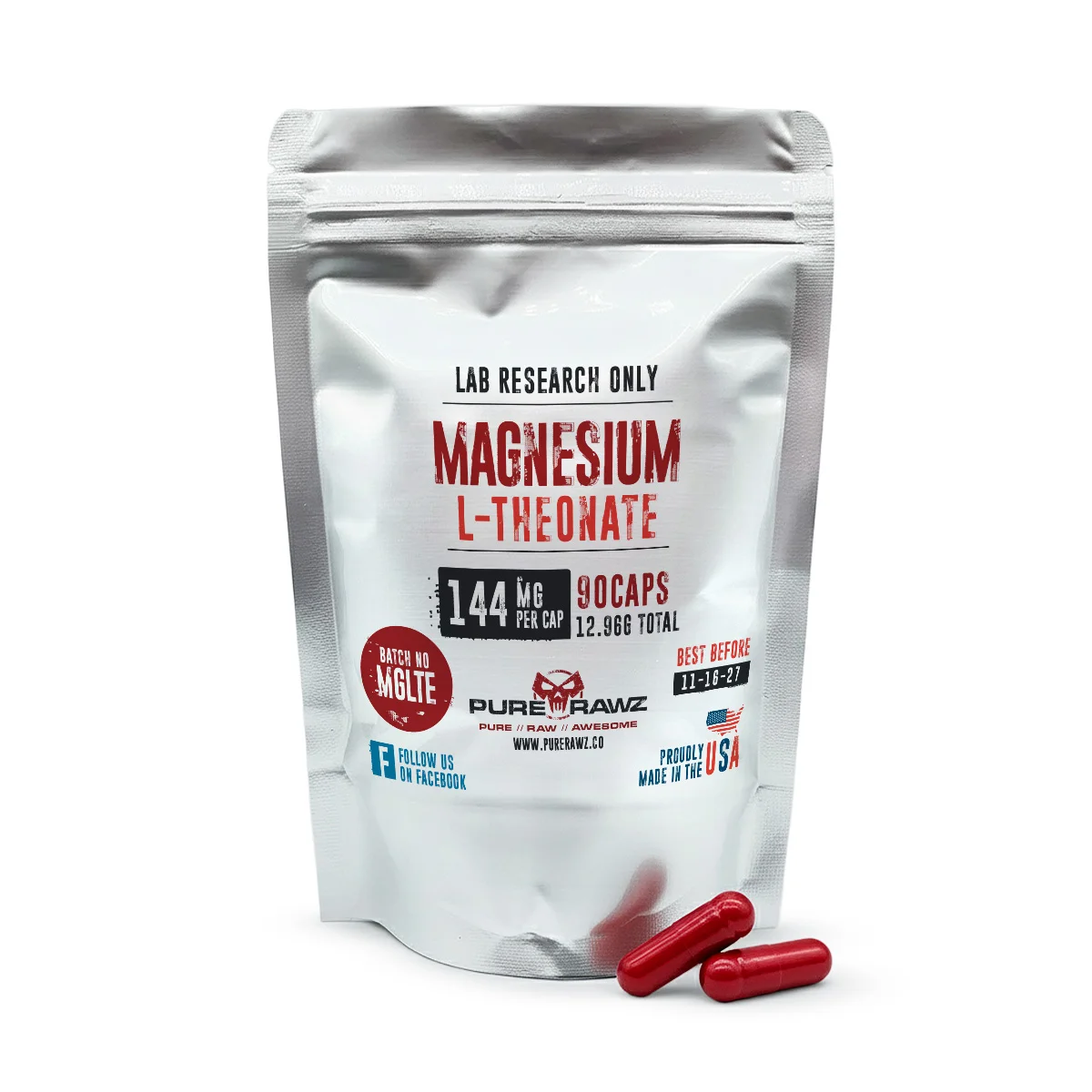
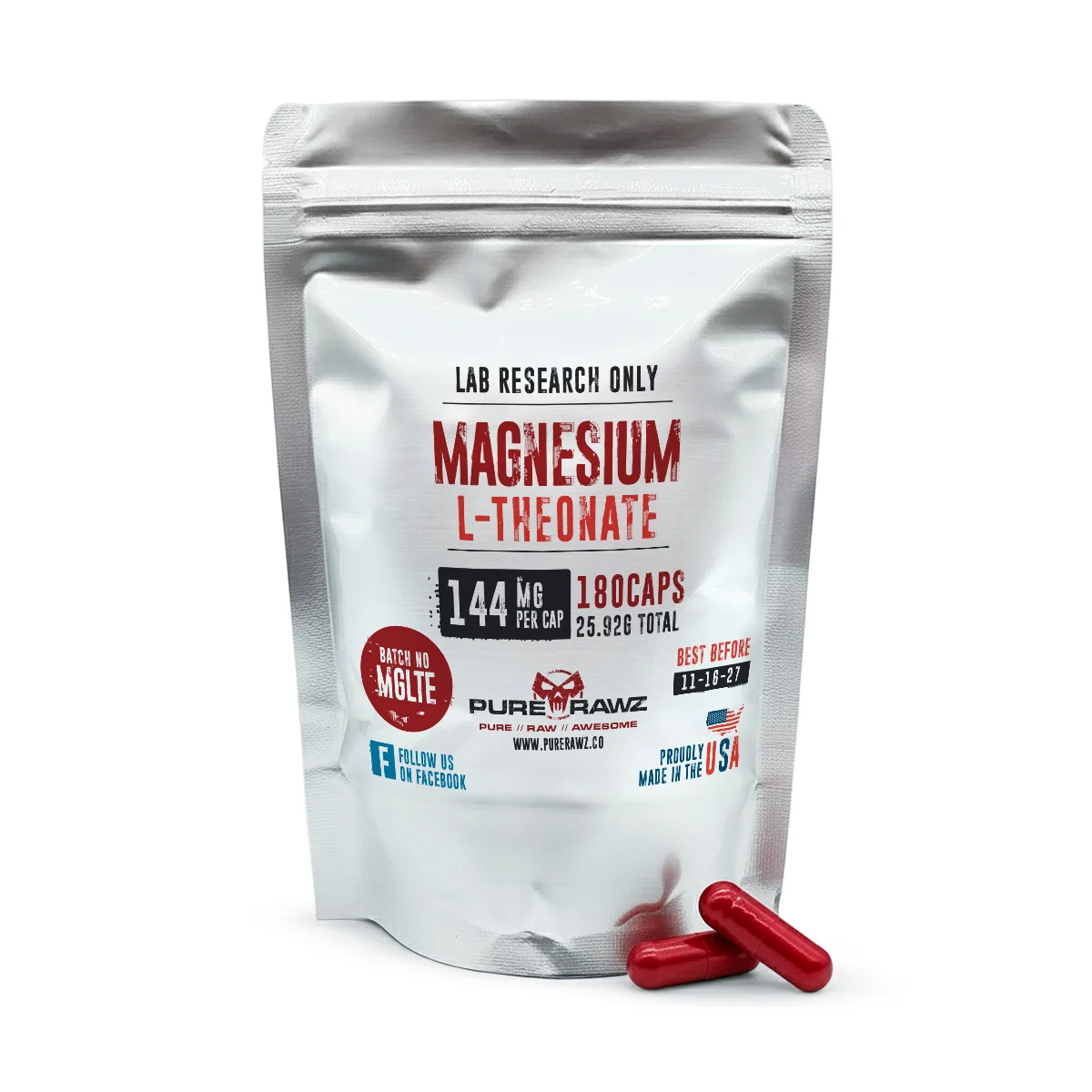
Magnesium L-Theonate Capsules
Price range: $39.98 through $69.47
Earn 40 - 69 points upon purchasing this product.
✅ 99% Purity – Third-Party Tested
🚚 Free U.S. Shipping on Orders $100+
 Proudly Made in the USA
⚡ Fast & Reliable Shipping
🔒 Secure Checkout Guaranteed
Enjoy 24/7 customer support, 1st & 3rd party verified 99% purity, and free shipping on orders over $100!
Description
Magnesium L-Threonate
Product Overview
Magnesium L-Threonate is a different kind of magnesium bonded with L-threonine acid, which is a metabolite of vitamin C. Magnesium L-threonate is a magnesium salt of L-threonic acid, a metabolite of vitamin C. In laboratory studies, the compound has been examined for its ability to influence magnesium levels in neural tissue models.
Magnesium L-threonate has been investigated in experimental models exploring magnesium signaling in neural systems. Preliminary studies have explored the compound's role in processes associated with synaptic signaling and neural activity in experimental models.
| Property | Data |
| Compound Name | Magnesium L-Threonate |
| PubChem CID | 71307398 |
| CAS Number | 778571-57-6 |
| Molecular Formula | C8H14MgO10 |
| Molecular Weight | 294.50 g/mol |
| Chemical Classification | Magnesium salt of L-threonic acid |
| IUPAC Name | Magnesium bis((2R,3S)-2,3,4-trihydroxybutanoate) |
| Structure | 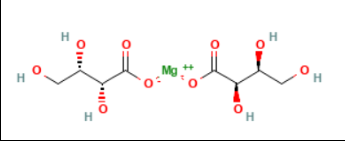 |
| Solubility | Soluble in water |
| Source Database | PubChem (NCBI) |
Working Mechanism
Some laboratory studies have examined whether magnesium L-threonate may influence magnesium concentrations in neural tissue models.
Researchers have noticed that Magnesium L-Threonate may cross the blood-brain barrier. This ultimately raises the brain magnesium concentration and supports synaptic plasticity, strengthening communication between cells.
Another way the compound has been shown to work is by balancing neurotransmitters. Additionally, preliminary studies have indicated that Magnesium L-Threonate may reduce neuronal activity.
Research Applications
Though long-term research is required to understand this compound, to date, studies have demonstrated the following research areas under investigation.
- Experimental studies have explored magnesium signaling in relation to neuronal activity patterns.
- Some laboratory models examine how magnesium availability may influence synaptic plasticity and memory-related signaling pathways.
- Researchers have also investigated magnesium-related pathways involved in neuronal resilience and cellular signaling.
Why Buy at PureRawz
When it comes to online orders, you can always count on Purerawz. We have curated exceptional research compounds for different levels of researchers. Talking about Magnesium L-threonate, you can order it online for an affordable prices.
We provide first-and third-party tested Magnesium L-threonate so that researchers will have full confidence in our products. For accuracy and transparency, we also give a Certificate of Analysis (COA) with this compound.
Note: Magnesium L-threonate supplied by PureRawz is distributed strictly as a research material. The compound is not approved by the U.S. Food and Drug Administration (FDA) for therapeutic or veterinary use when sold in this format.
Research Disclaimer
The information provided is intended for scientific reference and educational purposes only.
By placing an order, you agree to the PureRawz Terms and Conditions. If you are not satisfied with your order, please contact support@staging.purerawz.co.
ATTENTION: All products are FOR LABORATORY AND RESEARCH PURPOSES ONLY and NOT FOR HUMAN OR ANIMAL USE.
All research involving this compound should be conducted by qualified professionals and must comply with institutional regulatory oversight, such as IRB or IACUC guidelines, where applicable.
References
Slutsky, I., Abumaria, N., Wu, L. J., et al. (2010). Enhancement of learning and memory by elevating brain magnesium. Neuron, 65(2), 165 177. https://pubmed.ncbi.nlm.nih.gov/20152124/
National Center for Biotechnology Information. (2024). Magnesium L-threonate compound summary. PubChem Database. https://pubchem.ncbi.nlm.nih.gov/compound/71307398
Barbagallo, M., & Dominguez, L. J. (2010). Magnesium and brain function. Current Pharmaceutical Design, 16(7), 832 839. https://pubmed.ncbi.nlm.nih.gov/20236052/

Dr. Helma Wennemers
Dr. Helma Wennemers is a globally recognized chemist shaping modern peptide science and molecular design through highly original research in applied biosciences.
Her work explores how precise molecular architecture can be engineered to create new functional systems in chemistry and life sciences. Her contributions continue to redefine contemporary chemical research through creativity, depth, and structural innovation.
Please click here to access instructions on how to make a payment.
How to Pay