
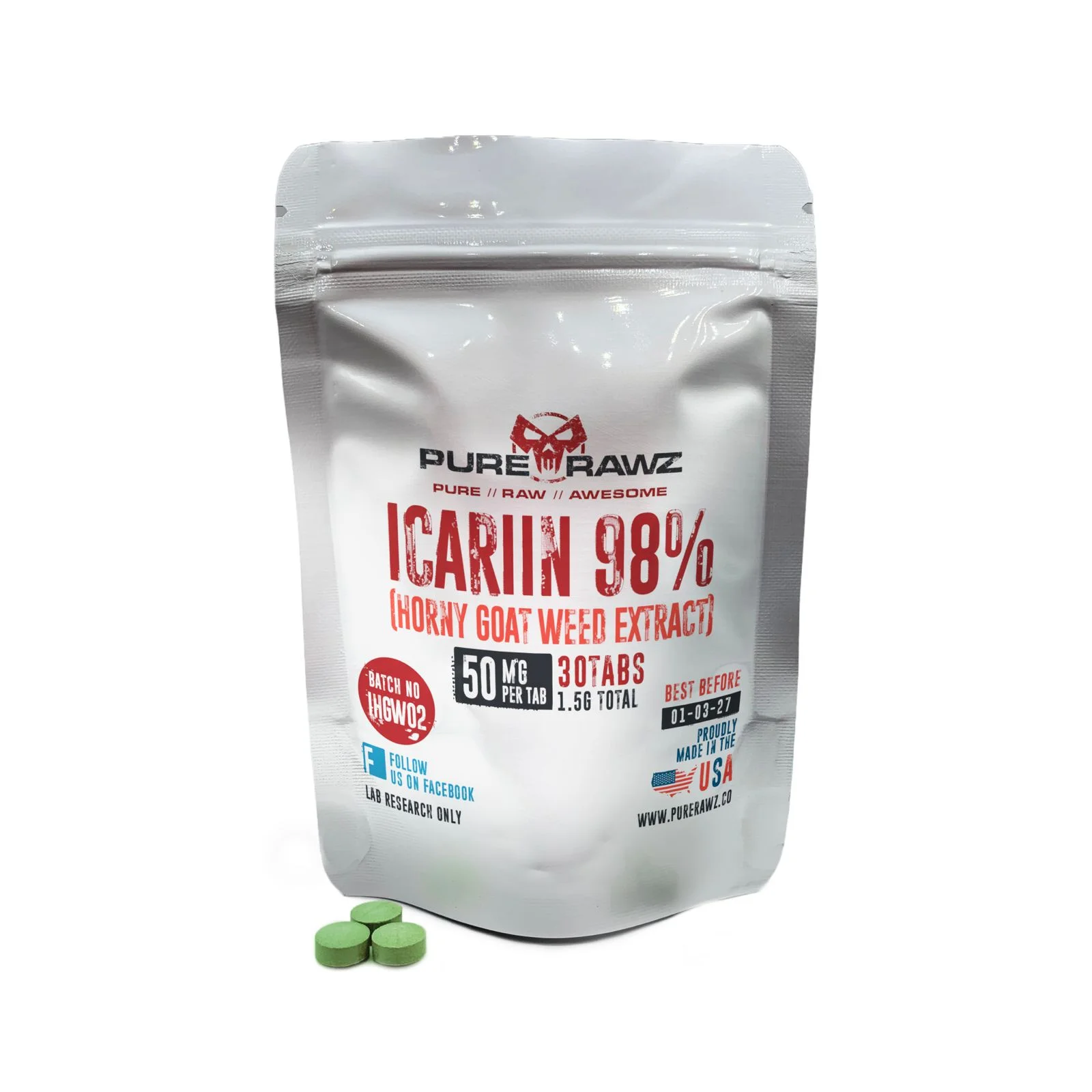
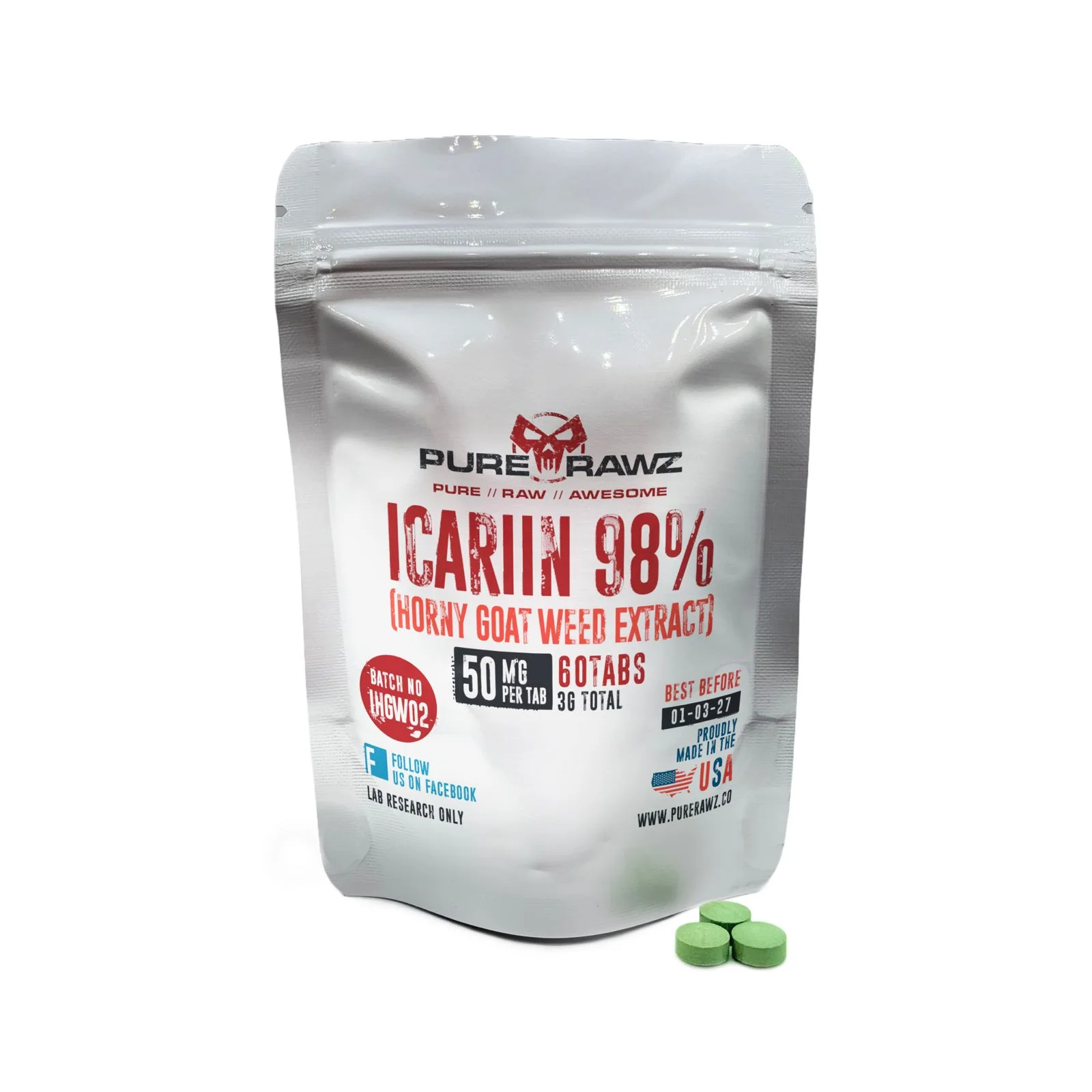
Icariin (Horny Goat Weed Extract 98%)
Price range: $24.02 through $53.55
Earn 24 - 54 points upon purchasing this product.
✅ 99% Purity – Third-Party Tested
🚚 Free U.S. Shipping on Orders $100+
 Proudly Made in the USA
⚡ Fast & Reliable Shipping
🔒 Secure Checkout Guaranteed
Enjoy 24/7 customer support, 1st & 3rd party verified 99% purity, and free shipping on orders over $100!
Description
Icariin (Epimedium-Derived Compound 98%) Overview
The formulation consists of a standardized botanical-derived compound preparation containing 98 percent icariin, a flavonoid-class molecule isolated from plant species within the Epimedium genus. Researchers investigate icariin in molecular biology and biochemical studies that examine flavonoid-associated signaling processes and intracellular molecular interactions.
Within experimental laboratory models, Icariin 98% may be used to evaluate receptor-associated signaling activity, intracellular regulatory responses, and biochemical communication networks operating within cellular systems.
Icariin (Epimedium-derived compound 98%) is categorized as an investigational laboratory chemical compound preparation supplied strictly for analytical and experimental research purposes.
Chemical and Molecular Properties
| Compound Name | Icariin (Epimedium-Derived Compound 98%) |
| Primary Component | High-purity botanical-derived molecular compound |
| Chemical Type | Flavonoid-class molecular compound |
| Molecular Components | Standardized Icariin (98%) |
| Chemical Class | Botanical-origin flavonoid research compound |
| Laboratory Handling | Handle as a laboratory chemical reagent following standard laboratory safety procedures |
| Storage Conditions | Store in a cool, dry laboratory environment protected from direct light |
| Status | Not for human or animal consumption |
| Regulatory Status | Not approved by regulatory authorities |
How does Icariin work?
The following section outlines biochemical signaling systems and molecular interactions currently examined in experimental research models.
Flavonoid Signaling Pathway Investigation
Icariin is examined in molecular research environments due to its flavonoid-based molecular structure and potential interaction with cellular regulatory systems.
Laboratory investigations may evaluate interactions involving:
- intracellular signaling pathways
- protein interaction networks
- enzyme-regulated molecular pathways
- transcription-associated regulatory cascades
Intracellular Signaling and Molecular Interaction Research
Within biochemical research environments, Icariin 98% may be examined for its interaction with intracellular molecular communication networks.
Experimental laboratory studies may investigate:
- signaling pathway modulation within cellular models
- enzyme-associated regulatory interactions
- receptor-linked molecular networks
- protein-binding interaction mechanisms
Cellular Regulatory Network Analysis of Icariin
Icariin is also investigated in biochemical research for its potential interaction with broader cellular regulatory systems and signaling cascades.
Laboratory investigations may include:
- evaluation of transcription factor regulatory systems
- analysis of protein-mediated molecular pathways
- coordination of intracellular signaling networks
- interaction with enzyme-associated regulatory processes
Biochemical Interaction Research on Icariin
The high-purity composition of Icariin 98% allows researchers to examine detailed biochemical pathways and molecular interaction mechanisms involving:
- intracellular signal transduction networks
- enzyme interaction systems and regulatory responses
- protein interaction mapping within cellular environments
- structural pathway analysis involving flavonoid compounds
These controlled laboratory experiments enable scientists to observe and document complex intracellular molecular responses associated with concentrated flavonoid-derived compounds.
Research Applications of Icariin
Laboratory investigations using Icariin (Epimedium-derived compound 98%) may support several areas of biochemical and molecular research.
Cellular Model Research
Researchers may analyze intracellular signaling networks, protein interaction pathways, and regulatory signaling responses within experimental cellular systems.
Molecular Biology Investigations
Scientists may conduct transcription network analysis, signaling pathway studies, and biochemical regulatory investigations using Icariin 98% as a laboratory research compound.
Biochemical Signaling Research
The compound may function as a research chemical probe used to examine enzyme activity, flavonoid-associated molecular interactions, and intracellular regulatory pathways.
Analytical Laboratory Studies
Laboratories may utilize Icariin 98% in controlled research environments to evaluate molecular characteristics, signaling interactions, and structural behavior associated with high-purity flavonoid compounds.
Disclaimer
The information provided above is intended for scientific documentation and educational reference purposes only. All procedures involving laboratory chemicals must be conducted within appropriate laboratory facilities and in accordance with established institutional safety protocols.
By obtaining materials through the Purerawz platform, purchasers acknowledge and agree to the organization's Terms and Conditions. Product inquiries should be directed to support@staging.purerawz.co.
ATTENTION: These materials are laboratory research chemicals intended strictly for scientific investigation. They are not approved for human or animal consumption or clinical use.
Reference Sources
Icariin molecular structure and flavonoid research https://pubchem.ncbi.nlm.nih.gov/compound/10193054
Flavonoids and intracellular signaling modulation research https://pubmed.ncbi.nlm.nih.gov/24760982/
Icariin biochemical pathway investigations https://pubmed.ncbi.nlm.nih.gov/31413943/

Dr. Helma Wennemers
Dr. Helma Wennemers is a globally recognized chemist shaping modern peptide science and molecular design through highly original research in applied biosciences.
Her work explores how precise molecular architecture can be engineered to create new functional systems in chemistry and life sciences. Her contributions continue to redefine contemporary chemical research through creativity, depth, and structural innovation.
Please click here to access instructions on how to make a payment.
How to PayRelated products
-

Theacrine
Price range: $20.75 through $62.29 Select options This product has multiple variants. The options may be chosen on the product page -
7-Keto DHEA
Price range: $26.77 through $45.33 Select options This product has multiple variants. The options may be chosen on the product page -
Noopept
Price range: $10.32 through $51.64 Select options This product has multiple variants. The options may be chosen on the product page -
LGD-3303
Price range: $84.93 through $296.69 Select options This product has multiple variants. The options may be chosen on the product page


